
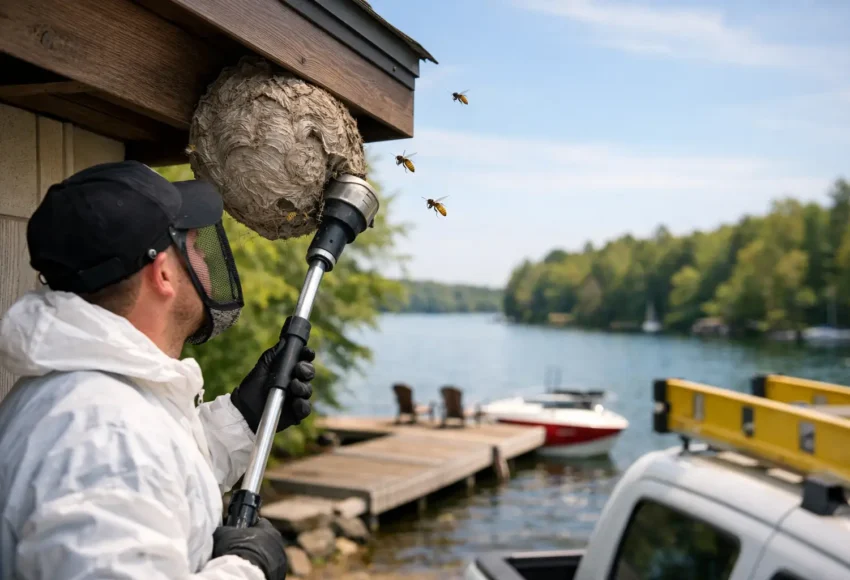
Wasp Removal in Georgina Ontario Made Safe
A wasp nest can turn a quiet porch, garage, shed, or storefront entrance into a place everyone avoids. For wasp removal in Georgina, Ontario, the safest move is usually to keep your distance and deal with the nest before activity grows. A small nest in spring can become a busy colony by late summer, and disturbing it at the wrong time can lead to painful stings.
Discount Pest Control provides fast, discreet help for homeowners, landlords, and businesses that need the problem handled without added stress. Whether wasps are nesting under siding, behind a light fixture, or inside a wall void, the goal is simple: stop the activity safely and help prevent the nest from becoming a repeat problem.
When a Wasp Nest Needs Professional Attention
Not every flying insect near your property means there is a nest. A few wasps visiting flowers, garbage bins, or outdoor food areas are common in warm weather. The concern starts when you see repeated flight in and out of one opening, hear buzzing in a wall or ceiling, or find a visible paper-like nest under an eave, deck, roofline, or shed.
Professional help is especially worthwhile when the nest is close to a door, walkway, play area, patio, pet run, or business entrance. It is also the right choice when someone in the home has a known sting allergy. Even people without an allergy can have a serious reaction after multiple stings, so this is not a situation to test with a ladder and a can of spray.
Wasps can become defensive when they believe their nest is threatened. Yellow jackets, in particular, often nest underground or inside structural gaps and may swarm when their entrance is disturbed. Paper wasps are commonly found on exposed structures, while hornet-like insects may build larger nests in trees, soffits, or protected exterior areas. Identifying the exact species is useful, but your immediate priority should be avoiding the nest and keeping children, pets, tenants, and customers away from it.
Why DIY Wasp Removal Can Go Wrong
It is understandable to want a quick fix when you spot a nest. Store-bought sprays may work on a small, exposed nest when used exactly as directed, but they are not a reliable answer for every situation. The biggest risk is that spraying can agitate the colony without reaching the nest completely.
A partially treated nest may stay active, and surviving wasps can relocate deeper into a wall, attic, or other hard-to-reach space. This turns a visible outdoor issue into an indoor one. Knocking down a nest without treating it first can also send wasps into defense mode, especially if the nest is larger than it appears.
There are other practical concerns. Climbing a ladder while wasps are flying around you creates a fall risk. Sealing an active entry point can trap insects inside and drive them into your living space. Flooding an underground nest, burning it, or using homemade mixtures can damage property and put people at greater risk without solving the problem.
If you can safely observe the nest from a distance, take note of where the insects enter and exit, how active the area is, and whether the nest is exposed or hidden. That information helps a technician choose the right treatment approach without requiring you to get close.
What Professional Wasp Removal in Georgina Ontario Looks Like
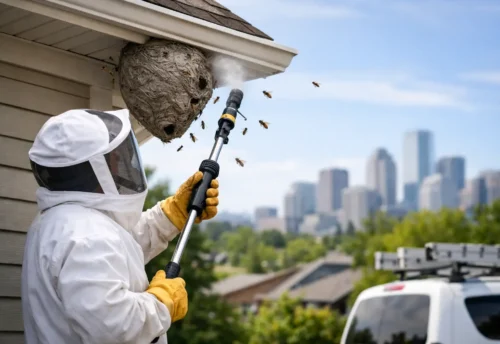
A proper wasp treatment starts with locating the nest and identifying the access point. For an exposed nest, removal may be straightforward. For nests in siding, soffits, wall cavities, roof areas, or underground spaces, treatment has to be more targeted. The goal is to treat the colony at its source while minimizing disruption to the property.
A technician will assess the nest location, level of activity, nearby people and pets, and the construction of the affected area. This matters because a nest near a front door needs a different plan than one inside a second-story wall. In some cases, the exterior nest material can be removed after activity has stopped. In other cases, the primary focus is treating the colony and monitoring the area before any access point is repaired.
You should receive clear instructions about the treated area. Depending on the location and product used, residents, pets, staff, or customers may need to avoid the immediate area for a period of time. A reliable service will explain what to expect, including the possibility of seeing a small amount of remaining wasp activity shortly after treatment. Wasps that were away from the nest when treatment was applied may return before the activity fully stops.
For urgent situations, fast response matters. A nest by a daycare entrance, restaurant patio, rental property walkway, or family deck should not be left until the weekend if people are at risk of being stung. Discreet service in unmarked vehicles can also be helpful for businesses and property managers who want the issue handled professionally without creating unnecessary attention.
The Cost of Removal Depends on the Nest Location
Wasp removal is not one-size-fits-all. A small, accessible nest usually takes less time and equipment than a colony hidden inside a wall or high along a roofline. The number of nests, height of access, severity of activity, and whether follow-up work is needed can all affect the service cost.
The cheapest option is not always the best value if it only knocks down visible material and leaves the colony active. Ask whether the service addresses the source of the activity, what treatment is being used, and what guidance you will receive for preventing another nest. Affordable pest control should still be thorough, safe for people and pets when used as directed, and clear about the work being performed.
Keeping Wasps From Returning
No treatment can stop every wasp from passing through your yard, but simple maintenance can make your property less inviting for nesting. Early spring is the best time to check for small nests before colonies become established. Look under deck rails, eaves, porch ceilings, outdoor furniture, play structures, sheds, and around garage doors.
Keep garbage containers closed, clean up food and drink spills promptly, and avoid leaving pet food outside. Repair damaged screens, close gaps around vents and utility lines, and address loose siding or soffit sections where insects can enter. If you have a recurring issue in one area, there may be an opening or sheltered spot that needs attention after the nest has been treated.
For commercial properties, regular checks around dumpsters, loading areas, patios, and customer entrances can prevent a small issue from becoming a safety complaint. Property managers should also remind tenants not to seal or spray an active nest on their own, since that can complicate removal and increase the chance of indoor activity.
When to Act Right Away
Call for help promptly if wasps are entering your home through a wall, ceiling, fireplace area, or vent; if the nest is near a high-traffic area; or if someone has been stung and is showing signs of a severe reaction. Trouble breathing, swelling of the face or throat, dizziness, widespread hives, or fainting after a sting requires emergency medical attention.
For the nest itself, keep the area clear and let a trained professional assess it. Quick action protects more than your comfort outside. It helps keep a manageable pest problem from disrupting your home, tenants, employees, or customers when you need those spaces to feel safe.
Leave a Comment