
How to Eliminate Wasps Around a Deck
That first wasp circling the railing usually shows up right when you want to sit down outside. Then another appears near the grill, one ducks under the deck boards, and suddenly relaxing feels like work. If you need to eliminate wasps around a deck, the goal is not just to knock down what you see today. You need to remove what is attracting them, deal with any active nest safely, and make the area less appealing so they do not keep coming back.
Wasps around a deck are more than a nuisance. They can sting when disturbed, build nests in hard-to-see areas, and turn a backyard gathering into a stressful situation fast. For families with kids, pets, or anyone with sting sensitivity, this is one problem that should be handled quickly and carefully.
Why wasps gather around decks
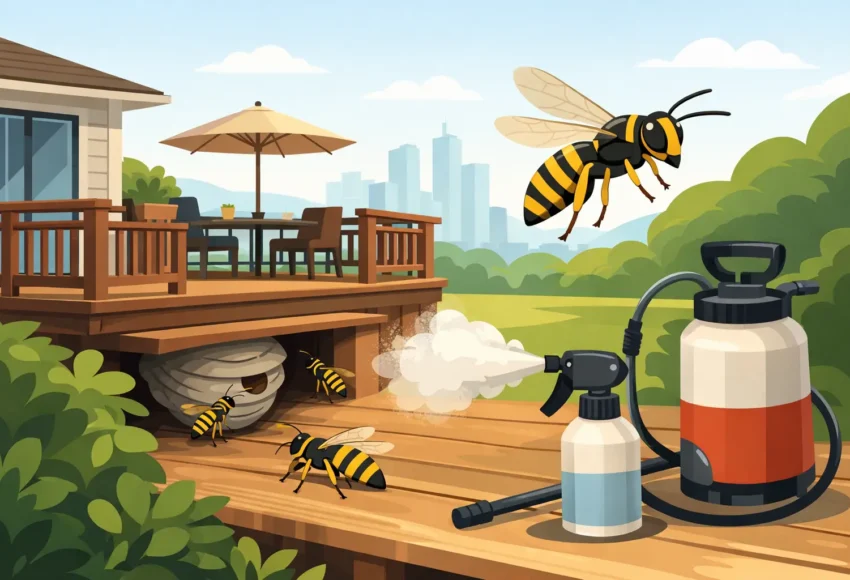
Decks give wasps exactly what they like – shelter, food, moisture, and quiet places to build. The underside of a deck is especially attractive because it is shaded, protected from wind and rain, and often left undisturbed for long periods. Railings, joists, light fixtures, furniture covers, and nearby eaves can all become nesting spots.
Food is another big reason they stay. Sweet drinks, fruit trays, barbecue sauces, and open garbage bins pull in worker wasps fast. If you have outdoor recycling with sticky cans or bottles, that can keep activity going even when the deck itself looks clean.
In some cases, what seems like random wasp traffic is actually a sign of a nearby nest in the ground, under the deck, inside a wall void, or in a soffit close to the seating area. That matters because surface spraying a few wasps will not solve the real issue.
How to eliminate wasps around deck areas safely
The safest approach depends on what kind of activity you are seeing. If you only notice the occasional wasp stopping by for food, prevention and cleanup may be enough. If you see repeated flight paths to one exact spot, or a visible cluster of wasps entering and exiting, that usually points to an active nest.
Start by watching from a distance during daylight. Do not swat, poke, or spray right away. You want to know whether the wasps are scavenging or defending a home base. If they are using one gap, beam, or corner over and over, treat that as a nest location until proven otherwise.
Next, remove attractants. Wipe down tables, railings, and outdoor furniture to clear sugary residue. Keep drinks covered. Clean the grill trays and grease catch. Move garbage and recycling farther from the deck if possible, and make sure lids close tightly. Fallen fruit from nearby trees should be picked up quickly.
If the wasp activity drops off after cleanup, you may have caught the problem early. If it continues, the nest is likely nearby.
When a DIY approach can work
Small, fully visible early-stage nests can sometimes be handled without major risk, but only if they are easy to access and there is low wasp traffic. Even then, caution matters. Wasps become much more aggressive when they feel their nest is under attack.
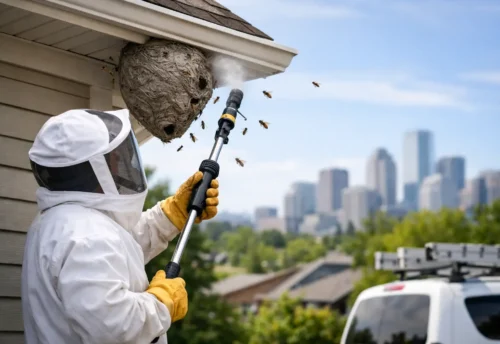
If you are considering a store-bought wasp spray, read the label carefully and use it exactly as directed. Treatment is generally less risky at dawn or dusk when wasps are less active, but less active does not mean harmless. You should wear long sleeves, long pants, closed shoes, gloves, and eye protection. Keep children and pets inside and away from the area.
Never stand on a ladder while treating a wasp nest. Never seal the entry hole before the colony is eliminated. And never try to remove a nest bare-handed, even if it looks inactive. These are the kinds of mistakes that turn a manageable problem into an emergency.
DIY is usually not the right call if the nest is under the deck, inside a wall, attached high above the deck line, or if there are many wasps present. The same goes for ground nests near stairs, patios, or play areas.
Signs you should call a professional wasp removal service
There is a point where speed and safety matter more than saving a few dollars on a can of spray. If you need to eliminate wasps around deck spaces where people gather often, professional treatment is often the quickest path to real relief.
Call for help if you notice any of the following:
- Wasps entering a hole under the deck, siding, soffit, or wall
- Heavy wasp traffic during the day
- A nest you cannot reach safely
- Multiple nests on or near the property
- Ground wasps near walkways or steps
- Anyone in the home has a history of allergic reactions to stings
A trained technician can identify the nest type, treat the source directly, and reduce the chance of a repeat issue. That is especially important for hidden nests, because partial treatment often leaves the colony active. In busy communities like Georgina, Keswick, Sutton, and nearby York Region areas, wasp pressure can build quickly during peak season, especially around backyards, decks, sheds, and rooflines.
The spots homeowners miss most often
One reason wasps keep returning is that the nest is not always where people expect it to be. Homeowners often check the obvious upper corners and railings but miss the more sheltered zones. Under-deck framing is a common one. So are gaps where the deck meets the house, hollow metal posts, storage boxes, pergola beams, and the underside of stairs.
You may also have a nearby attractant that is easy to overlook. Pet food on a back step, standing water in planters, sticky recycling, and uncovered compost can all support ongoing activity. If you only treat the nest and leave these conditions in place, another queen may choose the same general area later.
Preventing wasps from coming back
Once you eliminate wasps around a deck, prevention becomes the next job. The good news is that small changes make a real difference.
Regular cleaning matters more than most people think. Wasps are efficient scavengers, and even a little sweetness or grease can keep them interested. During warm months, wipe surfaces often and avoid leaving food out longer than necessary.
It also helps to reduce nesting opportunities. Check for openings, cracks, and protected cavities around the deck structure. If there are gaps where wasps can enter framing voids or wall spaces, sealing those after treatment can discourage future nesting. Just make sure any active nest has already been professionally dealt with before closing entry points.
If your deck area has repeated wasp problems every summer, a seasonal inspection is worth it. Catching an early nest in spring is much easier than dealing with a mature colony in mid to late summer.
Safety around children and pets
Deck wasp problems feel more urgent when kids or pets use the area every day. In those situations, do not test whether the wasps are aggressive. Limit access to the deck until you know where they are coming from and whether a nest is present.
Dogs are especially at risk because they investigate corners, gaps, and ground holes with their noses. Young children may swat at flying insects or lean into a hidden nest without realizing it. If there is any doubt, keep everyone away from the area until the problem is resolved.
This is also why many property owners prefer treatment options that are effective but still mindful of people and pets. A dependable local service should be able to explain what is being used, where it is applied, and when the space is safe to use again.
Fast action prevents bigger problems
A small wasp issue rarely stays small for long during the active season. Colonies grow, foraging increases, and what starts as a few sightings can become daily disruption around meals, gatherings, or tenant use of outdoor space. For homeowners, landlords, and small business owners, quick action protects both comfort and safety.
If the activity around your deck is increasing, or if you suspect a hidden nest, it is smart to bring in a professional wasp removal service instead of waiting for someone to get stung. Discount Pest Control handles urgent wasp issues with fast response, discreet service, and treatment options designed to be safe for families and pets when used properly.
A deck should be the place where you can sit down and relax, not scan every corner before stepping outside. The sooner you deal with wasps at the source, the sooner your outdoor space feels like yours again.

Leave a Comment