
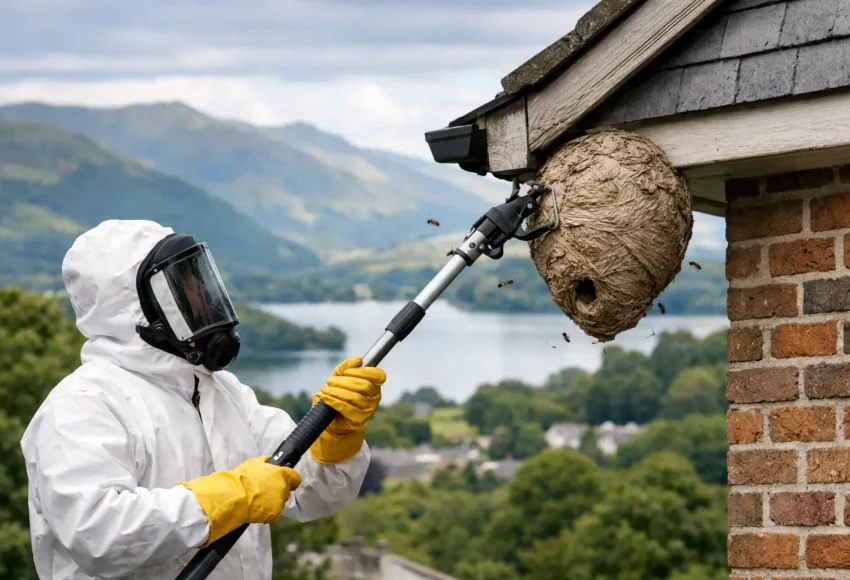
A Wasp Nest Removal Success Story in Keswick
The call came in on a warm Saturday morning, only hours before a Keswick family planned to host relatives for a backyard birthday party. What began as a few wasps near the deck had become a steady stream entering a gap under the aluminum siding. This wasp nest removal success story is a good reminder that a nest can grow quietly, then become an urgent problem the moment people, pets, food, and outdoor plans are nearby.
The homeowners had done the right thing. They kept everyone away from the area, brought their dog inside, and called for professional help rather than trying to knock down the nest themselves. By the end of the day, the activity was stopped, the entry point had been addressed, and the family was able to use its backyard with far more confidence.
The Problem Was Hidden Behind the Siding
At first, the homeowners assumed the wasps were gathering around a nearby garbage bin. But they noticed something more concerning: the insects were flying in and out of the same narrow opening beside the deck, especially during the afternoon. They also heard a faint buzzing sound from the wall when standing close to that section of the house.
This is a common situation with yellowjackets and other social wasps. Instead of building a visible paper nest under an eave, they may use a protected void behind siding, inside a soffit, beneath a porch, or in the ground. The nest is out of sight, but the colony is active. Blocking the entrance without treating the nest can make the situation worse, since trapped wasps may look for another path into the home.
The family had young children and a dog that regularly played near the deck. They also had guests arriving later that afternoon. Waiting another week was not a comfortable option, but neither was taking a risk with a store-bought spray while the nest was hidden inside the exterior wall.
A Fast Assessment Made the Difference
A technician arrived, assessed the wasp flight pattern from a safe distance, and confirmed that the insects were entering through a gap behind the siding. The goal was not simply to make the visible wasps disappear. The job required treating the colony at its source while limiting disruption around the family’s outdoor living space.
The technician explained what would happen, where people and pets needed to stay during the service, and what level of activity the homeowners could expect afterward. Clear communication matters in a situation like this. A few wasps may still be visible for a short time after treatment, particularly when workers return to the entrance, but that does not mean the treatment failed.
Because the nest was in a concealed location, removal was handled with the right equipment and treatment approach for the structure. This is where professional service has an advantage. The method needs to fit the nest location, wasp species, building materials, and the amount of activity around the area. A treatment that is appropriate for an exposed nest under a shed roof may not be appropriate for a colony inside a wall void.
Safety Came Before the Backyard Party
The family’s biggest concern was simple: could the kids, guests, and dog safely use the yard later that day? The answer depended on the treatment area and the level of wasp activity after service. They were given practical instructions to avoid the nest entrance, keep the dog away from the deck perimeter, and postpone setting up food or decorations beside that wall.
The technician also advised them not to seal the opening immediately. Once the activity had dropped and the treatment had time to work, the gap could be properly sealed to discourage future nesting. This step is easy to overlook. Wasps are attracted to sheltered gaps, and an unsealed entry point can invite another colony in a later season.
By the afternoon, traffic at the opening had slowed dramatically. The family moved the party setup to the opposite side of the yard as an extra precaution, and the celebration went ahead. It was not the kind of weekend problem anyone wants, but it did not have to cancel their plans or turn into a painful sting incident.
What Made This Wasp Nest Removal Success Story Work
This result was not about luck. It came down to acting early, recognizing the warning signs, and avoiding the mistakes that often escalate a wasp problem.
The homeowners did not disturb the nest. They did not spray into an unknown opening and hope for the best. They did not tape over the entry hole while the colony was still active. Instead, they created distance, kept children and pets away, and requested prompt help.
Fast action also mattered because wasp colonies become more defensive when their nest is threatened. Late summer can be especially challenging, as colonies are larger and food sources are more competitive. A nest that seemed manageable in June may be far more active by August.
For property managers and business owners, the same principle applies. Wasps near a loading area, patio, entrance, playground, dumpster, or customer seating area should be handled quickly. The risk is not only stings. Visible wasp activity can make tenants, customers, and staff feel unsafe, and it can disrupt normal operations.
Signs You Should Call for Wasp Removal
You do not need to see an entire nest to have a legitimate concern. Repeated wasp traffic to one specific spot is often the clearest sign of a hidden colony. Pay attention if you see insects entering cracks in siding, holes in the ground, roof edges, vents, deck framing, or the underside of a shed.
An occasional wasp around flowers or food is normal during warm weather. A steady pattern of wasps flying the same route is different. So is an increase in activity near doors, windows, outdoor trash, or children’s play areas.
It is also time to call if anyone in the household has a known allergy to stings. In that situation, avoiding the area and arranging professional removal promptly is the safer choice. Do not wait to see whether the nest gets bigger.
Why DIY Wasp Removal Can Go Wrong
Do-it-yourself products can sometimes work on a small, fully exposed nest when conditions are safe and the user can keep a clear exit path. But that is not the situation many homeowners are facing. Hidden nests, large colonies, elevated nests, and nests near doors or enclosed spaces require more caution.
Spraying a nest from too close can provoke a defensive swarm. Treating at the wrong time of day can also expose the person applying the product to more active wasps. If a nest is inside a wall or roof space, an incomplete treatment can leave activity behind the structure and create a frustrating recurring problem.
There is also a trade-off between speed and certainty. A homeowner may save money upfront with a can of spray, but a failed attempt can lead to multiple stings, property damage from accessing the nest, or a larger service issue later. Professional wasp removal is about reducing those risks and resolving the source of the problem properly.
A Clear Plan for the Next Nest
If you notice a possible nest, keep your distance and watch from indoors or several yards away to identify where the wasps are entering. Keep pets and children away from the area, especially if the nest is near the ground, a deck, or a doorway. Avoid swatting at wasps or using water to knock down a nest, as both actions can trigger an aggressive response.
For homeowners in Keswick and nearby York Region communities, Discount Pest Control provides fast, discreet wasp removal for nests around homes, rental properties, and businesses. The focus is straightforward: assess the problem, treat it safely, and help you get back to using your space.
A wasp nest does not have to take over your weekend. The best outcome often starts with one calm decision: give the nest space, protect the people around it, and get the right help before the problem grows.
Leave a Comment