
How to Stop Mice Entering House for Good
A mouse does not need an open door to get inside. It can squeeze through gaps around pipes, damaged weather stripping, foundation cracks, and openings as small as a dime. To stop mice entering house, the priority is simple: remove the easy way in, the easy meal, and the quiet place to nest.
That matters especially when temperatures drop in Ontario. Mice are looking for warmth and food, not just shelter. Once indoors, they can contaminate pantry items, chew wiring and insulation, leave droppings in cupboards, and reproduce faster than most homeowners expect. A few sensible prevention steps can make a real difference, but active signs of mice call for fast action.
Find the openings mice use to enter
Start outside, working slowly around the entire building. Mice usually enter at ground level, but do not ignore rooflines, garage doors, utility connections, and areas where decks meet the home. Look for gaps around air-conditioning lines, plumbing pipes, electrical cables, dryer vents, and gas meters.
Pay close attention to the foundation. Cracks in concrete, loose mortar, gaps under siding, and spaces where brick or stone meets a porch can all become entry points. A garage is another common weak spot. If light is visible beneath the garage door or side door, a mouse may be able to get through.
Indoors, check behind the stove and refrigerator, below sinks, around the furnace room, and in unfinished basements. Small black droppings, shredded paper or insulation, greasy rub marks along walls, and a persistent musty smell are clues that mice may already be using the area.
Seal gaps with materials mice cannot chew
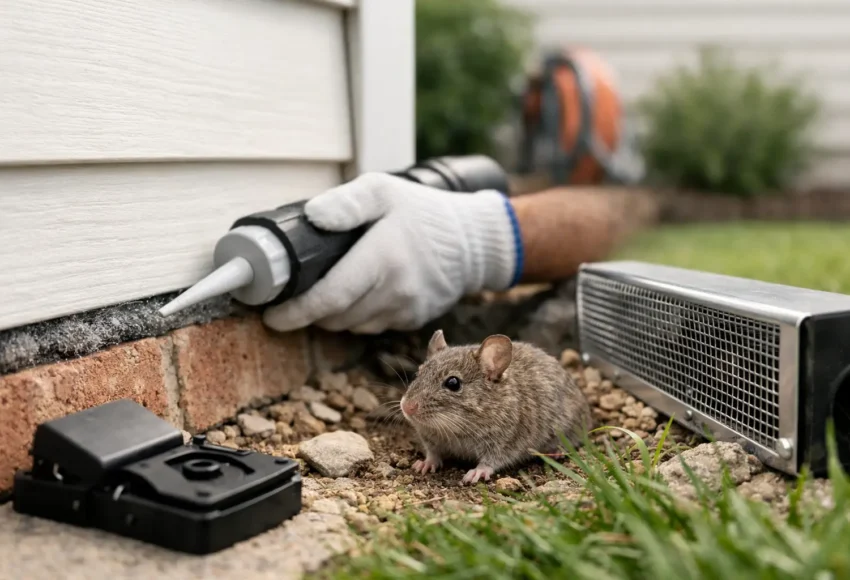
Foam alone is not a reliable mouse barrier. Mice can chew through many expanding foams, wood fillers, plastic vent covers, and thin rubber materials. For small openings, use copper mesh or stainless steel wool packed firmly into the gap, then finish it with a durable exterior-grade sealant.
Larger holes need a more permanent repair. Sheet metal, hardware cloth, mortar, or cement may be the right choice depending on the surface. Replace torn screens and damaged door sweeps, and make sure exterior doors close tightly. Vents need airflow, so cover them with properly sized metal screening rather than blocking them completely.
Do not seal a suspected active entry point without checking for signs of mice inside. If mice are already in walls or an attic, trapping and removal should happen before every opening is closed. Otherwise, you could leave rodents trapped indoors, where they may chew their way into another part of the home.
Remove the food sources that keep mice around
A clean-looking kitchen can still provide enough food for a mouse. Crumbs under appliances, pet food left overnight, an unsealed bag of birdseed in the garage, or a loosely closed garbage container can keep rodents returning.
Store dry food in hard-sided containers with tight-fitting lids. This includes cereal, flour, rice, snacks, pet food, and birdseed. Wipe counters after preparing meals, sweep beneath appliances when possible, and avoid leaving dirty dishes in the sink overnight. For homes with pets, pick up food bowls after feeding rather than allowing food to sit out all day.
Garbage also deserves attention. Use bins with secure lids indoors and outdoors, and keep recycling reasonably clean. A sticky jar or food-coated takeout container may not seem like much, but mice need very little to survive.
Water is equally useful to them. Repair dripping pipes, check for moisture below sinks, and address condensation around basement plumbing. In a dry home, a small leak can become a dependable water source.
Make the outside less inviting
Mice often live near a structure before they get into it. The goal is not to create a bare yard. It is to reduce sheltered pathways and food sources close to the building.
Keep grass trimmed and pull dense vegetation back from the foundation. Stacked firewood, lumber, old planters, boxes, and stored equipment should be kept off the ground and away from the house when possible. These areas provide cover from predators and make it easier for mice to move unnoticed toward entry points.
Tree branches should not rest against the roof or siding. While mice are more likely to enter near the ground, branches and vines can give them access to upper gaps, eaves, and attic vents. Secure compost containers, clean up fallen fruit, and avoid leaving birdseed scattered near the home.
For property managers and small business owners, the same principle applies to dumpster areas, storage sheds, loading doors, and staff break areas. A single poorly sealed service door or food waste bin can create a recurring rodent issue for an entire property.
Use traps carefully if mice are already inside
Prevention is best, but traps can help when you have seen droppings or heard scratching in walls or ceilings. Snap traps are generally effective when placed correctly. Set them along walls, behind appliances, inside cabinets, or beside suspected travel routes, with the trigger end facing the wall.
Use a small amount of bait such as peanut butter. More bait is not necessarily better. The goal is to encourage the mouse to interact with the trigger, not give it a full meal. Check traps daily and wear gloves when handling dead rodents or contaminated materials.
Avoid placing traps where children or pets can reach them. Enclosed trap stations can be a safer option in some homes. Glue boards are generally not a good choice because they create unnecessary distress and can catch non-target animals.
Rodent poison is not a simple fix. It can create risks for children, pets, and wildlife if used incorrectly. A poisoned mouse may also die inside a wall, ceiling, or inaccessible area, causing odor and cleanup issues. For most households, targeted trapping combined with exclusion is the more controlled approach.
Clean droppings without spreading contamination
Do not sweep or vacuum dry mouse droppings. That can stir contaminated particles into the air. Instead, ventilate the area first, keep children and pets away, and wear disposable gloves.
Spray droppings, nesting material, and nearby surfaces with a household disinfectant until thoroughly wet. Let it sit briefly, then wipe everything up with paper towels and place the waste in a sealed bag before disposing of it. Wash your hands carefully after removing gloves.
If droppings are widespread in an attic, crawlspace, duct area, or commercial storage space, professional cleanup may be safer and more practical. Large infestations often involve hidden contamination that is easy to miss during a quick surface clean.
Know when a mouse problem needs professional help
One mouse can be an isolated visitor, but repeated droppings, noises at night, gnawed food packages, or sightings during the day usually mean there is more activity than you can see. Mice breed quickly, and a small issue can become a larger one within weeks.
Professional rodent control is particularly helpful when the entry point cannot be found, mice are in walls or ceilings, trapping has not worked, or the property has vulnerable residents, pets, tenants, or customers. A proper inspection identifies access points, nesting zones, food sources, and the treatment method that fits the situation.
For homeowners and businesses in Georgina, Keswick, Sutton, Jackson Point, Mount Albert, Pefferlaw, Bolton, and Caledon, Discount Pest Control provides fast, discreet rodent control with safe treatment options. An unmarked vehicle can be especially reassuring for rental properties, restaurants, offices, and anyone who would rather handle the problem privately.
The best time to act is when you notice the first clue, not when you start seeing mice in multiple rooms. Seal the gaps you can find, remove what attracts them, and get help promptly if activity continues. A home that is difficult to enter and offers little food is one mice are much more likely to leave alone.


Leave a Comment