
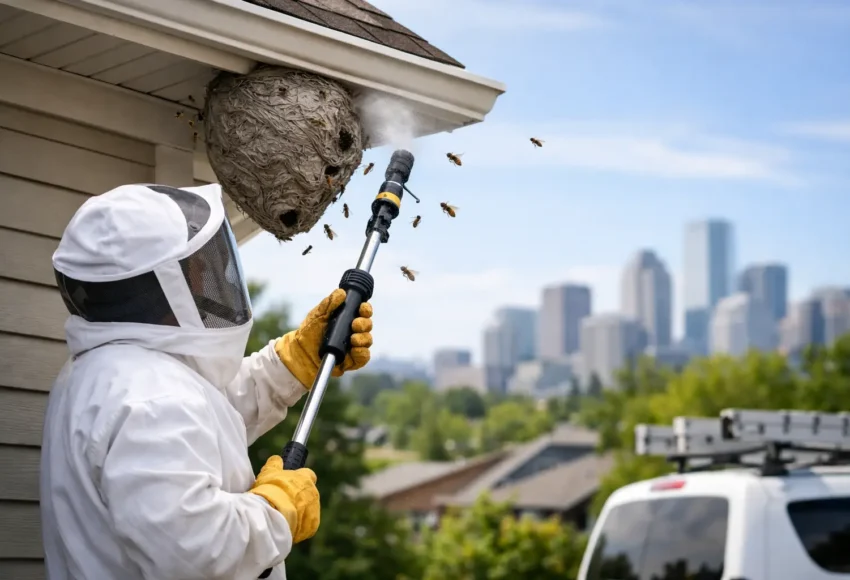
Hornet Nest Removal Service for Fast Safe Help
A hornet nest near a front door, deck, roofline, or work entrance can turn an ordinary day into a safety concern fast. A professional hornet nest removal service gives you a clear, safe way to deal with active stinging insects without putting your family, pets, tenants, customers, or staff at unnecessary risk.
Hornets and other large wasps are defensive around their nest. One person attempting to spray, knock down, burn, or block a nest can trigger a group response in seconds. The right response is not panic. Keep people away from the area, avoid disturbing the nest, and arrange prompt professional treatment.
When a Hornet Nest Needs Professional Removal
Not every flying insect around your yard means there is a hornet nest. Bees may visit flowers, and solitary wasps can move through an area without building a colony nearby. The concern rises when you see repeated insect traffic entering one point in a wall, soffit, attic vent, shed, tree, deck, or ground opening.
A visible paper-like nest is a strong sign of a social wasp or hornet colony. These nests can grow quickly through the warmer months, with more workers protecting the queen and nest. What began as occasional activity can become a serious problem once the colony is established near a walkway, play area, outdoor dining space, or building entrance.
Professional removal is especially urgent when the nest is close to children, pets, elderly residents, or anyone with a known sting allergy. It is also a priority for rental properties and businesses, where a sting incident can affect visitors, employees, tenants, and day-to-day operations.
Do Not Assume a Small Nest Is Harmless
A small nest may contain fewer insects than a large one, but the location matters as much as the size. A nest above a garage door can become risky every time the door opens. One inside a wall cavity may go unnoticed until insects enter the living space through a gap around a light fixture, window, or vent.
It is also easy to misidentify stinging insects from a distance. Many people use “hornet” to describe several types of large wasps. A trained technician can assess the activity, nesting location, access points, and safest treatment method rather than relying on a guess.
Why DIY Hornet Nest Removal Can Make Things Worse
Store-bought sprays may seem like the quickest answer, but they often create a more dangerous situation. The person applying the product must get close to the nest, usually with limited protection and no reliable plan for retreat. If treatment does not reach the colony effectively, surviving insects may become highly active and defensive.
Knocking a nest down is even riskier. Hornets can sting more than once, and they may follow movement when defending their colony. Using a hose, smoke, fire, or makeshift covering is not a safe alternative. These methods can spread insects into concealed spaces, cause property damage, or leave the nest active.
Sealing an entry hole before the colony has been treated can also backfire. If the nest is inside a wall, the insects may search for another way out – sometimes into the home or business. The goal is to treat the colony first, confirm activity has stopped, and then address access points where appropriate.
What a Hornet Nest Removal Service Should Include
Fast removal should still be careful removal. An effective service begins by identifying where insects are entering, how active the nest is, and whether it is exposed or hidden in a structural void. Treatment decisions depend on the nest location, the species involved, weather conditions, and who uses the area nearby.
For an exposed nest, the technician can apply a targeted treatment designed to control the colony while limiting unnecessary exposure around the property. For nests in walls, soffits, attics, or other enclosed spaces, the approach may require treating the entry point and allowing the product to reach the colony safely.
After treatment, activity should be monitored long enough to confirm the colony is no longer active. In some situations, removing the nest material is appropriate. In others, particularly where the nest is inaccessible inside a wall, removal may not be necessary once the colony has been eliminated. A good technician will explain the trade-off clearly rather than recommending extra work that does not improve the result.
At Discount Pest Control, the focus is fast, reliable, and effective relief with treatments selected for the property and the problem. Customers who value privacy can also request discreet service in an unmarked vehicle.
Safety Around Children and Pets
Before service, keep children and pets indoors or away from the treatment area. If the nest is near a gate, doorway, garbage area, or backyard path, choose another route until the technician advises that normal use can resume.
After treatment, follow the instructions provided for your specific situation. The waiting period can vary depending on nest placement and the treatment method. You may still see some insect activity immediately afterward as returning workers encounter the treated area. That does not always mean the service has failed.
What to Do While You Wait for Help
The safest short-term solution is simple: give the nest space. Tell family members, tenants, staff, and visitors not to approach it. If possible, close off the immediate area using an obvious barrier or sign, but do not place anything directly over the nest or its entrance.
You should seek urgent assistance when a nest is located in a high-traffic area, insects are getting inside, or someone has had a severe reaction to a sting. Call emergency medical services right away if a person has trouble breathing, swelling of the face or throat, dizziness, widespread hives, or signs of anaphylaxis after being stung.
Avoid mowing, trimming branches, pressure washing, or doing roof work close to an active nest. Vibrations and sudden movement can disturb the colony. If you own a commercial property, alert staff and temporarily redirect customers rather than hoping the insects will move on by themselves.
Preventing Another Nest Next Season
No company can promise that a wasp or hornet will never appear near a property again. Outdoor conditions change, and nesting queens look for sheltered locations each spring. Still, a few practical steps can make your property less inviting and help catch activity before a colony gets large.
Walk around the exterior of your home or building in spring and early summer. Look beneath eaves, decks, sheds, outdoor furniture, play structures, and dense shrubs. Watch for repeated insect movement around vents, roof edges, siding gaps, and utility openings.
Keep garbage and recycling containers closed, clean up spills around outdoor eating areas, and repair damaged screens or loose exterior trim. These actions will not eliminate all stinging insects, but they reduce food sources and help limit easy routes into structures.
For landlords and property managers, encourage tenants to report visible nests early. Early reporting is safer, usually simpler to manage, and helps prevent a small outdoor issue from becoming a complaint that affects multiple units.
Fast Help for Nests Near Homes and Businesses
A hornet problem does not need to become a risky do-it-yourself project. Whether the nest is under an eave in Keswick, beside a shed in Sutton, or near a business entrance, prompt professional help can protect people while addressing the colony at its source.
If you have noticed steady hornet activity around one location, keep your distance and request an inspection or quote as soon as possible. Quick action gives you the best chance to restore safe use of your property before the nest becomes larger, more active, and harder to ignore.


Leave a Comment