
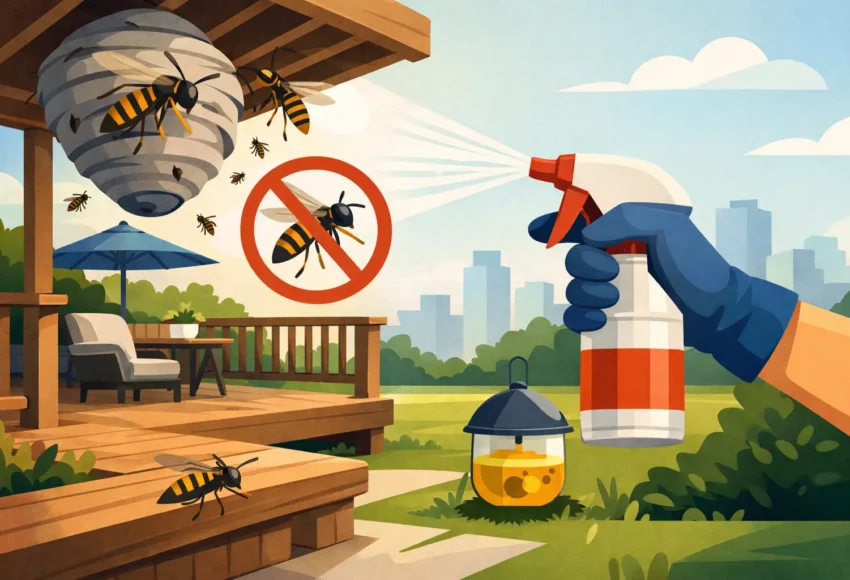
How to Eliminate Wasps Around Your Deck
One afternoon meal outside is usually all it takes – a few wasps start circling the railing, one lands near a drink, and suddenly nobody wants to sit on the deck. If you need to eliminate wasps around deck spaces, the fastest path is to stop what is attracting them, deal with any nearby nest safely, and make the area less appealing going forward.
That sounds simple, but wasps are stubborn for a reason. Decks give them almost everything they want during warm weather: shelter under railings and steps, dry corners for nesting, and easy access to sweet drinks, food scraps, and nearby gardens. If the problem has been building for a few weeks, there may be more than one factor involved.
Why wasps keep showing up around decks
Most homeowners assume the deck itself is the issue. Usually, it is the combination of food, scent, and shelter. Wasps are drawn to protein earlier in the season and sugary foods later in summer, which is why they seem especially aggressive during August and early fall.
A deck creates hiding spots that people rarely inspect closely. The underside of stairs, the inside of hollow posts, gaps in joists, storage boxes, barbecue covers, and even patio furniture can all give wasps a protected area to build. If your deck is near garbage bins, compost, fallen fruit, or flower beds, that adds another reason for them to stay.
In Ontario communities with lots of yards, trees, sheds, and waterfront areas, wasps also move easily from one property to the next. So if your space is attracting them, it may not mean your property is dirty. It usually means your deck is convenient.
How to eliminate wasps around deck areas safely
Start with the least risky step: remove the reasons they are visiting. Wipe down tables and railings, rinse sticky drink spills, and keep food covered whenever you are outside. If you have recycling or garbage near the deck, make sure lids close tightly and containers are cleaned regularly.
Next, inspect the area carefully during the daytime, but do not get too close. Watch where the wasps fly. If several are repeatedly entering the same hole, crack, or sheltered corner, there is a good chance a nest is active nearby. Common trouble spots include under deck boards, beneath stairs, under eaves near the deck, and inside wall voids connected to the patio area.
If you do not see a nest and only notice occasional wasps, reducing attractants may be enough. Remove standing water, trim back overgrown shrubs touching the deck, and store sweet beverages indoors until you are ready to use them. Even pet food left outside can keep wasps returning.
If you do find a nest, that is where the situation changes. Trying to knock it down, spray it casually, or seal the opening before the colony is gone can make the problem worse. Agitated wasps defend their nest fast, and on a deck there is often very little room to retreat.
What works fast and what usually fails
People often try a mix of DIY tricks first, and some are more useful than others. Cleaning, removing food sources, and sealing entry points after the nest is eliminated can absolutely help. But fake nests, strong-smelling home remedies, and random store-bought sprays tend to give mixed results at best.
Traps can reduce activity, but they rarely solve a nest problem by themselves. They are more helpful for lowering the number of foraging wasps than for eliminating the source. If the nest is under your deck or inside a structural void, traps may catch some workers while the colony keeps growing.
Sprays are where homeowners get into trouble. The product may not reach the nest core, especially if the colony is hidden in a cavity. You may also end up driving wasps deeper into the structure or scattering them temporarily without actually removing the nest. And if children, pets, or guests use the deck, any treatment needs to be handled with care.
There is also a timing issue. A nest found early in the season is usually easier to manage than one discovered in late summer when activity is at its peak. By that point, what looks like a small problem during dinner can turn into a serious hazard during yard work or when tenants use the outdoor space.
Signs your deck has an active nest nearby
Sometimes the nest is obvious. Other times, you only notice the pattern. If wasps seem to appear from below the deck boards, gather under the railing, or hover in one section of the deck more than others, there is often a nest hidden close by.
You may also hear faint buzzing inside a wall, post, or enclosed step area. Another common sign is seeing wasps carrying material or food back to the same location. One or two wasps passing through the yard is not unusual. A steady stream near the deck is different.
For property managers and small business owners, recurring complaints from tenants or customers about one outdoor seating area are worth taking seriously. Wasps do not just create discomfort – they can become a liability if someone is stung.
When professional wasp removal is the better call
If the nest is attached to or hidden in the deck, close to an entrance, or in an area where people and pets regularly pass, professional removal is usually the safest option. The same goes for large nests, repeated wasp activity after DIY treatment, or situations where someone on the property has an allergy to stings.
A professional can identify whether you are dealing with paper wasps, yellowjackets, or another species, which matters because nesting behavior and treatment approach can differ. More importantly, the nest can be treated completely rather than just disturbed.
For homeowners in places like Georgina, Keswick, Sutton, Jackson Point, Mount Albert, Pefferlaw, Bolton, and Caledon, deck and yard activity ramps up quickly in the warmer months. That means a wasp problem often needs attention right away, not after another weekend of avoiding the backyard.
If you need help, Discount Pest Control handles wasp issues with fast response, safe treatment options, and discreet service. That matters when the goal is to get your outdoor space back without creating a bigger scene.
How to keep wasps from coming back to the deck
Once the immediate problem is gone, prevention matters. Wasps are opportunistic, so you do not need a perfect property – just a less inviting one. Keep the deck clean, especially after meals, and avoid letting sugary residue build up on furniture, railings, and outdoor cushions.
Check the underside of the deck and attached structures every couple of weeks in spring and early summer. Small starter nests are much easier to deal with than mature colonies. Pay attention to overhangs, corners, and sheltered cavities where queens may begin nesting.
It also helps to repair loose boards, seal gaps where practical, and reduce clutter stored under the deck. Firewood piles, unused planters, tarps, and storage bins can all create quiet sheltered spots. If your barbecue area is nearby, clean grease trays and food drips regularly.
Lighting can play a smaller role too. Wasps are not drawn to light in the same way as some insects, but nighttime food and drink setups around the deck can extend the buffet. If you entertain outdoors often, get into the habit of cleaning up right after.
A quick word on safety around kids and pets
If children play on or around the deck, treat any wasp activity as more urgent than it might seem. Kids often do not notice warning signs, and pets may paw at nest areas or snap at flying insects. Even a small nest under a stair can become dangerous if it is disturbed accidentally.
Until the issue is resolved, keep everyone away from the problem zone. Do not let kids investigate entry holes or toss water at a nest. That may sound obvious, but it happens more often than people think when the nest is partly hidden.
The right approach is not always the most aggressive one. Sometimes the best way to eliminate wasps around deck areas is a careful mix of cleanup, inspection, and professional nest removal when the risk is high. Getting ahead of it early can mean the difference between enjoying your deck and avoiding it for the rest of the season.
If wasps are claiming your outdoor space, deal with it before the next warm evening turns into another stressful one.


Leave a Comment