
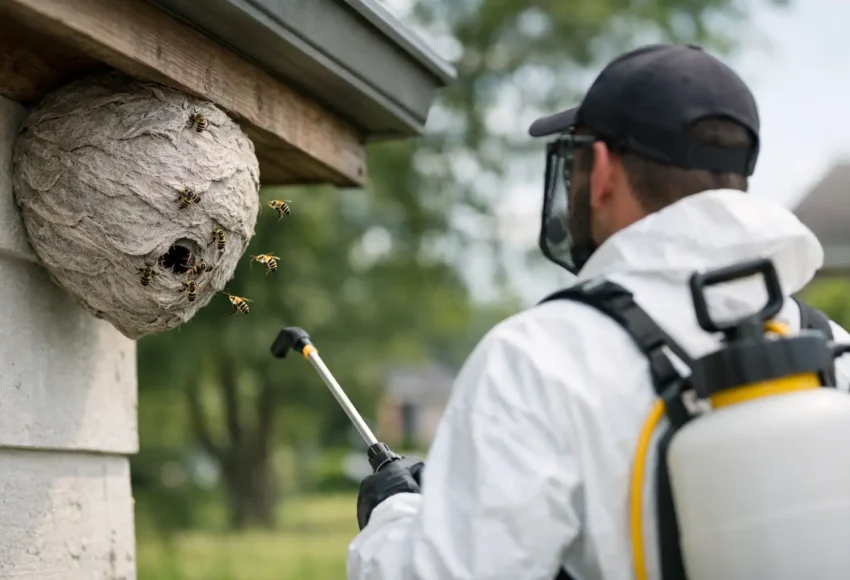
When Should Wasp Nests Be Removed Safely?
A wasp nest above the front door, under a deck, or near a business entrance can turn a normal day into a safety concern fast. If you are wondering when should wasp nests be removed, the short answer is: as soon as the nest creates a risk to people, pets, tenants, customers, or regular activity around the property. Waiting can allow the colony to grow, make removal more difficult, and increase the chance of painful stings.
Not every wasp you see means there is an urgent emergency. But a visible nest near high-traffic areas deserves prompt attention. The safest choice is usually professional removal, especially when the nest is active, hard to reach, or located inside a wall, attic, shed, or roofline.
When Should Wasp Nests Be Removed?
The best time to remove a nest depends on where it is, how active it is, and who could come into contact with it. In Ontario, wasps become more active as temperatures rise in late spring and summer. A small nest spotted early in the season is usually far easier and safer to deal with than a large colony discovered in August.
Removal should be arranged right away if the nest is close to a doorway, patio, pool, playground, garbage area, mailbox, deck, or outdoor eating space. It should also be treated as urgent if someone in the home or workplace has a known allergy to insect stings. Even one sting can cause a serious reaction for an allergic person.
For rental properties and commercial locations, do not wait for a tenant or customer to get stung before acting. A nest outside a store entrance, near a loading area, or around a restaurant patio can quickly become a liability and disrupt business.
Early Season: The Easiest Time to Act
In spring and early summer, a queen begins building a small paper nest and raising the first worker wasps. At this point, the nest may be no larger than a golf ball or small orange. Removing it early can prevent a much larger infestation later in the season.
This is the time to pay attention to repeated wasp activity around soffits, roof edges, decks, sheds, vents, and cracks in exterior walls. Seeing one or two wasps entering the same opening over and over may mean a nest is forming inside a hidden space.
Small does not automatically mean safe to remove yourself. A nest near your face, on a ladder-access area, inside a wall, or around children and pets should still be handled by a trained technician.
Mid to Late Summer: Do Not Delay
By mid and late summer, colonies can contain dozens or hundreds of wasps. They become especially protective when someone gets close to their nest, vibrates the surface they are attached to, or blocks their flight path. This is when homeowners often get stung while mowing the lawn, opening a shed, trimming hedges, or working near a deck.
A large nest needs professional treatment as soon as possible. Spraying it with a store-bought product may not reach the entire colony, particularly when the nest is concealed in siding, a wall void, beneath a roof, or underground. It can also agitate the wasps and cause them to swarm.
Signs the Nest Needs Immediate Professional Removal
Some situations should not be treated as a weekend project. Call for help promptly when you notice repeated stings, heavy wasp traffic, a nest in an enclosed area, or wasps entering your home through a gap near a window, light fixture, vent, or ceiling.
The same applies if you hear buzzing behind a wall or see wasps gathering around an opening in brick, siding, or eaves. Closing that opening before the colony has been treated can drive wasps farther into the structure. They may find another route indoors, creating a much more stressful problem.
Be especially cautious with ground nests. Yellowjackets often nest in old rodent burrows, soil banks, landscaping, and spaces beneath decks. Because the entrance can be hard to see, people may accidentally step on or disturb it. These colonies can respond aggressively and sting multiple times.
Why You Should Not Wait Until Fall
People sometimes assume wasps will simply die off once colder weather arrives. While most worker wasps do die after the first hard frosts, waiting until fall is not always practical or safe. A nest beside a door or beneath a deck still poses a risk throughout the busiest part of wasp season.
Late-season wasps can also seem more persistent around food, sweet drinks, garbage bins, and outdoor gatherings. They are searching for sugar and protein sources as the colony changes. That makes patios, picnics, and commercial waste areas common trouble spots.
If a nest is far from your house and does not interfere with people or pets, monitoring it may be reasonable in limited cases. For example, a small nest high in a distant tree may not require immediate action. The trade-off is that its activity can change quickly, and a nest that seems harmless today may become a concern as the colony grows or people begin using that area more often.
What Not to Do Around an Active Wasp Nest
Do not knock down, burn, flood, or seal an active nest. These actions can provoke defensive behavior, spread the problem into the home, or create a fire and property-damage risk. Avoid hitting the nest with a broom, using a pressure washer, or attempting removal from a ladder.
It is also best not to use strong fragrances, bright floral clothing, or open food near an active nest. Keep children and pets away from the area, and let household members, employees, or tenants know where the nest is located. If the nest is near a walkway, restrict access until treatment is complete.
A single wasp flying nearby is not usually looking to attack. Swatting at it, however, can make it more likely to defend itself. Stay calm, move away slowly, and avoid sudden movements.
What Professional Wasp Removal Looks Like
Professional service starts by identifying the type of wasp, locating the nest, and checking for additional entry points or hidden activity. This matters because a visible nest is not always the only nest on the property. Treatment methods should match the nest location, colony size, and level of risk.
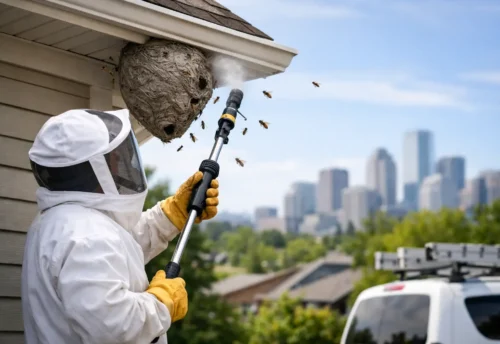
For nests in eaves, sheds, trees, wall voids, and ground areas, a technician can use targeted treatment designed to control the colony while limiting exposure for people and pets. Once the activity has stopped, the area can be assessed for safe nest removal and prevention steps.
At Discount Pest Control, the focus is on fast, discreet service and practical solutions for homes and businesses dealing with active wasp problems. If the nest is near an entrance, living space, tenant area, or customer-facing location, requesting help early is usually the most affordable way to prevent a larger issue.
Preventing New Wasp Nests Next Season
After removal, inspect the areas where wasps commonly build. Repair loose soffits and screens, seal nonessential exterior gaps, keep garbage containers closed, and clean up spilled drinks or food outdoors. Check sheds, deck undersides, roof edges, and outdoor play equipment in spring, when new nests are still small.
Avoid sealing a hole if you still see wasps using it. The colony must be treated first. Once the activity is gone, sealing the entry point can help reduce the chance of another queen choosing the same protected location next season.
A wasp nest rarely becomes less concerning by being ignored. If it is close to daily activity or anyone on the property could be stung, act early, keep clear of the area, and arrange safe removal before the colony has time to grow.
Leave a Comment