
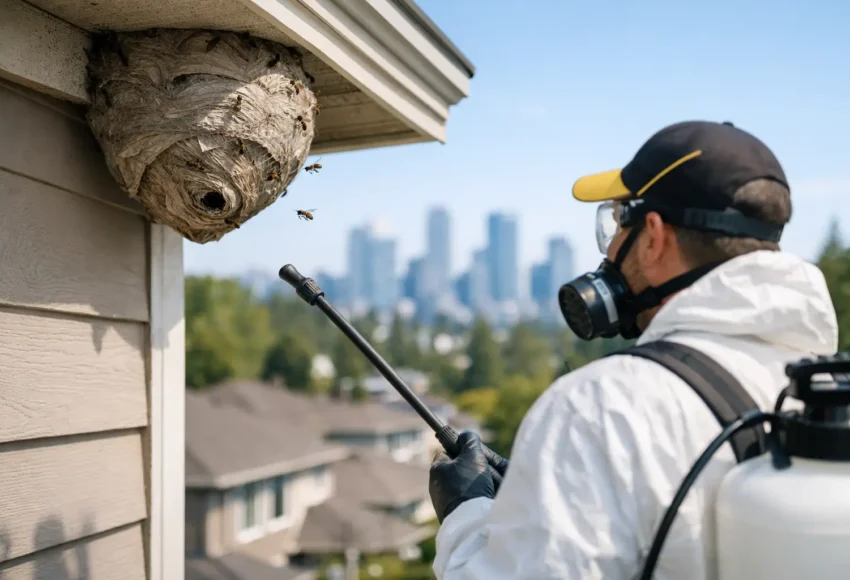
Wasp Nest Removal: When to Call Fast
That first wasp circling your deck is easy to ignore. The steady stream of them slipping under your soffit, around your shed, or into a wall opening is not. Wasp nest removal becomes urgent the moment regular outdoor activity starts changing – when kids avoid the yard, customers hesitate at an entrance, or you stop opening a garage door because you know what is waiting nearby.
If you are dealing with active wasps around your home or business, the safest move is to treat it as a real hazard, not a weekend chore. A nest can grow quickly, and the longer it stays in place, the more defensive the colony usually becomes.
Why wasp nest removal needs quick action
Wasps are not just annoying. They are protective of their nest and much more likely to sting when they feel disturbed. That matters if the nest is attached to a roofline, tucked into a play area, built near an air conditioner, or hidden close to an entry door where people pass every day.
For homeowners, the risk is usually personal safety and loss of use of the property. For property managers and business owners, there is another layer – tenant complaints, staff exposure, and the appearance of a visible pest problem near customers or visitors. In either case, waiting rarely makes the problem easier.
There is also the issue of location. A small exposed nest under an eave is one thing. A nest inside a wall cavity, attic edge, fence post, or roof vent is another. Hidden nests are often noticed only after activity becomes heavy, and by then the colony may already be well established.
Signs you may have a nest nearby
You do not need to see the full nest to know there is a problem. Repeated wasp traffic is often the clearest clue. If multiple wasps are flying the same path to one point on your property, they are usually returning to a nest.
Common warning signs include wasps entering a gap in siding, hovering around the same corner of the roof, clustering under decks, or appearing around garbage and outdoor eating areas in unusual numbers. Indoors, seeing wasps near a window or light fixture can sometimes mean a nest is inside a wall or attic space.
This is where people often make the mistake of treating the symptom instead of the source. Killing a few visible wasps does not solve the infestation if the nest remains active.
Can you remove a wasp nest yourself?
Sometimes people want to handle the problem on their own, especially if the nest looks small. That instinct is understandable. The trade-off is that size alone does not tell you how risky removal will be.
DIY wasp nest removal is most dangerous when the nest is elevated, partially hidden, or located in a confined area. Sprays from a hardware store can agitate the colony before the treatment fully works. If access is poor or the nest is inside a structure, you may end up driving wasps deeper into the space or spreading activity to a second exit point.
There is also timing. Wasps are generally less active at certain hours, but that does not make a nest safe to approach. One wrong step on a ladder, one blocked exit route, or one incomplete treatment can create a much bigger problem than the original nest.
For families with children, pets, seniors, or anyone with sting allergies, the risk usually outweighs any money saved by trying it alone.
When professional wasp nest removal is the safer choice
Professional service makes the most sense when the nest is active, hard to reach, inside a wall, near a high-traffic area, or large enough that you are seeing constant movement. It is also the right call if you are not completely certain whether you are dealing with wasps, hornets, or another stinging insect.
A proper treatment is not just about knocking down visible paper comb. It means identifying where the nest is, how the insects are entering and exiting, and whether there could be more than one colony on the property. In some cases, the main issue is not the obvious nest but a hidden one nearby.
That is why professional wasp nest removal tends to be faster, safer, and more reliable than trial-and-error methods. The goal is to stop activity at the source and reduce the chance of the problem coming back in the same area.
What to expect from wasp nest removal service
A good service visit should start with a clear inspection. The technician looks for nest placement, flight patterns, access points, and any surrounding conditions that make the area attractive to wasps. That can include roof gaps, sheltered overhangs, food waste, or quiet spaces around sheds and garages.
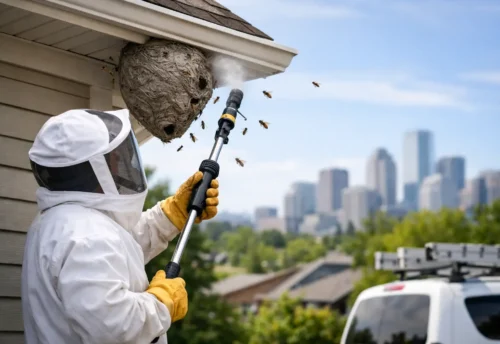
Treatment depends on the location and severity of the nest. Exposed nests are handled differently than nests behind siding or inside cavities. The right approach should focus on safety for people and pets while still being effective enough to eliminate active colonies.
For many customers, discretion matters too. If you are managing a rental property or operating a business, you may not want attention drawn to the issue. Fast response and professional handling help reduce disruption and get the space usable again sooner.
Wasp nest removal around homes and businesses
Residential and commercial situations are similar in one way: both need quick control. But the way the problem affects daily life is often different.
At home, wasps usually interfere with comfort and safety. Patios, backyards, porches, and children’s play areas can become off-limits. A nest near a front door can turn a simple trip outside into a stressful routine.
At a business, the concern is often exposure and reputation. Wasps around loading doors, dumpsters, signage, seating areas, or customer entrances can create complaints fast. Even one visible nest can make people assume there are broader sanitation or maintenance issues.
That is why many Ontario property owners look for service that is both fast and low-profile. They want the problem solved without adding more stress to the day.
How to lower the chance of another nest
No service can promise that wasps will never return to your property, because seasonal activity depends on weather and surrounding conditions. What you can do is make nesting spots less inviting.
Pay close attention to rooflines, soffits, vents, sheds, pergolas, and deck undersides in spring and early summer. Small starter nests are easier to address than mature colonies. Keep garbage sealed, clean outdoor eating areas promptly, and repair gaps where insects may be entering wall voids or attic edges.
If your property has had repeat activity in the same area, it is worth having that section checked more carefully. Recurring nests often point to a structural opening or sheltered zone that keeps attracting them year after year.
Wasp nest removal in York Region communities
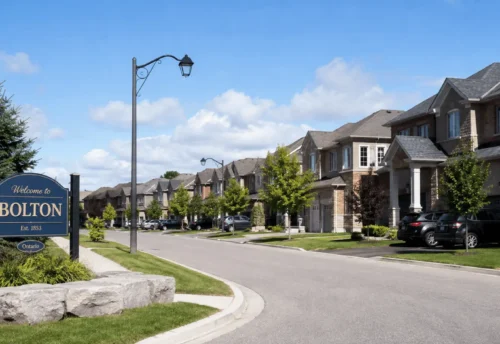
In places like Georgina, Keswick, Sutton, Jackson Point, Mount Albert, Pefferlaw, Bolton, and Caledon, wasp activity tends to spike when outdoor spaces are used the most. Cottages, decks, lake-area properties, shops, and family homes all have plenty of sheltered spots where nests can start unnoticed.
That local pattern matters because response time matters. If the nest is beside a doorway, above a garage, or near a business entrance, waiting several days can feel much longer than it sounds. Fast service is often the difference between a contained issue and a property everyone starts avoiding.
If you need help, Discount Pest Control handles wasp nest removal with the urgency most customers are looking for – quick response, safe treatment options, and professional service that does not create more disruption than the nest already has.
When not to wait another day
If someone on the property has a known sting allergy, if the nest is close to children or pets, or if wasps are entering the building itself, do not put it off. The same goes for nests attached to elevated areas that would require a ladder or roof access.
A lot of pest problems can be monitored for a short time before action is needed. Active wasp nests are usually not one of them. They tend to get worse before they get better, and they rarely solve themselves in a way that helps the people using the space.
If you are seeing repeated wasp activity, trust what your property is telling you. The sooner the nest is dealt with properly, the sooner your home or business starts feeling normal again.
Leave a Comment