
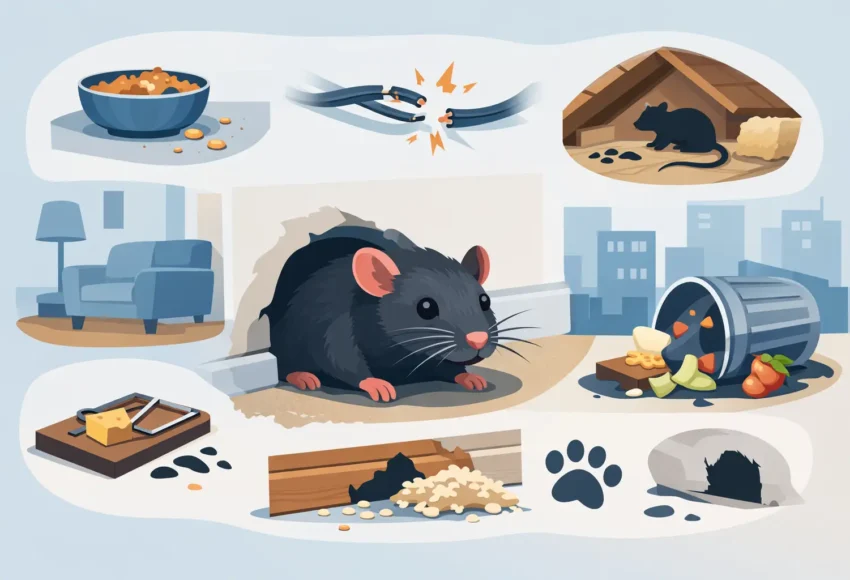
8 Signs of a Rat Infestation at Home
You usually do not see rats first. You hear something in the wall after midnight, notice a torn bag of pet food in the garage, or catch a strange odor that was not there last week. Those small changes are often the first signs of a rat infestation, and waiting too long can turn a manageable problem into a much bigger one.
Rats are not just unpleasant to deal with. They contaminate food, damage insulation, chew wiring, and create serious stress for families, tenants, and business owners. In homes and buildings across Ontario, they often settle in attics, basements, crawl spaces, garages, utility rooms, and behind walls where they can stay hidden while the activity grows.
If you are wondering whether what you are seeing is minor or urgent, here is what to watch for and why fast action matters.
The most common signs of a rat infestation
Some clues are obvious. Others are easy to dismiss until the problem gets worse. The key is not to look at one sign in isolation. If you notice two or three of these at the same time, there is a good chance rats are already active inside or around the property.
Droppings in hidden or food-related areas
Rat droppings are one of the clearest warning signs. They are usually dark, pellet-shaped, and larger than mouse droppings. You may find them along baseboards, under sinks, inside cabinets, near garbage bins, behind appliances, or in the attic.
Fresh droppings are dark and soft. Older droppings dry out and become crumbly. If you keep finding new droppings after cleaning, that usually means the rats are still active.
Scratching sounds in walls or ceilings
Many homeowners first suspect rats because of the noise. Scratching, scurrying, gnawing, or movement in the ceiling at night is common, especially because rats are most active after dark.
That said, noise alone does not confirm rats. Squirrels, mice, and other wildlife can also make sounds in walls or attics. The difference often comes down to the timing, location, and the presence of other evidence like droppings or chew marks.
Gnaw marks on wood, plastic, and wires
Rats constantly chew to wear down their teeth. That means they can leave damage on baseboards, boxes, food packaging, pipe insulation, door corners, and electrical wiring.
This is one of the most serious signs because wire damage can create a fire risk. If you notice fresh gnaw marks in utility spaces, storage areas, or near your electrical panel, it is best not to wait and see if it stops on its own.
Grease marks and dirty rub trails
Rats tend to follow the same paths along walls and edges. As they move, the oil and dirt in their fur can leave dark smear marks on surfaces they brush against repeatedly.
These marks are often found near holes, along foundation walls, around pipes, or beside entry points in basements and crawl spaces. They may look minor, but they often point to regular rodent traffic.
Nests made from shredded materials
Rats build nests from soft items they can gather quickly. That may include insulation, paper, fabric, cardboard, dryer lint, or torn upholstery stuffing. Nests are often tucked into secluded places such as attics, wall voids, behind stored boxes, or under appliances.
If you find a nest, the infestation is usually more established than people realize. Rats do not build a nest unless they have found a place where they feel secure.
Strong, musky odors
A rat infestation often has a distinct smell. It can be stale, musky, and unpleasant, especially in enclosed areas with poor airflow. The odor usually comes from urine, droppings, nesting material, and movement through the same areas over time.
In more advanced cases, the smell becomes stronger and more persistent. If a rat dies inside a wall or attic, the odor can become sharp and overwhelming for days.
Damaged food packaging or signs around pet food
Rats are drawn to easy food sources. Pantries, bird seed, livestock feed, and pet food stored in garages or basements are all common targets. You may notice ripped bags, chewed boxes, crumbs where there should not be any, or food pulled into hidden spaces.
This is especially common in colder months when rats push indoors looking for warmth and dependable food.
Burrows or activity outside the property
Not all infestations start indoors. Rats often nest outside first, then move into the structure when access is easy. Burrows in soil, especially near foundations, decks, sheds, garbage storage areas, or under concrete slabs, can be an early warning sign.
If you are seeing outdoor rat activity, it is worth checking the building for gaps around vents, utility lines, doors, and the roofline before the problem shifts inside.
Where rats usually hide
Rats prefer areas that are quiet, dark, and close to food or water. In homes, that often means attics, basements, crawl spaces, garages, laundry rooms, and wall cavities. In commercial spaces, they may hide near storage rooms, kitchens, dumpsters, and utility areas.
One of the reasons infestations grow quickly is that people rarely inspect these spaces closely. By the time rats are seen in the open, they have often been active for a while.
Why these signs should not be ignored
A lot of people hope the problem is temporary. Maybe one rat got in. Maybe the sound in the wall will stop. Unfortunately, rats do not usually leave on their own if they have found shelter, food, and water.
They reproduce quickly, and the damage adds up fast. Beyond contamination and property damage, there is also the issue of health and safety. Rats can spread bacteria through droppings and urine, and their presence can affect air quality in enclosed spaces like attics and basements. In rental properties and businesses, a rodent problem can also become a reputation issue if customers or tenants notice signs before the owner does.
What to do if you notice signs of a rat infestation
Start by avoiding direct contact with droppings, nesting material, or dead rodents. Do not sweep or vacuum dry droppings, since that can stir contaminated particles into the air. If you need to handle anything, use gloves and proper cleaning methods.
Next, try to identify where the activity is happening most. That does not mean you need to tear open walls. It just helps to note where you have seen droppings, heard noise, or found damage. That information can make inspection and treatment much faster.
It is also smart to remove easy food sources right away. Store pantry goods and pet food in sealed containers, clean up spills, keep garbage tightly closed, and reduce clutter in storage areas. These steps help, but they are rarely enough to solve an active infestation by themselves.
When professional help makes the most sense
If you are seeing multiple signs, hearing movement regularly, or finding new droppings after cleanup, the problem is likely already established. That is usually the point where professional pest control saves time, reduces risk, and prevents repeat issues.
The challenge with rats is not just removing the ones you know about. It is finding how they are getting in, identifying where they are nesting, and making sure the problem does not restart a few weeks later. A quick do-it-yourself attempt may catch one or two, but it often misses the bigger pattern.
In communities like Georgina, Keswick, Sutton, and surrounding areas, seasonal changes, nearby water, older structures, and accessible crawl spaces can all make rodent pressure worse at certain times of year. That is why a proper inspection matters as much as treatment.
A dependable pest control company should be able to assess the level of activity, recommend safe options for homes with children or pets, and explain what needs to happen next in plain language. Fast response also matters. The longer rats stay active, the more contamination and damage they leave behind.
Signs of a rat infestation versus a one-time rodent sighting
Sometimes it really is a single rodent passing through a garage or shed. But if you are noticing recurring sounds, repeated droppings, gnawing, nesting material, or a strong odor, that points to more than a one-time visit.
The real question is not whether you saw a rat once. It is whether the property is giving rats what they need to stay. If the answer is yes, early action is almost always cheaper and easier than waiting.
If your home or business is showing signs of a rat infestation, trust what you are seeing. Small clues tend to mean a larger hidden problem, and the safest move is to deal with it before the damage spreads further. Peace of mind usually starts with acting sooner than you think you need to.


Leave a Comment