
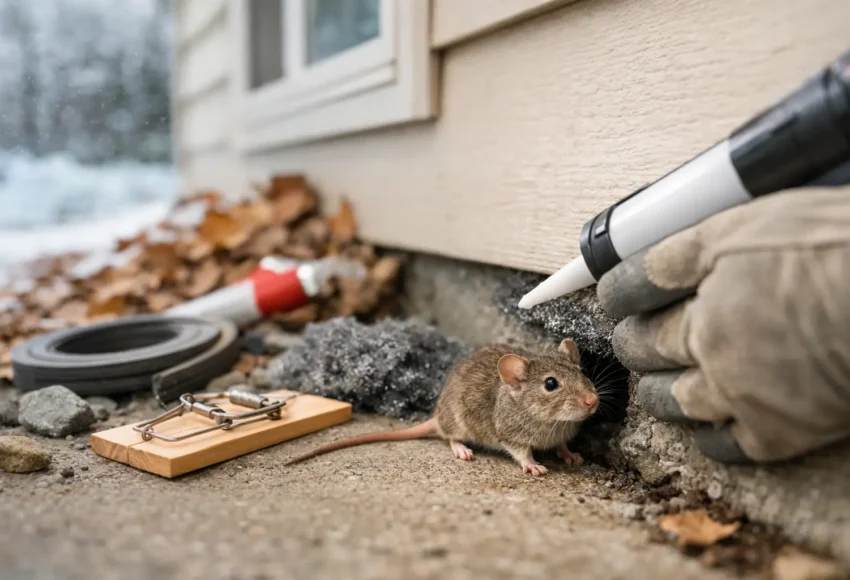
Mouse Proofing Your Home Before Winter Hits
A mouse does not need a broken window or an open door to get inside. It can slip through a gap about the width of a pencil, then disappear behind insulation, appliances, cabinets, or walls. That is why mouse proofing your home is less about setting a few traps and more about closing off the conditions that make your property easy to enter, feed in, and nest in.
For homeowners, landlords, and small business owners, the first signs are often subtle: a few droppings under the sink, scratching after dark, chewed food packaging, or a strange odor in a storage area. Acting early can prevent a small issue from becoming a larger infestation that damages wiring, contaminates food, and creates stress for everyone in the building.
Start Mouse Proofing Your Home Outside
The exterior is where lasting rodent prevention begins. Mice commonly enter around foundations, utility lines, vents, siding, garage doors, and aging weatherstripping. A home can look sealed from the street while still having several small access points at ground level or around the roofline.
Walk slowly around the outside of the building during daylight. Look closely where pipes, cable lines, air conditioning lines, and dryer vents pass through walls. Check the corners of the foundation, the gap beneath exterior doors, window wells, and the edges of attached garages. If you can see daylight under a door or into a wall opening, a mouse may be able to use it.
Seal small holes with quality steel wool or copper mesh secured with caulk. For larger openings, use metal flashing, hardware cloth, or a durable exterior repair material. Foam can be useful as a backing material, but foam by itself is not a reliable mouse barrier because rodents can chew through it.
Pay attention to vegetation as well. Shrubs, stacked lumber, dense ground cover, and clutter placed directly against the home give mice cover as they travel along the exterior. Keep plants trimmed back from the foundation and store firewood away from the house when possible. This will not stop every mouse, but it makes the building less inviting and makes entry points easier to inspect.
Do not overlook the garage
Garages are one of the most common weak spots. They are warm, often full of stored items, and frequently have gaps around the overhead door. Inspect the bottom seal and side weatherstripping. Replace worn sweeps and make sure the garage door closes evenly against the floor.
Cardboard boxes, birdseed, pet food, and bags of grass seed can turn a garage into an easy food source. Move stored goods into sealed plastic bins and keep food products off the floor. If you use the garage for seasonal storage, leave enough space along walls to inspect for droppings or nesting material.
Remove Food, Water, and Nesting Materials
Sealing holes matters, but it works best when mice have less reason to stay. A mouse can live on small crumbs, grease residue, pantry items, pet food, and even spilled seed from a bird feeder. One overlooked food source can keep activity going after you have blocked several entry points.
In kitchens, wipe counters and sweep floors regularly, especially beneath appliances and around the stove. Store cereal, flour, rice, pasta, snacks, and pet food in hard-sided containers with tight lids. Avoid leaving pet bowls full overnight if mice are active. Check the pantry for chewed packaging, and remove any contaminated food rather than taking a chance on it.
Water is just as valuable to rodents. Repair dripping pipes, check under sinks, and keep basement drains and utility areas as dry as possible. A damp crawl space or leak behind a washing machine can support mouse activity even when the kitchen is spotless.
Mice also look for soft nesting materials. Reduce piles of paper, fabric, insulation scraps, and cardboard in basements, storage rooms, attics, and sheds. You do not need an empty home to prevent mice, but organized storage makes it harder for them to hide and much easier for you to spot a problem early.
Check the Hidden Areas Mice Prefer
A quick visual check of the kitchen is not enough. Mice often travel along walls and remain close to cover, so inspect the areas people rarely use. Pull out the stove and refrigerator if it is safe to do so. Look behind the dishwasher, around the water heater, beneath basement stairs, and near the furnace room.
In an attic, watch for disturbed insulation, shredded paper, droppings, and small dark rub marks along beams or pipes. In a basement, inspect rim joists and areas where pipes enter from outdoors. For rental units and commercial spaces, shared utility rooms, loading areas, and gaps around plumbing are especially important because rodents can move between connected areas.
Fresh mouse droppings are dark and may have a slightly moist appearance. Older droppings become gray and dry. Either way, do not sweep or vacuum dry droppings directly, as that can stir particles into the air. Wear gloves, ventilate the area, lightly wet the droppings with a household disinfectant, then wipe them up with disposable paper towels. Wash your hands thoroughly afterward.
Use Traps Carefully While You Seal Entry Points
Traps can help reduce active mouse numbers, but they are not a substitute for exclusion. If the openings remain, more mice can continue entering. Think of trapping as the short-term response and mouse proofing as the long-term fix.
Place traps along walls, behind appliances, near suspected entry points, and in areas where you have seen droppings. Mice tend to follow edges rather than cross open rooms. Position the trigger end toward the wall, and keep traps away from children and pets. Enclosed trap stations can be a practical option in homes with pets or in business settings.
Avoid relying on poison indoors as a first response. A rodent may die inside a wall, attic, or inaccessible void, creating odor and cleanup problems. Baits also require careful placement and handling to protect children, pets, and non-target wildlife. The right method depends on the property, the level of activity, and whether the issue is limited to one area or spread throughout the building.
When a Small Mouse Problem Needs Professional Help
DIY mouse proofing can be effective when you have found a single clear entry point and activity is limited. It becomes harder when droppings keep appearing, scratching continues after traps are set, mice are seen during the day, or activity is present in several rooms. Those signs can mean there is a larger population, multiple entry points, or nesting inside walls, ceilings, or insulation.
Professional rodent control is also worth considering for multi-unit properties, restaurants, offices, retail spaces, and homes with vulnerable occupants. These locations need a thorough plan that identifies access points, addresses active activity, and reduces the chance of repeat issues without disrupting daily life.
For residents in Georgina, Keswick, Sutton, Jackson Point, Mount Albert, Pefferlaw, Bolton, and Caledon, Discount Pest Control provides discreet rodent control with practical treatment options for homes and businesses. A trained technician can identify the less obvious routes mice use, recommend exclusion repairs, and help manage active activity safely around families and pets.
Keep Prevention Going After the Activity Stops
Mouse prevention is not a one-time chore, especially in fall and winter when rodents look for warmth. Recheck exterior seals after heavy weather, foundation work, siding repairs, or utility upgrades. Door sweeps and caulk do not last forever, and a small gap can return as a home settles.
Make a habit of inspecting the pantry, garage, basement, and utility areas every few weeks. You are looking for the earliest clues, not waiting for obvious damage. A few minutes of attention can save you from a much larger cleanup later.
A mouse problem can feel unsettling, but it is manageable when you address both the mouse and the reason it got inside. Close the gaps, remove the easy food and shelter, and get help promptly if activity does not stop. The sooner you act, the sooner your home can feel like your space again.


Leave a Comment