
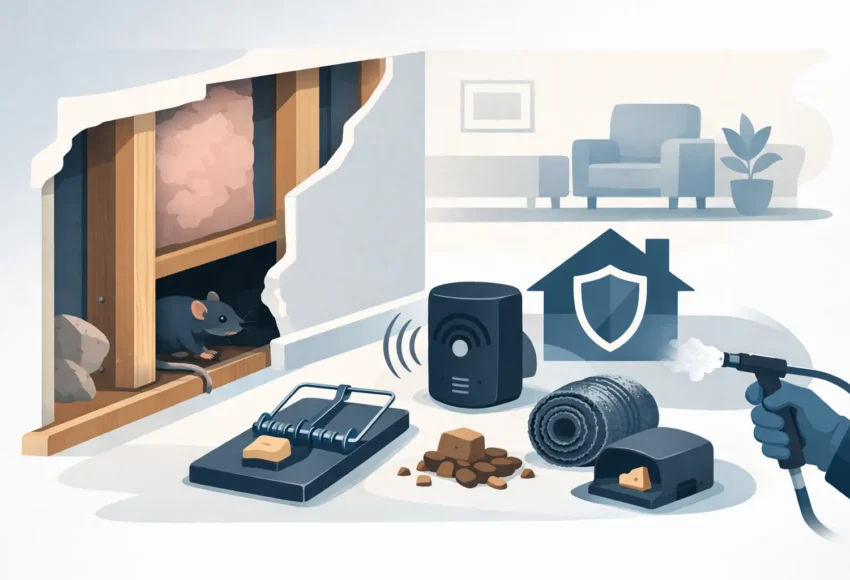
How to Get Rid of Mice in Walls
If you hear scratching after dark, especially near bedrooms, kitchens, or basements, there is a good chance you are dealing with rodents behind the drywall. Knowing how to get rid of mice in walls starts with one simple fact: the noise is only part of the problem. Mice in wall cavities can chew wiring, contaminate insulation, and keep spreading into other parts of the home if the entry points stay open.
The good news is that wall infestations can be handled. The bad news is that spraying a room, setting one random trap, or banging on the wall rarely solves it. To get real results, you need to confirm where the mice are traveling, remove the ones already inside, and close the gaps that let them in to begin with.
Why mice end up inside walls
Walls give mice exactly what they want – darkness, warmth, and cover from people and pets. Once temperatures drop or outdoor food sources become limited, they start looking for sheltered places close to water and crumbs. A home gives them all of that.
In many cases, they do not stay only in the walls. They move through attics, crawl spaces, utility lines, cabinets, and basements, using wall voids like hidden highways. That is why you might hear activity in one room but find droppings somewhere else.
Older homes are especially vulnerable, but newer buildings are not immune. Small openings around pipes, foundation gaps, roofline breaks, garage door edges, and worn weather stripping can all be enough. A mouse only needs a tiny space to squeeze through.
Signs you need to act quickly
Some homeowners wait because they hear movement only once in a while. That can be a mistake. Mice reproduce fast, and a small issue can turn into a larger infestation sooner than most people expect.
Common warning signs include scratching or scurrying at night, droppings under sinks or along baseboards, a stale or musky odor, chewed food packaging, and pets staring at one wall for no obvious reason. In businesses or rental properties, you may also notice complaints from tenants, staff, or customers before you ever see a mouse.
If you are hearing activity in more than one area, or if the sound seems to move from wall to ceiling, the problem may be larger than a single trapped mouse.
How to get rid of mice in walls without making it worse
The biggest mistake people make is sealing holes too early. If mice are still active inside the wall, blocking every exit can leave them trapped in hidden areas. That can lead to odor issues, dead rodents in inaccessible spaces, and continued scratching as they search for another way out.
A better approach is to work in the right order. First identify the level of activity. Then remove the mice. After that, seal the structure.
Step 1: Confirm where the mice are active
Start by listening carefully at night when the house is quiet. Note which walls, ceilings, or floor areas produce the most sound. Check nearby spaces for droppings, rub marks, gnawing, or nesting material. Focus on utility areas first – under sinks, behind appliances, in furnace rooms, in attics, and around the basement perimeter.
You are not looking only for where you hear them. You are trying to figure out how they are moving through the building. That route matters more than the noise itself.
Step 2: Set traps in the right places
You usually cannot place traps inside a sealed wall cavity without opening it, and that is not always necessary. In many cases, the best place to trap mice is along their entry and travel points outside the wall – near baseboards, behind appliances, in attic access areas, or along basement walls.
Snap traps are often the most effective option for mice because they are quick and let you confirm results. Place them perpendicular to the wall, with the trigger side facing the runway. Use multiple traps, not just one. Peanut butter can work well, but it is not the only bait. Soft nesting material or small bits of food may be more effective if the mice are already feeding elsewhere.
Avoid scattering poison inside a home unless a licensed professional has a clear plan for placement and follow-up. Rodenticides can create secondary risks for pets and wildlife, and poisoned mice may die in inaccessible wall spaces.
Step 3: Reduce what is attracting them
Trapping works better when food is harder to access. Store pantry items in sealed containers, clean up crumbs quickly, remove pet food overnight, and empty garbage regularly. Fix leaks under sinks or near appliances because mice need water as much as food.
Clutter also matters. Storage rooms full of cardboard, fabric, and unused items give mice more cover and nesting material. Tidying those areas does not solve the infestation on its own, but it does make treatment more effective.
When wall access is necessary
Sometimes mice are nesting inside a specific wall cavity and standard trapping around the perimeter is not enough. If there is persistent noise in one section, a strong odor, or signs of repeated activity in the same spot, targeted wall access may be needed.
That should be done carefully. Opening the wrong area can scatter insulation, spread contamination, or make the problem harder to control. A trained pest control technician can determine whether wall access is justified or whether the mice can be removed without cutting into finished surfaces.
This is especially true in multi-unit housing or commercial spaces, where rodents may be moving between units through shared walls and service lines.
Seal the entry points after activity drops
Once traps show that activity is declining, the next job is exclusion. This is the part that stops the cycle.
Walk the exterior of the home and check around foundation lines, vents, pipe penetrations, siding gaps, soffits, roof edges, and garage doors. Indoors, inspect utility penetrations under sinks, behind stoves, around laundry hookups, and near water heaters. Mice can use surprising routes, so small cracks matter.
Use durable materials that rodents cannot chew through easily. Depending on the gap, that may include metal mesh, steel wool combined with sealant, flashing, or other rodent-resistant repair materials. Foam alone is usually not enough because mice can chew through it.
This part is easy to underestimate. If even one active access point stays open, the sounds in the walls can return in a matter of days.
Why mice in walls keep coming back
If you have dealt with this before and the scratching returned, one of three things usually happened. The original entry points were never fully sealed, the nesting population was reduced but not eliminated, or conditions around the property still make the building attractive.
Outdoor factors play a role too. Firewood stacked against the house, overgrown vegetation, bird seed, unsecured trash, and gaps around sheds or garages can support rodent activity close to the home. In colder parts of Ontario, seasonal pressure increases as mice look for indoor shelter, so fall and early winter often bring a spike in calls.
That is why a lasting fix usually involves both interior treatment and exterior inspection. One without the other often leads to repeat problems.
When to call for professional help
You should consider professional service if you hear mice in multiple walls, if trapping has not reduced activity within several days, if you notice strong odors, or if the infestation is affecting tenants, customers, or sensitive areas like food storage spaces.
A professional can also help when discretion matters. For many homeowners and business owners, the problem is not just the mice. It is the stress, the lost sleep, and the worry about what guests, tenants, or customers might notice. Fast treatment with a clear plan can remove a lot of that pressure.
For homes and properties in areas like Georgina, Keswick, Sutton, or nearby communities, local experience matters because rodent patterns, building styles, and seasonal pressure are not the same everywhere. The right solution should be practical, safe around people and pets, and focused on preventing another round of activity.
How to get rid of mice in walls and keep them out
If you want the short version, here it is: confirm the activity, trap strategically, remove food and water sources, and seal every realistic entry point once the population is under control. If the sounds continue, or if the problem feels bigger than you can safely handle, bring in a pest control team that can inspect the structure properly and act fast.
Mice in walls are unsettling, but they are not something you have to live with. The sooner you deal with the movement behind the drywall, the easier it is to protect your home, your wiring, your insulation, and your peace of mind.


Leave a Comment