
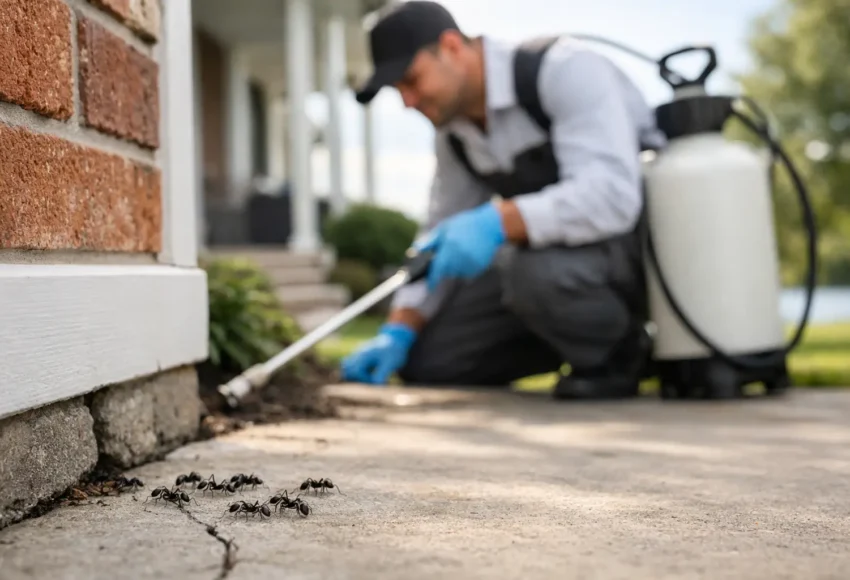
When to Call an Ant Exterminator in Ontario
A few ants near a window can become a steady trail across the kitchen counter surprisingly fast. An ant exterminator in Ontario can identify where those ants are coming from, treat the active problem, and help stop the colony from returning. That matters because the ants you see are usually only the workers. The nest, queen, and much larger population may be hidden behind walls, under floors, or outside near your foundation.
For homeowners, tenants, landlords, and business owners, ant activity is more than an annoyance. Ants can contaminate food, frustrate customers, and make a property feel difficult to manage. Fast, professional treatment offers immediate relief without leaving you to guess which store-bought product might make the situation worse.
When an ant problem needs professional help
One or two ants may have wandered indoors looking for water or food. Repeated sightings, however, are a different situation. If you notice a defined line of ants traveling to the same cabinet, sink, pet bowl, garbage area, or food storage shelf, there is likely an established route into the building.
Calling for help makes sense when ants keep reappearing after cleaning, especially if they return within days of using sprays or traps. It is also wise to arrange an inspection when you see ants in several rooms, find them in a commercial kitchen or staff area, or notice activity around baseboards, windows, and plumbing openings.
Carpenter ants deserve prompt attention. These larger ants are often black, reddish-black, or dark brown and may be active around damp wood, window frames, decks, rooflines, or areas affected by a leak. They do not eat wood like termites, but they can excavate galleries in damp or damaged wood to build nests. If you see larger ants indoors or small piles of coarse, sawdust-like material near wood, do not wait for the problem to grow.
Flying ants can also create concern. Swarming often means a colony is mature enough to reproduce. Flying ants are not always carpenter ants, and they are not automatically termites, but they are a good reason to have a professional assess what is happening rather than rely on appearance alone.
Why ants keep coming back after DIY treatment
Most household ant sprays kill the ants that are visible at that moment. They rarely address the colony. In some cases, spraying a foraging trail can scatter the workers and disrupt their route, making the infestation appear to disappear briefly before it shows up somewhere else.
Ant colonies can also have more than one nest or queen, depending on the species. That is why a treatment that works for a small pavement ant problem may not be the right approach for carpenter ants, pharaoh ants, or other indoor species. The key is not simply killing ants on contact. It is identifying the species, locating likely nesting conditions, and using a treatment strategy that reaches the source.
Food and moisture are the other half of the problem. Crumbs under appliances, pet food left overnight, sticky recycling bins, leaking pipes, and gaps around utility lines all make a building more attractive. Professional service works best when treatment is paired with practical changes that reduce those resources.
What an ant exterminator in Ontario should inspect
A reliable ant service starts with questions. Where are the ants appearing? When did you first notice them? Are they small and numerous, or larger and mostly active at night? Have you seen them near moisture, food, wood, or exterior walls? These details help narrow down the likely species and nesting areas.
The inspection should look beyond the obvious trail. A technician may check kitchen and bathroom plumbing, door thresholds, window frames, utility entry points, foundation edges, garages, basements, attics, decks, and areas with water damage. In multi-unit buildings, the source may involve shared walls, trash areas, utility spaces, or another unit, which makes a coordinated plan especially valuable.
For businesses, the inspection should focus on places where ants affect sanitation and customer confidence. Break rooms, food storage areas, receiving doors, drains, display areas, and waste handling zones are common trouble spots. The best approach is one that treats the immediate activity while minimizing disruption to staff, customers, and daily operations.
A treatment plan should fit the infestation
There is no single ant treatment that is right for every property. A technician may use targeted bait placements, crack-and-crevice applications, exterior perimeter treatment, nest-directed treatment, or a combination of methods. The right choice depends on the ant species, the size of the infestation, the nest location, and whether children, pets, customers, or sensitive areas are present.
Baits are often useful because worker ants can carry the product back to the colony. This can take time, so it is normal to see activity for a short period after treatment. That does not necessarily mean the service failed. In fact, increased activity around properly placed bait can mean workers are taking it back to the nest.
For carpenter ants, treatment may also include finding and correcting conditions that support nesting. Moisture control is important. Repairing a leak, replacing water-damaged wood, improving drainage, or trimming vegetation away from the structure can reduce the chance of another colony moving in later.
Safe service should always come with clear instructions. You should know what was treated, what areas to avoid temporarily if needed, what to expect over the next several days, and what steps will help prevent reinfestation. A professional should never leave you uncertain about how the plan protects your household, pets, tenants, or employees.
Simple steps that make treatment more effective
Before and after service, a few practical habits can make a real difference. Keep food in sealed containers, wipe counters and floors regularly, empty garbage promptly, and rinse recyclable containers that hold sugary residue. Do not leave pet food out all day if ants have been active around feeding areas.
Moisture deserves equal attention. Check beneath sinks, around dishwashers, behind refrigerators, near washing machines, and in basements for slow leaks or condensation. Outside, keep mulch, firewood, and dense vegetation from sitting directly against the foundation where possible. Seal obvious gaps around windows, doors, pipes, and utility lines after the active infestation has been assessed.
These steps are not a substitute for professional treatment when a colony is established. They are the support system that makes a lasting result more likely.
Fast, discreet help for homes and businesses
An ant problem can feel embarrassing, particularly in an apartment building, retail location, office, or home with frequent visitors. It should not. Ants are a common property issue, and quick action usually prevents a small concern from becoming a larger disruption.
Discount Pest Control provides responsive ant treatment for residential and commercial properties, including communities across York Region such as Georgina, Keswick, Sutton, Bolton, and Caledon. Discreet unmarked vehicles are available for customers who value privacy, while tailored treatment plans focus on safe, affordable, and effective results.
If ants are appearing day after day, do not spend another week chasing trails with a spray bottle. Request an inspection, get clear answers about the source, and give your property the focused treatment it needs to feel comfortable again.
Leave a Comment