
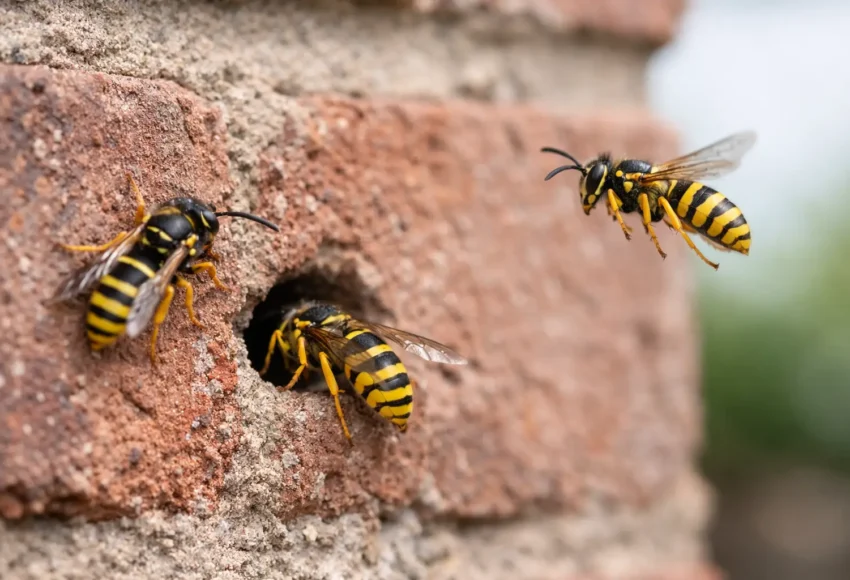
Wasps Going Into Brick Holes at Home?
If you keep seeing wasps going into brick holes residential homes, you are probably not just looking at random insect activity. In many cases, that small opening in the mortar or brick face is acting like a doorway to a nest hidden inside the wall cavity. What looks minor from the outside can turn into a bigger problem fast, especially in summer when colony activity ramps up.
This is one of those pest issues that homeowners often notice just after it has become established. You might spot a few wasps flying in and out during the day, then suddenly realize the traffic never really stops. That pattern matters. A single wasp resting on the wall is one thing. A steady stream using the same hole usually means the nest is active behind the brick.
Why wasps use brick holes in residential homes
Brick homes have plenty of tiny access points that look perfect to wasps. Gaps in mortar, weep holes, small cracks near window frames, and openings where materials meet can all provide sheltered entry. From a wasp’s perspective, wall voids are ideal. They are protected from rain, shaded from direct sun, and difficult for predators to reach.
The trouble is that the nest is usually not in the visible hole itself. The opening is only the access route. Once inside, wasps may build farther back in the cavity, where the nest can expand without being seen. That is why spraying the outside opening rarely fixes the issue. In some cases, it makes things worse by agitating the colony while leaving the nest intact.
Older homes and even newer brick exteriors can both be affected. The deciding factor is not just the age of the house. It is whether there is a hidden void and a usable entry point. Homes in areas like Georgina, Keswick, Sutton, and surrounding communities often see this kind of activity during peak wasp season, especially when warm weather stretches well into late summer.
What kind of wasps are usually involved?
Most homeowners are not interested in insect identification charts. They want to know whether the problem is dangerous and whether it will spread. Fair enough. In Ontario, the wasps entering brick holes are often yellowjackets or paper wasps, although yellowjackets are especially known for nesting in wall voids.
Yellowjackets tend to be more aggressive, particularly when the nest is disturbed. They can sting more than once, and they do not need much provocation if they think their colony is under threat. Paper wasps can also nest around homes, though their nests are more often visible under eaves or overhangs. If you are seeing repeated traffic into a hole in brick, yellowjackets are often the more likely culprit.
That said, the exact species changes the treatment approach more than it changes the homeowner’s next step. If there is active movement in and out of the wall, the safest assumption is that there is a nest and it needs proper removal.
Signs the nest is already established
A few details can tell you whether you are seeing early scouting activity or a developed nest. If wasps are using the same opening every few minutes, if activity is strongest in the warmest part of the day, or if you notice several wasps hovering near one section of wall, the nest is likely active. You may also hear faint buzzing indoors near the wall in quiet rooms, though that does not happen in every case.
Another red flag is increased indoor activity. Sometimes wasps find their way from the wall void into living spaces through gaps around vents, light fixtures, or unfinished basement areas. If you suddenly see wasps inside and also notice them entering brick holes outdoors, those two things may be connected.
The time of year matters too. In spring, a smaller amount of activity may mean a queen is just getting started. By mid to late summer, heavy traffic usually means the colony has grown. Larger colonies bring more risk, not just because of numbers but because they are more defensive.
Why sealing the hole is usually the wrong move
Homeowners understandably want to fix what they can see. If the entry point is obvious, the instinct is to caulk it, fill it, or cover it. The problem is that sealing an active nest inside the wall can trap angry wasps in the cavity. Once blocked, they may search for another way out, and that can mean inside your home.
There is also the issue of incomplete treatment. If the nest remains alive behind the brick, closing one entry point does not solve the root problem. Wasps may reopen the area, use a nearby gap, or die inside the wall and leave behind nest material that attracts other issues.
This is one of those situations where quick DIY action can create a more stressful and expensive job later. Waiting too long is not ideal either, but sealing first and asking questions later is rarely the best choice.
Can you treat it yourself?
It depends on the level of activity, the nest location, and your tolerance for risk. A visible, small paper wasp nest under a shed roof is one thing. Wasps disappearing into the brick exterior of your house is another. Wall void nests are harder to access, harder to confirm, and much more likely to lead to stings if disturbed.
Store-bought sprays may kill some returning workers near the opening, but they often do not reach the nest deep inside the cavity. If the colony survives, activity resumes. If the product is applied at the wrong time or in the wrong amount, the wasps can become more aggressive. That is a serious concern for homes with children, pets, older adults, or anyone with sting allergies.
There is also a ladder issue. Many brick entry points are near rooflines, soffits, or upper-story walls. Mixing stinging insects with ladder work is not a safe gamble.
What professional treatment usually involves
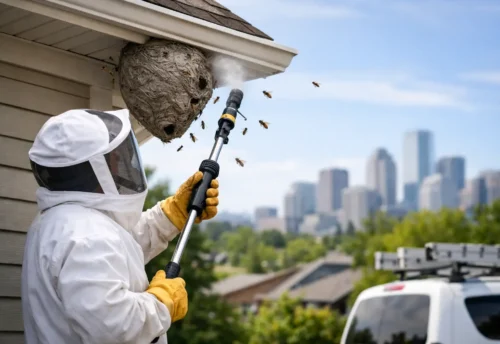
A proper inspection comes first. The goal is to identify the active entry point, assess how established the nest is, and determine whether the colony is likely in a wall cavity, soffit, chimney area, or another hidden void. Effective treatment targets the nest, not just the hole.
In many cases, a technician applies material in a way that the wasps carry it deeper into the nest, or uses equipment designed to treat concealed spaces more effectively than over-the-counter products. The exact method depends on the home construction, the wasp species, and where the activity is concentrated.
After the nest is neutralized, the next step is prevention. That may involve recommending repairs to mortar gaps, screening vulnerable openings where appropriate, and watching for repeat activity in nearby sections of the exterior. Timing matters here. Sealing is smart after the nest is dealt with, not before.
For homeowners who want the issue handled quickly and without attention from neighbors, discreet service matters too. That is one reason many people call for help rather than trying to fight an active wall nest on their own.
Wasps going into brick holes residential homes – when to call right away
Some situations should not wait. If anyone in the home has a known allergy to stings, if wasps are entering indoor living areas, if the nest appears close to a front door, play area, deck, or AC unit, or if the activity is heavy, it is time to call right away. The same goes for rental properties and small businesses where customers, tenants, or staff may be exposed.
A hidden nest in a wall is not something that usually gets better on its own during the active season. In fact, colonies tend to grow until the weather turns. That means more wasps, more defensive behavior, and more chances for a painful encounter.
For homeowners in Georgina, Keswick, Sutton, Bolton, Caledon, and nearby areas, fast local help can make a real difference when the nest is active and daily life is being disrupted. If the problem needs professional attention, Discount Pest Control handles wasp issues with safe, effective treatment designed for homes and families.
How to reduce the chances of it happening again
Once the nest is removed, prevention becomes much more manageable. Brick exteriors should be checked for failed mortar, small cracks, and recurring access points around trim, vents, and utility lines. Keeping exterior repairs current makes a big difference. So does paying attention in spring, when a new queen may be looking for a nesting site before the colony grows.
It also helps to avoid attracting wasps to the area. Open garbage, sugary spills, and outdoor food sources do not create wall nests by themselves, but they can increase wasp activity around the property. That makes early signs easier to miss because the whole area seems busy.
If you are unsure whether the problem is active, take a step back and watch the hole from a safe distance for several minutes. Consistent in-and-out movement is your answer. At that point, the smartest move is usually not to test your luck with a spray can but to get the nest handled properly before a small access hole turns into a bigger household problem.
When wasps choose your brick wall, they are looking for shelter. You are looking for peace of mind. The good news is those two goals do not have to stay in conflict for long.
Leave a Comment