
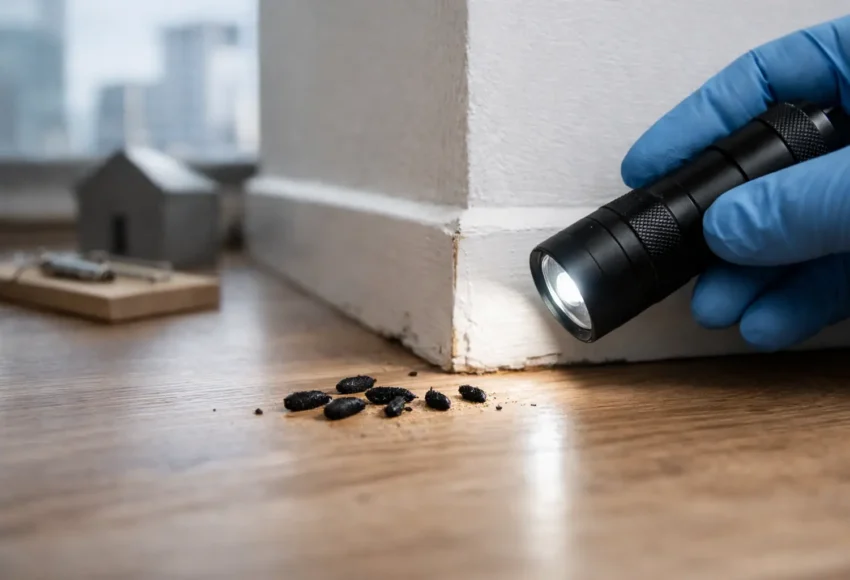
How to Spot Mouse Droppings Fast
You usually do not find mouse droppings in the middle of the floor. They show up where mice feel safe – tucked behind the toaster, along the basement wall, inside a pantry corner, or under the sink. If you are trying to figure out how to spot mouse droppings, the key is knowing where mice travel, what the droppings actually look like, and what other signs tend to show up at the same time.
For homeowners and business owners, this matters for one simple reason: droppings are often the first clear sign that mice are already active inside the building. By the time you see them once, the problem may not be brand new. A fast response can make the difference between a small cleanup and a larger infestation.
How to spot mouse droppings in the right places
Mouse droppings are rarely random. Mice tend to follow the same protected routes over and over, usually close to walls, behind stored items, and near food or water sources. That is why you should start your inspection in low-traffic, hidden areas rather than the open center of a room.
In kitchens, check behind appliances, inside lower cabinets, under sinks, and in pantry shelves. In basements, look along foundation walls, near storage bins, around laundry areas, and close to utility lines. In garages, inspect corners, shelving, pet food storage, and any clutter that gives cover. If you manage a commercial space, look in stock rooms, under counters, behind equipment, and around break areas.
Mice also leave droppings near nesting and feeding spots. If they are getting into dry goods, bird seed, pet food, or garbage, that area will often show multiple signs at once. You may notice droppings, gnaw marks, and shredded material close together.
What mouse droppings look like
The easiest way to identify mouse droppings is by size, shape, and color. Mouse droppings are usually small and dark, about the size of a grain of rice. Most are rod-shaped with pointed ends. They are much smaller than rat droppings, which tend to be thicker and longer.
Fresh droppings are typically dark black or dark brown and may look slightly shiny or moist. Older droppings dry out over time and become dull, grayish, and crumbly. That difference helps you judge whether mice are currently active or whether the droppings may be from an older problem.
One or two pieces can be easy to miss. A more active mouse problem usually leaves clusters in repeated locations. If you keep finding new droppings after cleaning, that is a strong sign the mice are still there.
Fresh vs old droppings
This is where a lot of people second-guess themselves. They see tiny dark specks and wonder if they are looking at droppings, dirt, or food debris. The condition of the droppings helps narrow it down.
Fresh mouse droppings are soft enough to smear slightly if disturbed, though you should never touch them directly. They look darker and more solid. Older droppings lose that dark, fresh appearance and become dry and brittle. If they break apart easily into dusty bits, they have likely been there for a while.
That said, age is not always obvious in humid basements, garages, or crawl spaces. Moisture levels and temperature can affect how fast droppings dry out. So while appearance helps, it should not be your only clue.
Signs that often appear with droppings
If you are unsure whether what you found is really from mice, look around for supporting evidence. Mice are messy in predictable ways. Droppings are just one part of the picture.
You may also notice a light scratching sound in walls or ceilings, especially at night. Food packaging may have small chew holes. Paper, insulation, or fabric may be shredded for nesting. In some areas, there may be a stale or musky odor. Grease marks can also appear along baseboards or entry points where mice repeatedly brush against surfaces.
When several of these signs show up together, the odds of active rodent activity go up quickly. In practical terms, that means it is better to act early than wait for more proof.
Common places people miss
A lot of infestations get worse because the first inspection is too quick. People look under the sink, do not see much, and assume the issue is minor. Mice are good at staying out of sight.
Check the backs of drawers, the void under lower cabinets, and the space behind stored boxes. Pull items away from walls in the basement or garage. Look around water heaters, sump pump areas, and where pipes enter the home. In attics, inspect around insulation edges and tucked-away corners rather than just the access opening.
If you live in an area with colder winters, mice often move indoors when outdoor temperatures drop. In places like Georgina, Keswick, Sutton, and other York Region communities, seasonal mouse activity can pick up fast in fall and winter. That is one reason droppings often show up first in basements, garages, and utility spaces.
What mouse droppings are not
Mouse droppings get confused with a few common things. Roach droppings are usually smaller and may look more like black pepper or coffee grounds, depending on the species. Lizard droppings, where relevant, often include a white tip. Dirt from shoes or crumbling building material tends to be irregular in shape rather than consistently pellet-like.
The consistency matters. Mouse droppings are fairly uniform. If what you are seeing varies wildly in size and shape, it may be something else. Still, if it is showing up repeatedly in hidden travel paths, it is worth taking seriously.
What to do if you find them
First, do not sweep or vacuum dry droppings. That can stir contaminated particles into the air. Instead, ventilate the area if possible, wear gloves, and lightly spray the droppings with a disinfectant or a bleach-and-water solution before wiping them up with paper towels. Seal the waste in a bag and wash your hands thoroughly afterward.
Cleaning alone will not solve the problem if mice are still active. You also need to find out how they are getting in and what is attracting them. Food should be sealed in hard containers, crumbs cleaned up, and pet food removed overnight when possible. Gaps around pipes, utility penetrations, door sweeps, vents, and foundation openings should be checked carefully.
This is also where the do-it-yourself approach has limits. A single mouse can leave a small amount of evidence, but recurring droppings usually mean ongoing movement through the structure. If you only clean what you see without addressing nesting areas and entry points, the droppings will return.
When to call for professional help
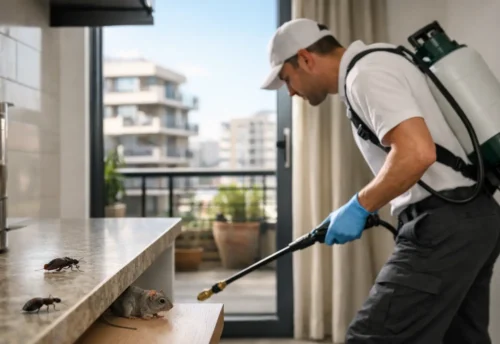
If you keep finding fresh droppings, hear activity in walls, or notice signs in multiple rooms, it is time to move quickly. The same goes for rental properties, restaurants, offices, and retail spaces where health concerns and reputation matter. Waiting rarely makes rodent problems cheaper or easier.
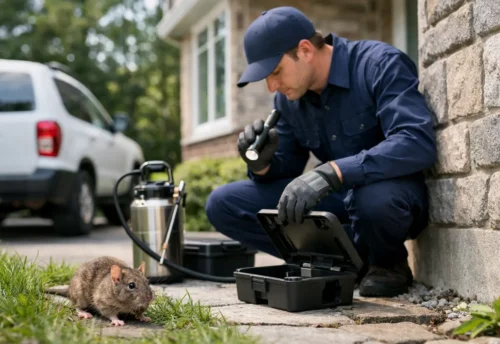
Professional service is especially helpful when the activity is hidden. Mice do not always nest where they leave the most visible mess. A trained inspection can identify entry points, traffic patterns, and the level of infestation more accurately than guesswork.
For property owners dealing with repeated rodent signs, a local service like Discount Pest Control can help confirm the source, remove the infestation, and reduce the chance of it coming back. That matters when you want the issue handled fast, safely, and without drawing attention to the problem.
How to spot mouse droppings before the problem grows
The best inspections are routine, not reactive. Check behind kitchen appliances every so often. Look at basement corners when you bring out seasonal storage. Pay attention to pantry shelves, pet food areas, and utility spaces after weather changes.
The goal is not to become an expert in rodent behavior overnight. It is to notice the early signs before they turn into a larger cleanup, damaged food, chewed wiring, or a full nesting problem. A few minutes spent checking the right places can save you a lot of stress later.
If something looks off, trust that instinct and act on it. Mouse problems are easier to handle when they are caught early, and a quick response gives you the best chance of keeping your home or business clean, safe, and under control.
Leave a Comment