
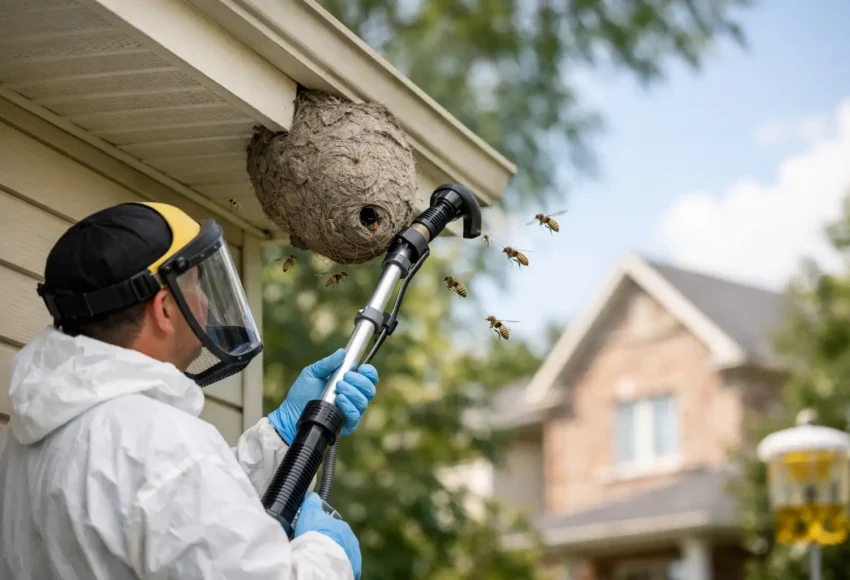
Wasp Nest Removal Ontario Homeowners Can Trust
A nest under the eaves can go unnoticed until a door opens, a lawn mower starts, or a child walks too close. Then a quiet summer afternoon can turn into a painful and stressful situation. For wasp nest removal Ontario property owners can depend on, the first priority is keeping people, pets, customers, and tenants away from the area while the nest is assessed and treated safely.
Wasps are useful predators outdoors, but they do not belong beside an entryway, patio, playground, attic vent, or business entrance. A visible nest is not always a reason to panic, yet it should never be treated as a problem to ignore. Nests can grow quickly through the warm season, and some species become highly defensive when they believe their colony is threatened.
When a Wasp Nest Needs Professional Removal
A small, exposed paper nest at the far edge of a large property may present little immediate risk. It still deserves attention if it is growing, but the urgency changes when wasps are regularly crossing areas people use. Nest location matters as much as nest size.
Professional help is the smart choice when a nest is near a doorway, deck, garage, mailbox, playground, pool, shed, air-conditioning unit, or outdoor dining area. It is also recommended when wasps are entering a wall, roofline, soffit, attic vent, or other enclosed space. These hidden nests are easy to underestimate because the visible insect traffic may be only a small part of the colony.
Treat the situation as urgent if someone at the property has a known sting allergy, if children or pets cannot avoid the area, or if wasps are becoming aggressive. Repeated stings can be serious for anyone, and a severe allergic reaction requires immediate medical care.
For landlords and business owners, prompt action also helps protect tenants, employees, and visitors. A nest beside a storefront door or in a shared apartment courtyard can create a real safety issue, along with understandable complaints and concern.
Why DIY Wasp Removal Can Make Things Worse
It is tempting to spray a nest from a ladder or knock it down with a broom. Unfortunately, these are common ways people get stung. Disturbing a nest before the colony has been controlled can trigger a defensive swarm, especially with yellowjackets or hornet-like wasps.
Ladders add another risk. A single sting can cause someone to lose balance, and a fall may be more dangerous than the sting itself. Reaching into eaves, shrubs, wall gaps, or attic spaces is equally risky because the nest may be larger or closer than expected.
Store-bought products can sometimes affect a small, fully exposed nest, but results vary. They may not reach an enclosed colony, and improper use can drive surviving wasps farther into wall voids or other parts of the structure. Sealing an active entry point too soon can have the same effect. The insects may look for a new way out, including into living spaces.
A professional technician identifies the activity pattern, nesting site, likely species, and safest treatment approach before removal begins. That approach is more controlled than reacting to a few wasps with a can of spray.
What Safe Wasp Nest Removal in Ontario Looks Like
A proper service visit begins with an inspection. The technician checks where wasps are entering and leaving, how close the nest is to occupied areas, and whether there may be more than one colony. Around homes, common locations include roof overhangs, decks, sheds, shrubs, wall voids, and ground burrows. At commercial properties, waste areas, loading zones, patio structures, signage, and rooftop equipment often need attention.
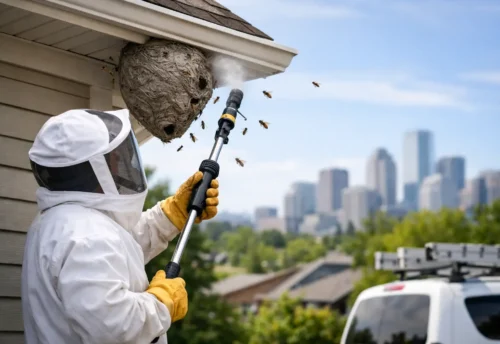
The treatment method depends on what is found. An exposed paper nest can require a different approach than a yellowjacket colony inside a wall or underground. The goal is to control the active colony while minimizing disruption around the property. Once activity has stopped, the nest or accessible material may be removed when appropriate.
People and pets may need to stay indoors or avoid a defined outdoor area during treatment. Your technician should explain exactly what to do before work begins and when the area can be used normally again. This clear guidance matters when treatment is near a family patio, a daycare entrance, a restaurant seating area, or a multi-unit building.
At Discount Pest Control, treatments are selected with safety, effectiveness, and the needs of the property in mind. Customers who value privacy can also request discreet service in an unmarked vehicle, so a pest issue does not become a neighborhood conversation.
Do Not Assume Every Flying Insect Is a Wasp
Many people use the words wasp, hornet, and bee interchangeably, but the distinction matters. Honey bees and bumblebees are pollinators and may require a different response than an aggressive wasp colony. Paper wasps often build open, umbrella-shaped nests beneath eaves. Yellowjackets frequently nest in the ground, behind siding, or inside structural voids. Bald-faced hornets build large, enclosed gray paper nests in trees, bushes, and occasionally on buildings.
You do not need to identify the insect on your own. Keep your distance and note where it is flying in and out. A technician can assess the activity and recommend the right solution. Taking a close-up photo is not worth the risk, particularly if the nest is active.
What to Do While You Wait for Service
Until removal can be arranged, make the area less likely to trigger wasps. Keep children and pets away, and use another entrance if the nest is near a door. Tell family members, tenants, staff, or visitors where the activity is located so they do not accidentally disturb it.
Avoid mowing, trimming branches, pressure washing, or moving outdoor furniture near the nest. Do not hit it, cover it, burn it, flood it, or block the entrance. These actions can provoke wasps and complicate safe treatment.
If the nest is near food service, outdoor garbage, or a patio, keep lids closed and clean up sweet drinks, fruit, and food scraps quickly. This will not eliminate a nest, but it can reduce the number of foraging wasps around people while you wait.
Preventing Nests Around Your Property
No property can be made completely unattractive to wasps, especially during peak summer activity. Still, a few maintenance steps can make nesting spots less inviting. Early spring checks are useful because small new nests are easier to spot before they become established.
Inspect soffits, roof edges, vents, sheds, fence lines, and deck ceilings. Repair damaged screens and close gaps around utility openings where practical. Keep garbage and recycling containers clean and tightly covered, and remove fallen fruit from the yard. If you have had wasps nesting in the same location more than once, ask about inspection and prevention options after the active colony is gone.
Recurring activity around an attic, wall, or roofline can point to an access gap that needs repair. Treatment addresses the immediate nest, while exclusion work helps reduce the chance that another colony chooses the same protected space next season.
Fast Help for Active Wasp Problems
Wasp activity rarely improves when people keep using the same space around it. If you are seeing steady traffic to a nest, hearing buzzing in a wall, or avoiding part of your own yard, arranging an inspection is the practical next step. Fast service can bring immediate relief without asking you to take unnecessary risks.
For homes and businesses in York Region and nearby communities, a trained local technician can assess the nest, explain the treatment plan in plain language, and help restore safe use of the property. A quick call or free online quote request is often all it takes to replace that constant buzzing with a little peace of mind.

Leave a Comment