
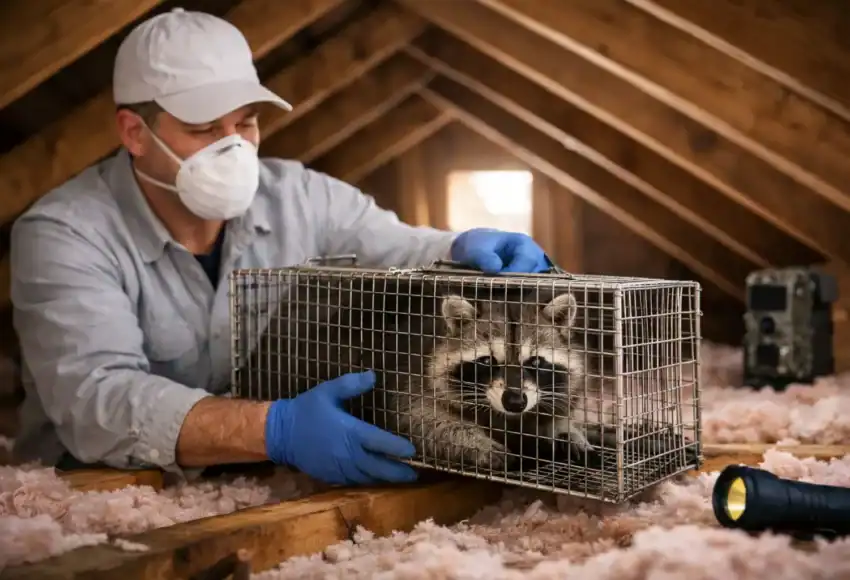
Raccoon Removal From Attic Without the Risk
Heavy footsteps overhead at night are not something to ignore. Raccoons are strong, determined animals that can tear through weak roof vents, soffits, and damaged shingles to reach a warm attic. Prompt raccoon removal from attic space protects your home from contamination, costly damage, and the risk of a frightened animal entering your living area.
The safest approach is not simply getting the raccoon out. It is making sure every animal has left, identifying how it entered, repairing the opening, and preventing another raccoon from using the same route. That takes a careful inspection and humane exclusion plan, especially during baby season.
Signs You May Have a Raccoon in the Attic
Raccoons are usually most active after dark, so homeowners often hear the problem before they see it. Their movement can sound much heavier than mice or squirrels. You may hear slow walking, thumping, scratching, chattering, or noises that seem to come from one area of the ceiling or roofline.
Outside, look for displaced soffit panels, torn roof vents, bent aluminum, damaged chimney caps, or an opening near the roof edge. Raccoons can pull apart materials that would stop smaller wildlife. Greasy marks, muddy paw prints, and droppings near a suspected entry point are also common clues.
An attic odor can be another warning sign. Raccoon urine and feces can build up quickly in a nesting area, particularly if an adult has been using the attic for several days. If the smell is suddenly stronger in an upstairs room, do not assume it is only a ventilation issue.
Why Raccoons Choose Attics
An attic gives a raccoon what it wants: warmth, darkness, shelter from weather, and a quiet place to rest or raise young. A small roof defect can become an invitation when an animal repeatedly tests weak spots around vents, eaves, chimneys, and roof returns.
Female raccoons are especially likely to enter attics in spring when looking for a den site. This is where removal becomes more complicated. A mother may leave at night to search for food while babies remain inside. Sealing the opening too soon can separate the mother from her young, creating noise, odor, and animal welfare concerns.
That is why timing matters. The right solution depends on whether the attic is being used by one adult, a pair, or a mother with babies. A professional inspection helps determine the activity level before exclusion work begins.
Do Not Try to Remove an Attic Raccoon Yourself
It is understandable to want immediate relief when there is noise above your ceiling. But climbing onto a roof, blocking an opening, or confronting a raccoon in an enclosed attic can make the situation worse. Raccoons may bite or scratch when threatened, and their droppings can carry harmful bacteria and parasites.
DIY trapping also creates problems when the wrong animal is captured, a young raccoon is left behind, or a trapped animal is relocated without solving the entry issue. Even if an adult raccoon is removed, another one may return to the same vulnerable spot unless the home is properly secured.
Avoid using poison, smoke, ammonia, loud music, or bright lights to force a raccoon out. These methods are unreliable and can drive the animal deeper into the structure. They can also cause an animal to die in a wall or attic, leaving homeowners with a much larger cleanup problem.
What Safe Raccoon Removal From Attic Space Looks Like
Effective raccoon removal starts with a full exterior and attic inspection. The goal is to confirm the animal involved, find all current and potential access points, assess damage, and determine whether babies may be present.
1. Find the active entry point
A technician checks vulnerable areas around the roofline, including vents, soffits, fascia boards, chimney openings, and gaps where roof sections meet. Raccoons may use one obvious hole, but homes often have several weak areas that need attention.
2. Confirm whether young are inside
This step is essential during denning season. Small vocalizations, concentrated nesting material, and activity patterns can indicate babies in the attic. Humane removal plans account for the entire family rather than excluding the adult and leaving dependent young behind.
3. Use humane exclusion methods
Once conditions are right, a one-way exclusion device may be installed at the active opening. This allows the raccoon to leave but prevents it from getting back in. The device should only be used after the property has been assessed for young animals and alternative entry points have been addressed.
4. Seal and reinforce vulnerable areas
After activity has stopped, the entry point needs durable repair. Screening, vent covers, reinforcement around soffits, and repairs to damaged roof components help prevent repeat visits. The strongest exclusion work focuses on the entire structure, not just the hole the raccoon used first.
5. Address contamination and damage
Raccoon waste should be handled carefully. Depending on the extent of contamination, attic insulation may need to be removed or affected areas may require sanitation and deodorizing. If wiring, ductwork, or building materials have been damaged, a homeowner may also need qualified repair work.
The Cost of Waiting
A raccoon in the attic rarely stays a minor issue for long. The longer it remains, the greater the chance of torn insulation, damaged vents, chewed materials, urine staining, and odor moving into living spaces. An animal may also widen its entry point, making future weather damage more likely.
For landlords and property managers, waiting can create another layer of difficulty. Tenants may lose sleep, complain about odors, or worry about safety. A quick, discreet response helps protect the property and keeps a wildlife issue from becoming a larger maintenance concern.
It also helps to act before the animal has time to establish the attic as a regular den. Raccoons remember reliable shelter and may return year after year if entry points are not secured.
How to Protect Your Home After Removal
Prevention works best when it combines roof maintenance with common-sense property care. Keep tree branches trimmed back from the roof where practical, secure garbage bins, and avoid leaving pet food outdoors overnight. These steps will not stop every raccoon, but they make your property less appealing.
Regularly check roof vents, soffits, chimney caps, and fascia boards for gaps or loose materials. After major storms or high winds, inspect the roofline from the ground for visible damage. If you notice a problem, repair it before wildlife finds it.
Do not cover an opening just because the attic becomes quiet for a night or two. Raccoons may be out feeding and still return later. Confirming that the attic is clear before repairs are finalized is one of the most important parts of preventing a repeat problem.
When to Call for Help
Call for professional help as soon as you hear heavy nighttime activity, find roofline damage, notice a strong attic odor, or suspect babies may be present. Fast service is especially valuable when a raccoon has created an opening that could expose the attic to rain, wind, or other wildlife.
For homeowners and property managers in Georgina, Sutton, Keswick, Mount Albert, Pefferlaw, Bolton, Caledon, and nearby communities, Discount Pest Control provides prompt, discreet wildlife service using unmarked vehicles. A professional can identify the entry point, remove the raccoon humanely, and help protect the structure from another costly attic invasion.
Your attic should be part of your home, not a raccoon den. Acting early gives you the best chance to protect your property, avoid unnecessary damage, and restore quiet to your home.
Leave a Comment