
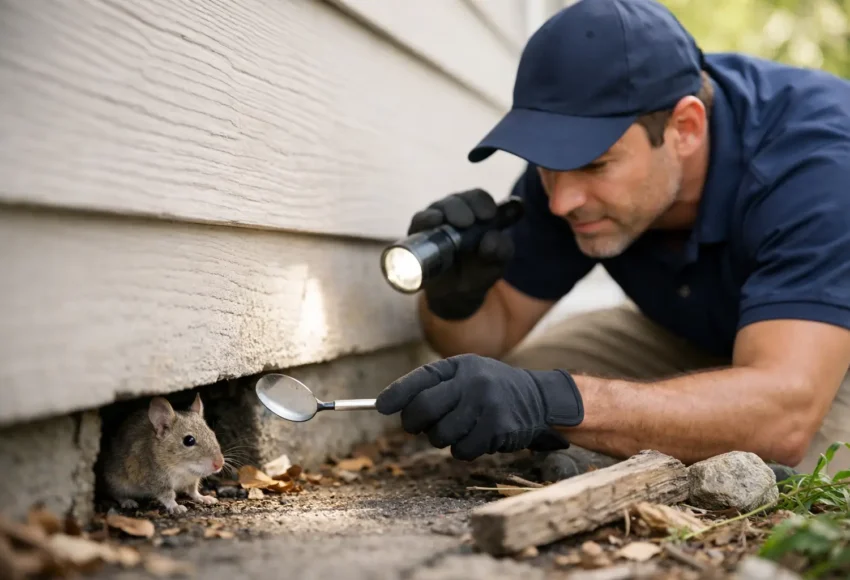
How to Find Mouse Entry Points Around Your Home
A mouse does not need a wide-open door to get inside. A gap about the width of a pencil can be enough, especially around utility lines, foundation joints, and aging weatherstripping. Knowing how to find mouse entry points early can stop a few suspicious noises or droppings from becoming a larger infestation.
Mice often enter quietly, travel along walls, and stay close to food, warmth, and hidden nesting areas. That is why the spot where you find droppings is not always the spot where they got in. A careful inspection, starting outside and following the signs indoors, gives you the best chance of finding the real access point.
Start Outside and Follow the Building Line
The exterior of the home is where most mouse-entry inspections should begin. Walk slowly around the full perimeter during daylight, paying close attention to where the house meets the ground. Mice are drawn to protected edges, cluttered areas, dense shrubs, decks, sheds, and spots where water or food may be available.
Do not just look for a perfectly round hole. Entry points can be narrow cracks, missing mortar, loose trim, warped siding, or gaps created when one material meets another. A small opening may be partially hidden by leaves, mulch, snow, or landscaping.
Use a flashlight even during the day. Shine it along foundation edges, behind downspouts, under deck steps, and around exterior corners. If an opening looks suspicious, look for dark rub marks, droppings, shredded material, or soil that appears disturbed. Mice repeatedly use the same routes, and their oily fur can leave grayish marks along the edges of a hole.
Check the foundation, siding, and roofline
Foundation cracks are common mouse access points, particularly on older homes or properties where settling has created small separations. Check around basement windows, window wells, crawl-space doors, and the joint where brick, siding, or stucco meets the foundation.
Then look higher. Mice can climb rough surfaces, vines, downspouts, stacked firewood, and branches that touch the house. Inspect loose soffits, roof vents, damaged fascia, attic vents, and gaps around chimneys. A mouse may enter at roof level and travel down inside wall cavities before you notice signs in the kitchen or basement.
In York Region communities, changing temperatures can expose small gaps as materials expand, contract, or shift. A crack that seemed harmless during warmer weather may become the route mice use when they begin seeking indoor shelter.
How to Find Mouse Entry Points Around Utilities
One of the most overlooked areas is where pipes, cables, and wires enter the building. Plumbing lines, gas lines, electrical service cables, internet wiring, air-conditioner lines, and dryer vents all require openings through exterior walls. If those openings were not sealed properly, they can provide a direct path indoors.
Check underneath sinks, behind appliances, inside utility rooms, around the furnace, and near the water heater. From outside, inspect the same areas where those services pass through the wall. You may find old caulking that has cracked, foam that has deteriorated, or a gap that was never sealed.
Dryer vents deserve special attention. The exterior flap should close when the dryer is not running. If it is broken, stuck open, or missing, rodents may be able to enter the vent system. Do not block a dryer vent with solid material, as this can create a fire risk. It needs a proper pest-resistant cover that still allows safe airflow.
Inspect Doors, Windows, and Garage Areas
Doors that do not close tightly are one of the simplest ways mice get inside. Check exterior doors, patio doors, basement doors, garage service doors, and doors leading from an attached garage into the home. Look underneath each door for daylight. If you can see light coming through, a mouse may be able to get through too.
Weatherstripping and door sweeps wear out over time. Replacing them can help, but make sure the door still closes and latches properly. For garage doors, inspect the rubber seal along the bottom and sides. Rodents commonly enter garages first because they are less disturbed, then find routes into wall cavities, storage areas, or the main living space.
Windows can also create access, especially basement windows and windows with damaged screens. Screens alone are not rodent-proof, but torn screens, loose frames, or gaps around window trim are worth addressing. Check window wells for leaves, stored items, or debris that gives mice cover while they investigate the foundation.
Use Indoor Clues to Narrow Down the Search
Once you have checked outside, use the signs indoors to focus your search. Fresh mouse droppings are small, dark, and pointed at the ends. They are commonly found along baseboards, in cabinets, behind the stove or refrigerator, in pantries, and near pet-food storage.
Look for shredded paper, insulation, fabric, or dried plant material. These may indicate nesting activity. Listen for scratching or light movement inside walls and ceilings, especially at night. A musty odor in a closed cabinet, closet, or utility area can also point to an active rodent problem.
Keep in mind that mice are excellent at traveling within a property. Finding evidence in an upstairs bedroom does not mean the entry point is upstairs. They may have entered through a basement utility gap, an attached garage, or a foundation crack and moved through voids in the walls.
If you want to test a suspected route, lightly place a small amount of flour near the area overnight. Tiny tracks can help confirm activity. Avoid using this method where pets or children could disturb it, and do not rely on it as proof that an opening is the only entry point. Homes often have more than one vulnerable area.
Common Places Homeowners Miss
Some entry points are easy to miss because they are not at eye level or are hidden behind storage. Check these areas carefully:
- Gaps behind outdoor faucets, hose connections, and electrical meters
- Openings around air-conditioning units and refrigerant lines
- Spaces beneath porches, decks, sheds, and crawl-space access doors
- Unscreened vents for attics, bathrooms, kitchens, or crawl spaces
- Damaged brick mortar, loose siding, and gaps behind exterior trim
- Pet doors, especially if the flap does not close securely
A property can look well maintained and still have entry points. New construction may have unsealed utility penetrations, while older homes may develop gaps through normal wear. The goal is not to find one obvious hole. It is to identify every opening large enough for a mouse and understand how rodents are moving through the building.
Seal Carefully After You Address Active Mice
Sealing entry points is essential, but timing matters. If mice are already active inside, closing only the visible exterior hole can trap them indoors. They may chew new openings, move deeper into walls, or continue contaminating food and storage areas.
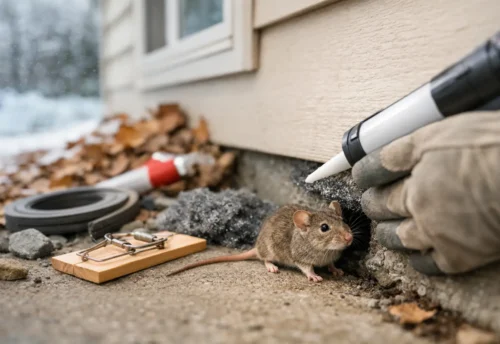
For a small, clearly isolated issue, durable materials such as metal mesh, hardware cloth, and appropriate exterior sealant can help close gaps. Avoid relying on expanding foam alone. Mice can chew through it, and it may hide a problem instead of solving it. Larger gaps, damaged vents, roofline openings, and areas around electrical or gas lines should be handled carefully to avoid creating a safety issue.
Remove food sources while you inspect and seal. Store pantry foods in hard containers, clean crumbs around appliances, secure garbage, and avoid leaving pet food out overnight. These steps do not eliminate an entry point, but they make your home less rewarding to mice that are nearby.
When a Professional Inspection Makes Sense
A professional inspection is the right move when you see repeated droppings, hear activity in walls or ceilings, find multiple damaged areas, or cannot safely reach the suspected opening. It is also helpful for rental properties, restaurants, offices, and other businesses where rodent activity can affect tenants, customers, or staff.
Discount Pest Control can identify active mouse routes, address the infestation, and help locate the exterior conditions that allow rodents to return. Discreet service and practical recommendations can make a stressful problem much easier to manage.
If you are finding fresh signs every few days, do not wait for the entry point to become obvious. The sooner the route is identified and the mice are dealt with properly, the sooner your home can feel quiet, clean, and protected again.

Leave a Comment