
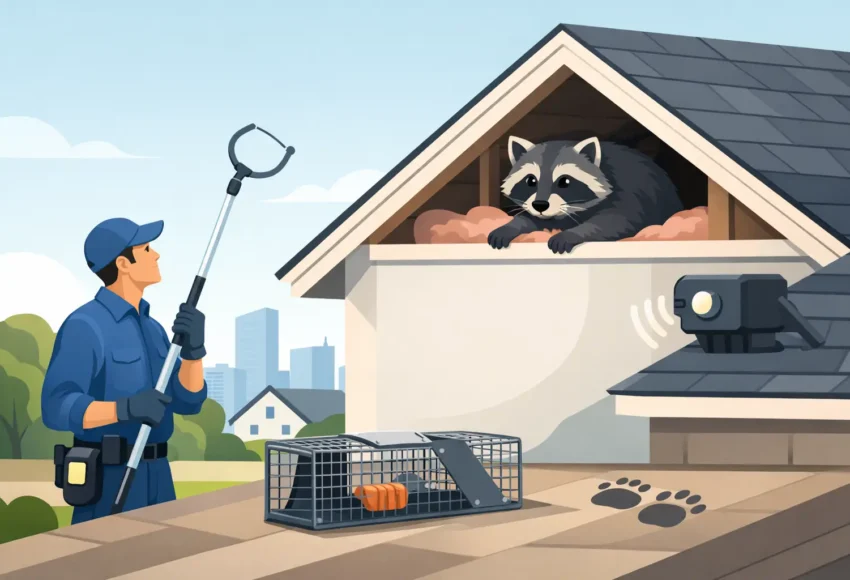
Raccoon Removal From Attic: What Works
If you are hearing heavy thumping overhead at night, you are probably not dealing with mice. In many Ontario homes, that noise points to one thing – a raccoon that has found a warm, sheltered place to nest. Raccoon removal from attic spaces needs to be handled quickly, but it also needs to be handled the right way. A rushed DIY attempt can leave you with property damage, an angry mother raccoon, or babies hidden in the insulation.
This is one of those pest problems that feels personal fast. The attic is part of your home, and once a raccoon gets in, the mess spreads quickly. Insulation gets torn apart, droppings build up, wiring can be disturbed, and the smell alone can become a serious issue. For homeowners and property managers, the real goal is not just getting the animal out. It is making sure it stays out.
Why raccoons get into attics
Raccoons are opportunistic. They are not choosing your attic because it is unusual. They are choosing it because it works. Roof vents, damaged soffits, loose shingles, and gaps near eaves give them easy access, especially if they are looking for a safe nesting spot.
Spring is often the worst time because female raccoons search for quiet places to have babies. Fall and winter can bring attic activity too, especially when temperatures drop and outdoor shelter becomes less reliable. In neighborhoods with mature trees, older roofs, or easy access from fences and garages, attic entry is even more common.
If you live in places like Georgina, Keswick, Sutton, or Mount Albert, where homes may back onto wooded areas or have more open roof access, raccoon issues can show up suddenly. One night of noise can turn into a full nesting problem within days.
Signs you need raccoon removal from attic areas
Some signs are obvious, and some are easy to mistake for a smaller pest problem. The biggest clue is the sound. Raccoons are heavy animals. You may hear stomping, dragging, scratching, or movement that sounds too loud to be rats or squirrels.
Other common signs include a strong odor coming from the attic or upper floors, torn shingles or vent covers, droppings near entry points, and visible damage around the roofline. If a raccoon has been inside for more than a short time, you may also notice stained ceilings, disturbed insulation, or noises at the same time every evening and early morning.
When babies are present, homeowners sometimes hear chirping or crying sounds. That is an important detail because removal becomes more delicate. Separating a mother from her young creates a bigger problem, not a faster solution.
Why DIY raccoon removal often goes wrong
It is understandable to want the problem gone immediately. Many people search for repellents, bright lights, loud music, or one-way doors and hope for a quick fix. Sometimes these methods help in very specific situations, but attic raccoon removal is rarely that simple.
The biggest issue is that it depends on who is in the attic and when. A single adult raccoon entering for shelter is different from a mother nesting with babies. If you seal the hole too early, the raccoon may tear a new one through the roof or soffit to get back in. If babies are left behind, you can end up with odor, sanitation issues, and a distressed animal problem inside the structure.
There is also the safety side. Raccoons can bite or scratch when cornered, and their droppings can carry harmful organisms. Going into a confined attic without the right protection is not worth the risk. Even outside, climbing onto a roof to inspect damage adds another layer of danger.
What professional raccoon removal from attic service should include
A proper service call should do more than remove the visible animal. First, the attic and roofline need to be inspected to confirm entry points, activity level, and whether young raccoons are present. That determines the safest removal method.
From there, humane removal or eviction methods can be used based on the season and the condition of the nest. In many cases, baby raccoons need to be carefully located and removed by hand so the mother can be reunited outside. This is where experience matters. Missing even one nesting area can leave the job unfinished.
After removal, the next step is cleanup and prevention. If the entry hole is not secured properly, the same raccoon or a new one will often come back. If contaminated insulation is left behind, the attic may continue to smell and attract other pests. The best outcome is a complete approach: remove, sanitize as needed, and animal-proof the vulnerable openings.
The real damage raccoons can cause
People often think the main issue is the noise. The noise is usually the first warning, but it is rarely the biggest problem. Raccoons are strong enough to rip apart vents, fascia, soffits, and insulation. They flatten nesting areas, create toilet spots, and can damage ductwork or wiring as they move through tight spaces.
In rental properties and commercial buildings, that can turn into complaints, cleanup costs, and repeat service calls if the issue is not fully addressed. In family homes, it can mean foul smells, stained drywall, and contamination above bedrooms or living spaces.
The longer the raccoon remains inside, the more expensive the repairs tend to become. Fast action usually saves money because it limits structural damage and shortens the cleanup process.
When timing matters most
There are situations where same-day or urgent service makes a real difference. If you hear aggressive movement, see a raccoon entering during daylight, notice water leaks tied to roof damage, or suspect babies in the attic, do not wait to see if the animal leaves on its own.
Daytime raccoon activity does not always mean the animal is sick, but it does raise concern. A raccoon that appears disoriented, unusually bold, or unable to move normally should be treated as a safety risk. The same goes for raccoons that have made their way into wall voids, garages, or occupied interior spaces.
For many customers, discretion matters too. If you manage tenants, run a small business, or simply do not want neighbors watching a pest issue unfold, a prompt and professional response helps contain the problem without unnecessary attention.
How to help before the technician arrives
You do not need to solve the problem yourself, but a few simple steps can prevent it from getting worse. Keep children and pets away from the attic access point and any visible entry area outside. Do not try to trap the raccoon or block the hole. Avoid entering the attic, especially if there are droppings, damaged insulation, or signs of babies.
If you can do so safely from the ground, make note of where the animal seems to enter and at what time you hear the most activity. That information can help speed up the inspection. What helps most is resisting the urge to force a quick fix. A professional removal plan works better when the situation has not been disturbed.
Preventing the next attic invasion
Once the raccoon is gone, prevention becomes the priority. That usually means securing roof vents with strong covers, repairing soffits and fascia, sealing construction gaps, and trimming tree branches that give easy roof access. Garbage control also matters. If food sources remain easy to reach, raccoons stay active around the property.
Prevention is not one-size-fits-all. Older homes may need more extensive sealing work, while newer homes often have one or two weak points that can be reinforced quickly. Detached garages, sheds, and low rooflines can also increase risk. The right prevention plan depends on how the raccoon got in and what made the property attractive in the first place.
For homeowners in communities where wildlife activity is common, regular exterior checks can catch the problem early. A loose vent cover or small soffit gap may not look urgent now, but it is exactly the kind of opening a raccoon will exploit later.
Choosing the right help
Not every pest issue requires the same response, and wildlife in the attic is a case where experience really counts. You want a team that understands safe removal, checks for babies, identifies all entry points, and knows how to keep the issue from coming back. Fast service matters, but thorough service matters just as much.
Discount Pest Control handles urgent wildlife problems with the kind of practical, no-nonsense approach most homeowners want. The job is to remove the raccoon safely, protect the people and pets in the home, and close off the access points so you are not dealing with the same stress again a week later.
If there is one helpful thing to keep in mind, it is this: attic noises rarely get better on their own. When a raccoon has chosen your attic, acting early gives you the best chance of a cleaner, safer, and less expensive fix.
Leave a Comment