
What Kills Bed Bugs Instantly?
You spot one bug on the mattress seam, and suddenly sleep feels impossible. When people ask what kills bed bugs instantly, they usually want one thing – fast relief. That makes sense. But with bed bugs, the bigger question is not just what kills on contact. It is what actually stops the infestation from growing.
The short answer is this: high heat kills bed bugs instantly at the right temperature, and certain professional insecticides can kill on contact. Rubbing alcohol may kill some bed bugs it hits directly, but it is unreliable and creates safety risks. Most store-bought sprays only kill the bugs you see, not the eggs hidden deep in cracks, furniture joints, baseboards, or wall voids.
That is why bed bug problems so often come back after a quick DIY attempt. Immediate kill sounds good, but complete control is what matters.
What kills bed bugs instantly at home?
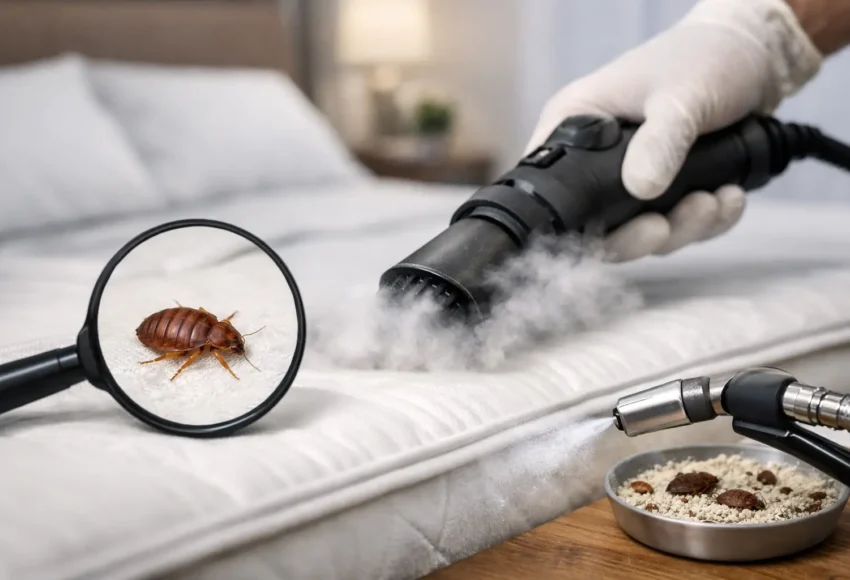
If you mean instant contact kill, heat is the most dependable answer. Bed bugs die quickly when exposed to high enough temperatures. Steam is especially useful because it can reach into mattress seams, upholstered furniture, bed frames, and other tight hiding spots where sprays may miss.
The catch is temperature and coverage. A hair dryer will not do the job. Tossing a blanket in a warm room will not do the job either. To kill bed bugs effectively with heat, you need sustained high temperatures applied directly where they are hiding. That is why professional heat equipment works better than improvised household methods.
You can also kill bed bugs instantly by crushing them, vacuuming them up, or hitting them directly with certain labeled sprays. But those are narrow wins. Bed bugs are experts at staying out of sight during the day, so killing the few you see is rarely enough.
What does not work the way people hope?
A lot of frustration comes from methods that sound strong but fall apart in real homes and apartments. Rubbing alcohol is one of the most common examples. It can kill some bed bugs on contact, but only if you spray the bug directly. It does not leave behind much lasting protection, it will not solve a hidden infestation, and it is flammable. Using it heavily around bedrooms is simply not worth the risk.
Foggers and bug bombs are another disappointment. They often scatter bed bugs deeper into walls, furniture, and neighboring rooms instead of eliminating them. Essential oils may smell better than chemical sprays, but they are not a dependable fix for an active infestation. Even over-the-counter bed bug products can fail if they are used in the wrong places or if the bugs are resistant.
This is where homeowners and property managers lose time. The infestation keeps spreading while they chase quick-contact products that do not reach eggs or hidden harborages.
Why instant kill is only part of the problem
Bed bugs are hard to eliminate because they do not stay out in the open. They hide in mattress piping, behind headboards, under baseboards, inside couches, around outlet covers, and in tiny cracks most people never think to inspect. A product that kills instantly on contact sounds great, but if it only touches 10 percent of the infestation, the problem is still very much alive.
Eggs are another major issue. Many products that kill live bed bugs do not kill eggs as effectively. That means new bugs can hatch days later, even after a strong-looking treatment. This is why complete bed bug control usually involves more than one tactic and often more than one visit.
For tenants, landlords, and small business owners, this matters even more. A half-solved infestation can lead to repeat complaints, damaged trust, and higher costs later.
The fastest reliable options for bed bugs
If speed matters, there are really two dependable paths: targeted steam treatment for smaller visible areas, or professional treatment for the full infestation.
Steam can work well when used properly on mattresses, box springs, bed frames, furniture seams, and carpeting edges. It gives immediate kill where it makes contact and avoids some of the concerns people have about overusing sprays around sleeping areas. But steam is technique-sensitive. Move too fast and the surface never gets hot enough. Miss one hiding area and bed bugs survive.
Professional treatment is usually the fastest route to actual control, especially when the infestation has spread beyond one bed. Depending on the situation, that may include commercial-grade heat, residual insecticides, dust formulations in voids, follow-up inspections, and clear prep instructions so the treatment has the best chance of working. The right plan depends on the layout of the home or unit, how long the bugs have been there, and how far they have spread.
Signs you are past the DIY stage
Sometimes a quick vacuum and laundry cycle can help reduce a very early issue. But there is a point where trying more home remedies just delays the fix.
If you are waking up with new bites, seeing bed bugs in more than one room, finding black spotting on mattresses or furniture, or noticing bugs in couches and common areas, the problem is likely established. The same is true if you live in a townhouse, apartment, duplex, or multi-unit building where bed bugs can move between units.
At that stage, instant-kill products are not a strategy. They are a temporary reaction.
What kills bed bugs instantly in professional treatment?
Professional exterminators usually rely on methods that do more than kill on sight. High-temperature steam and whole-room or targeted heat can kill bed bugs quickly when done correctly. Licensed products may also be used to kill active bugs and leave residual protection in cracks and crevices where bed bugs travel and hide.
That combination matters. Fast kill handles what is active now. Residual treatment helps catch what emerges later or what was missed in hard-to-reach spaces. This layered approach is one reason professional service is often more effective than relying on one spray from the hardware store.
For homes and rental properties in places like Georgina, Keswick, Sutton, or Bolton, fast response also matters. Bed bugs do not stay put because you are busy or hoping it clears up on its own.
How to protect your home while you wait for treatment
If you already suspect bed bugs, avoid moving bedding, clothing, or furniture from room to room unless items are sealed first. That is one of the easiest ways to spread them. Wash and dry fabrics on high heat when possible, reduce clutter around beds and baseboards, and vacuum carefully along sleeping areas and furniture edges.
Try not to throw out furniture too quickly. People often drag an infested mattress or chair through the house, spreading bugs on the way out, then replace it before the infestation is actually gone. That usually makes an expensive problem worse.
If you need help with active bed bugs, professional bed bug treatment is the safest way to move from panic to a real solution. The goal is not just to kill one bug instantly. It is to make sure the next one never gets the chance to bite.
The real answer most people need
When customers ask what kills bed bugs instantly, they are usually looking for reassurance that this can be handled. It can. But the honest answer is that instant kill and complete elimination are not the same thing.
Heat is the best immediate killer. Steam can help. Some sprays kill on contact. Alcohol is not a smart fix. And if the infestation is already established, the fastest path to peace of mind is a treatment plan built to find, kill, and stop bed bugs at every stage.
If you are losing sleep, dealing with bites, or worried about the problem spreading through your home or property, do not wait for it to get worse. Fast action is what keeps bed bug problems smaller, safer, and less expensive to resolve.
A bed bug problem feels personal, but the solution should be practical. The right treatment gives you your space back – and lets you sleep without second-guessing every itch.

Leave a Comment