
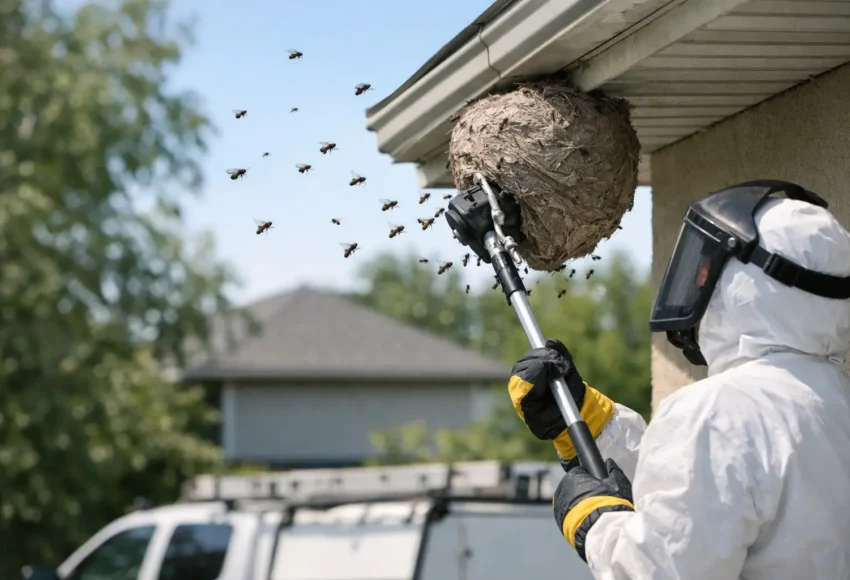
Wasp Nest and Hornets Removal Done Safely
You usually notice a wasp problem all at once. One day the yard feels normal. The next, there is a steady stream of insects flying in and out of the soffit, deck, shed, or roofline, and nobody wants to get too close. That is when wasp nest and hornets removal stops being a minor chore and becomes a real safety issue.
For homeowners and business owners, the biggest mistake is waiting to see if the nest will go away on its own. It usually does not – at least not before the colony grows larger, more defensive, and harder to deal with safely. If the nest is near an entryway, patio, playground area, garbage zone, or customer-facing space, the risk goes up quickly.
Why wasps and hornets become urgent fast
A small nest in spring can turn into a serious problem by mid to late summer. Worker activity increases, the nest expands, and the insects become much more likely to defend the area if they feel disturbed. That matters if you have children, pets, tenants, staff, or customers moving nearby every day.
Hornets are especially concerning because people often spot them later than they should. Their nests may be tucked into trees, wall voids, eaves, attics, or other high and hidden spaces. By the time the traffic is obvious, the colony may already be well established.
The other issue is unpredictability. Some nests remain quiet until a lawn mower passes, a door slams, or someone brushes against the wrong surface. Then the response is immediate. For anyone with sting allergies, even one bad encounter can become a medical emergency.
Wasp nest and hornets removal is not a simple DIY job
A lot of people start with the same thought: buy a spray can, wait until dark, and handle it themselves. Sometimes that works on a small, exposed nest that is easy to reach. Often, it does not.
The problem is not just the insects. It is the nest location, the colony size, the access point, and what is hidden behind the surface. A visible nest under a roof edge may be only part of the problem if wasps are also entering a wall cavity. Spraying the outside without treating the actual source can leave live activity inside the structure.
There is also the issue of timing. Wasps and hornets are less active at certain hours, but they are not harmless. If treatment is incomplete, agitated insects may scatter and re-enter through new openings. In some cases, people knock down a nest too early, assume the issue is solved, and then find the insects rebuilding nearby within days.
DIY attempts also tend to go wrong when ladders are involved. A nest under second-story eaves or near a steep roofline is risky before you even factor in stings. If there is any chance you could lose balance, disturb a large colony, or expose children and pets, it is better to stop there and bring in a professional.
Signs the nest is bigger than it looks
Not every infestation comes with a clearly visible paper nest. Sometimes the warning signs are more subtle. You may notice repeated insect traffic around the same soffit gap, vent, siding seam, attic opening, or deck cavity. You might hear faint buzzing in a wall or ceiling. In a commercial setting, staff may report increased wasp activity around loading doors, dumpsters, outdoor seating, or signage.
If you are seeing dozens of insects returning to one location, there is a strong chance the nest is established inside or behind that area. That changes the removal approach. The goal is not just to kill a few visible insects. The goal is to treat the source and reduce the chance of repeat activity.
What professional removal does differently
Professional wasp nest and hornets removal starts with identifying the species, the nest type, and the exact access points. That matters because ground-nesting wasps, exposed paper wasps, and hornets in a structural void do not behave the same way and should not be treated the same way.
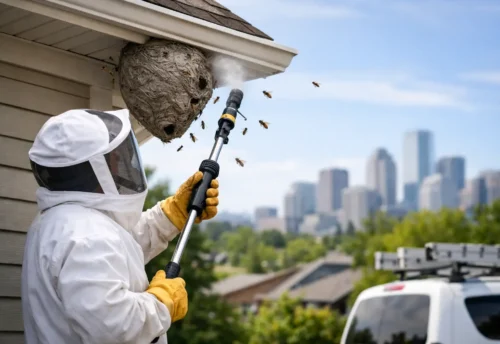
The next step is choosing the safest treatment for the location. If the nest is attached to an exterior surface, removal may be direct and straightforward. If the colony is inside a wall, soffit, attic, or roof area, treatment may need to target the entry route and the active nest zone without creating a bigger problem inside the structure.
This is also where safety matters most. A trained technician is not guessing from six feet away with a store-bought spray. They are approaching the problem with the right equipment, a plan for containment, and experience handling aggressive insect behavior. For families, tenants, and businesses, that usually means faster results and less chance of someone getting stung in the process.
At Discount Pest Control, the focus is on fast response, practical treatment, and safe solutions for people and pets. That matters when the nest is near a front door, school route, play area, or business entrance and you need the problem handled without delay.
When you should call right away
Some situations should never be put off until the weekend. If the nest is near your front door, garage, porch, deck, play structure, dog run, patio furniture, or HVAC equipment, call as soon as you notice regular activity. The same goes for nests in commercial spaces where employees or customers could be exposed.
You should also act quickly if anyone in the home or building has a known sting allergy, if the nest is hard to reach, or if you have already tried DIY treatment and the activity continues. A failed first attempt can make the colony more defensive, not less.
In communities like Georgina, Keswick, Sutton, Mount Albert, Pefferlaw, Bolton, and Caledon, warmer months can bring a sharp increase in wasp activity around homes, cottages, outbuildings, and small businesses. Local experience helps because nest placement and seasonal timing are not always the same from one property type to the next.
What to do while you wait for service
Keep your distance from the nest and do not block or disturb the flight path. Children and pets should be kept away from the area. If the nest is near a doorway that must be used, move slowly and avoid swatting at insects, since sudden movements can trigger defensive behavior.
Do not try to seal the opening if wasps or hornets are entering a wall or soffit. That can trap insects inside and push them into interior spaces. It can also make proper treatment harder later.
If the activity is around food service, trash bins, or outdoor seating, remove attractants where possible. Close garbage lids, clean sugary spills, and keep food covered. These steps will not solve the nest, but they can reduce extra insect traffic nearby.
Will they come back after removal?
Sometimes yes, sometimes no. It depends on what attracted them in the first place and whether the original nesting site remains accessible. If there is a protected void, gap, overhang, or quiet cavity that worked once, another queen may investigate it in a future season.
That is why removal is only part of the job. Prevention matters too. After treatment, it helps to inspect rooflines, soffits, vents, siding gaps, sheds, fences, and deck cavities for places that invite new nesting. Trash management, regular exterior checks, and early-season attention can make a real difference.
The good news is that early action is almost always easier and less expensive than dealing with a mature colony later. The longer a nest stays active, the more defensive the insects become and the more disruption they cause to daily life.
Choosing help you can trust
When you need wasp nest and hornets removal, speed matters, but so does judgment. You want someone who will assess the situation properly, use a treatment that fits the location, and handle the problem without creating more risk for your family, tenants, staff, or customers.
That is especially true if discretion matters. Many homeowners and businesses do not want a pest issue drawing extra attention, and a professional service approach helps keep the process calm and controlled.
If you are seeing active wasp or hornet traffic around your home or building, do not wait for someone to get stung before taking it seriously. The safest move is usually the simplest one – get the nest assessed early, get it treated correctly, and get your space back to normal before the problem grows.
Leave a Comment