

Seasonal Pest Risks in Ontario Explained
The first warm stretch after a long Ontario winter tends to bring the same surprise for a lot of property owners – pests that were quiet for months suddenly show up all at once. Ants appear in kitchens, wasps start scouting rooflines, and rodents that spent winter indoors keep finding reasons to stay. Seasonal pest risks in Ontario are not just about weather changes. They are about timing, shelter, food sources, and how quickly a small problem can turn into a bigger one.
For homeowners, landlords, and business owners, the challenge is not knowing that pests exist. It is knowing when the risk changes and what that means for your building. A problem in April does not look the same as a problem in August or November. If you understand the seasonal pattern, you can spot trouble earlier and avoid the stress of dealing with a full infestation later.
Why seasonal pest risks in Ontario change so much
Ontario gives pests a little bit of everything. Freezing winters push rodents and wildlife toward warm structures. Wet springs create ideal conditions for insects that need moisture. Hot summers speed up breeding cycles. Fall sends many pests looking for shelter before temperatures drop.
That means pest pressure is never really gone. It just shifts. Some seasons bring visible activity outdoors, while others push pests into basements, attics, wall voids, crawl spaces, and commercial storage areas. The mistake many people make is assuming no sightings means no risk. In reality, some of the most expensive pest problems start quietly.
Local conditions matter too. Properties near water, wooded lots, open fields, restaurants, dumpsters, or older neighborhoods often face higher pressure. In places like Georgina, Keswick, Sutton, and Pefferlaw, for example, a mix of residential growth and natural surroundings can create ideal conditions for both insects and wildlife.
Spring pests: when activity starts building
Spring is when many Ontario pest issues become visible again. As temperatures rise, overwintering insects wake up and scouting behavior begins. This is often when homeowners first notice ants near sinks and windows, spiders around entry points, and early wasp activity around eaves, sheds, and decks.
Spring also tends to reveal rodent activity that was hidden during winter. Mice and rats that moved inside for warmth may still be nesting in insulation, utility rooms, garages, or behind walls. If you hear scratching, find droppings, or notice gnaw marks, the problem may have started months earlier.
Moisture is a major spring driver. Snowmelt and rain can increase damp conditions around foundations and basements, which attracts pests that prefer humid spaces. Small cracks around doors, pipes, vents, and siding become easy access points when pests start moving again.
This is a good time to pay attention to what looks minor. One wasp scouting your soffit does not seem urgent, but it can be the first sign of a nest site being chosen. A few ants on the counter may point to a colony nearby. Early treatment is usually simpler and less disruptive than waiting for numbers to build.
Summer pests: peak pressure for insects and stinging pests
Summer is when pest calls often spike. Warm weather accelerates breeding, and food is more available indoors and outdoors. This is the season when wasps, ants, flies, cockroaches, and bed bugs can become especially disruptive.
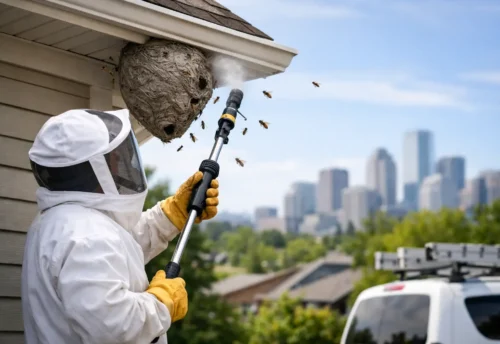
Wasps are one of the most common summer concerns because nests grow quickly. A nest that starts small in early summer can become a serious safety issue by mid to late summer, especially around entrances, patios, roofs, playgrounds, and commercial properties with customer traffic. If wasps are entering the same gap repeatedly or hovering around a certain part of the building, it is usually not random.
Bed bugs are another summer problem, largely because travel increases. They do not care what season it is, but summer movement between hotels, rental units, public transit, and guest spaces tends to create more introductions. In multi-unit housing and hospitality settings, that matters a lot. Fast action is key because bed bugs spread by hitchhiking, not by staying put.
Cockroaches also thrive in warm conditions, especially in spaces with moisture, food debris, and clutter. Restaurants, break rooms, apartment kitchens, and storage areas are common trouble spots. By the time roaches are seen during the day, the population is often well established.
Summer pest control is not just about comfort. It is also about safety and reputation. For a family, that may mean protecting kids and pets from stings. For a business, it may mean avoiding customer complaints or tenant issues before they escalate.
Fall pests: the season people underestimate
Fall is one of the most important times to think about seasonal pest risks in Ontario because this is when many pests start looking for a place to spend the colder months. Rodents are the biggest example. Mice can squeeze through very small openings, and once temperatures start dropping, garages, basements, attics, and wall cavities become attractive shelter.
This is also when wasp behavior changes. Toward the end of the season, colonies become more aggressive and more noticeable around food, garbage, and outdoor eating areas. Even if the nest will not survive winter, late-season activity can still create immediate risk.
Spiders also become more visible in fall, partly because prey insects are moving and partly because cooler weather changes where they settle. While many spiders are more nuisance than danger, increased sightings often mean the property is supporting other insect activity too.
Fall prevention matters because once pests settle in, winter removal can become more complicated. A few entry gaps around a foundation vent or garage door may not seem urgent in September. By November, they may be the reason you are hearing rodents in the ceiling.
Winter pests: hidden, but not gone
A lot of people assume winter gives them a break from pest issues. Outdoors, activity does drop for some species. Indoors, the opposite is often true. Rodents remain one of the top winter pest problems in Ontario because heated buildings provide food, water, and protection from the cold.
Mice and rats are not just unpleasant. They contaminate food, damage insulation, chew wires, and create ongoing stress in homes and businesses. In rental properties, one overlooked rodent issue can quickly affect multiple units. In commercial spaces, it can damage inventory and create sanitation concerns.
Winter is also when people notice the signs more clearly. With windows closed and outdoor noise lower, scratching in walls or ceilings stands out. Droppings in storage rooms, under sinks, or in cupboards become easier to spot. The danger in winter is delay. Many people wait until spring, assuming the problem will fade. Usually it does not.
What makes one property more vulnerable than another
Not every building faces the same level of risk, even on the same street. Older homes often have more entry points, aging seals, and hidden voids. Properties with heavy tree cover, standing water, wood piles, bird feeders, pet food, or cluttered storage areas tend to attract more pest activity.
Commercial properties have their own pressure points. Restaurants, retail units, offices with shared kitchens, and warehouses all offer different conditions that pests exploit. Multi-unit housing adds another layer because pests can move between units through plumbing lines, walls, and hallways.
There is also a trade-off with DIY prevention. Basic steps like sealing food, reducing moisture, and cleaning up outdoor debris absolutely help. But if pests are already nesting inside, prevention alone will not solve the issue. That is where many people lose time. They treat the symptom they can see while the source stays active behind the scenes.
When to call for help instead of waiting
If you are seeing repeat pest activity, hearing movement in walls, finding droppings, or noticing stings, bites, or nesting behavior, it is time to act. The best moment to call is usually earlier than people think. A fast response can mean a smaller treatment area, less disruption, and lower overall cost.
That is especially true for rodents, bed bugs, and wasps. These are not pests that usually improve with patience. They spread, reproduce, or become more dangerous over time. For property managers and business owners, waiting can also turn a manageable issue into complaints, lost trust, or health concerns.
A professional inspection helps answer the part that matters most: not just what pest is present, but why it is there and how to stop it from coming back. Safe treatment options, discreet service, and clear next steps matter when people are trying to protect families, tenants, staff, and pets without creating more stress.
If there is one practical takeaway from seasonal pest risks in Ontario, it is this: timing matters. The sooner you respond to the season you are in, the less likely that pest problem is to follow you into the next one.

Leave a Comment