
Raccoon Removal Versus Exclusion Methods Compared
A raccoon in the attic is not just a noisy overnight guest. It can tear insulation, damage ductwork, leave droppings, and create an opening that other wildlife may use later. When comparing raccoon removal versus exclusion methods, the right answer is usually not one or the other. Removal addresses the animal currently inside. Exclusion keeps raccoons from coming back through the same vulnerable spot.
For homeowners, landlords, and business owners, the goal is simple: get the animal out safely, protect the property, and avoid paying for the same problem twice. Don’t worry – fast, professional wildlife service can handle all three when the work is done in the right order.
Raccoon Removal Versus Exclusion Methods: The Main Difference
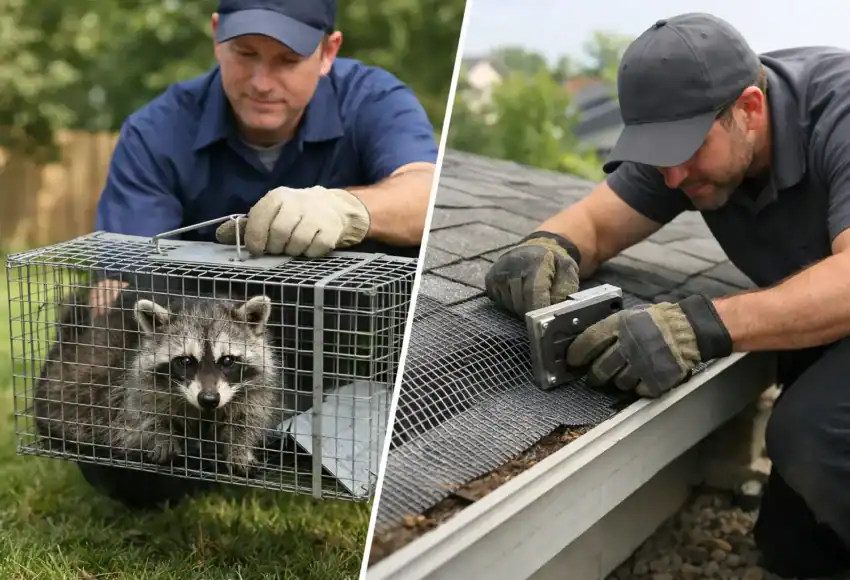
Raccoon removal means dealing with the raccoon that has already entered your building. Depending on the situation, this can involve a humane one-way door, a carefully placed live trap where permitted, or another wildlife-control approach that gets the animal out without putting people, pets, or the animal at unnecessary risk.
Exclusion means closing the entry points raccoons use to get in. This may include repairing a damaged soffit, reinforcing roof vents, securing chimney openings, covering gaps around decks, or repairing loose siding. It is the property-protection part of wildlife control.
Think of removal as solving the immediate emergency. Exclusion is what stops the repeat emergency. A raccoon may leave on its own for food at night, but if the opening remains available, it can return before morning or another raccoon can move in later.
When Raccoon Removal Is Necessary
Removal is necessary when a raccoon is actively living in an attic, crawlspace, garage, shed, chimney, or another enclosed area. Common signs include heavy thumping after dark, scratching above the ceiling, insulation pulled toward one area, a strong odor, droppings, or visible damage along the roofline.
A mother raccoon with babies requires special care. Spring and early summer are common denning periods, and sealing an opening before confirming whether young are inside can create a much bigger problem. The mother may cause serious damage trying to get back in. Babies left behind can also die inside the structure, leading to odor and insect problems.
This is why a proper inspection matters before anyone closes a hole. A wildlife professional should identify active entry points, check for signs of young, and choose a removal plan that allows the family to leave safely when possible. The process may take more than one visit because the work has to match the animal’s behavior and the condition of the building.
Removal also matters when a raccoon is trapped inside a living area, acting unusually, or creating an immediate safety concern. Keep children and pets away, do not attempt to corner the animal, and do not handle it yourself. Raccoons can bite or scratch when frightened, and direct contact can expose people and pets to disease risks.
Why Exclusion Is Usually the Long-Term Fix
Raccoons are intelligent, strong, and persistent. A loose vent cover or a small gap at the soffit may be enough for one to pull apart and enlarge. Once a raccoon has successfully found shelter in an attic or crawlspace, the site can become a familiar den location.
Exclusion focuses on making those spaces inaccessible. Quality work is more than stuffing a hole with foam or placing a light screen over an opening. Materials must be durable, securely fastened, and fitted in a way that does not create a new weak point nearby.
A complete exclusion inspection commonly looks at roof edges, roof vents, plumbing stacks, attic louvers, chimneys, soffits, fascia boards, garage doors, deck skirting, and gaps where utility lines enter the building. The exact repair depends on the property. Older homes, homes near wooded areas, and buildings with previous roof damage often need closer attention.
Exclusion is especially valuable when there is no confirmed raccoon inside but there is evidence of attempted entry. Claw marks on vents, displaced soffit panels, torn screens, and animal tracks near a deck are warning signs. Addressing them early can prevent an attic infestation and the higher cost of cleanup and restoration.
Why Sealing an Opening Too Soon Can Backfire
The biggest mistake in raccoon control is blocking the entry hole while the animal is still inside. This can trap the raccoon in an attic or wall cavity, where it may panic and tear through drywall, wiring areas, or other sections of the roofline to escape.
It can also leave young animals separated from their mother. That is why exclusion should follow a confirmed removal plan, not replace it when there is active wildlife inside. One-way doors can be useful in certain situations because they let a raccoon leave but prevent it from returning. However, they must be installed at the correct opening and only after a professional has assessed whether babies may be present.
There is also a timing issue. Raccoons may use more than one entry point. Closing only the obvious hole without inspecting the rest of the building can simply push the animal to another weak spot. A careful inspection prevents partial repairs that look finished but fail within days.
The Best Approach Is Often Removal and Exclusion Together
For an active attic problem, the most dependable plan is usually a combined service. First, identify the raccoon’s access point and determine whether young are involved. Next, remove or allow the raccoon to exit through a humane, appropriate method. Then repair and reinforce the access point after the space is confirmed clear.
Cleanup may also be needed. Raccoons can leave urine, feces, nesting material, and damaged insulation behind. In some cases, contaminated insulation should be removed and affected areas cleaned and deodorized. This helps restore the space and reduces lingering odors that may attract other animals.
The exact scope depends on how long the raccoon has been inside, where it nested, and how much damage occurred. A raccoon that briefly entered a garage through a damaged door seal may need a simple repair. A mother raccoon living in an attic for weeks may require removal, exclusion, sanitation, and attic restoration.
What Homeowners Can Do Before Help Arrives
Do not climb onto the roof, reach into an attic opening, or try to scare a raccoon out with loud noises. These actions can injure you, separate young from a mother, or cause the animal to move deeper into the structure.
Instead, keep pets indoors or supervised, move outdoor food sources away from the area, and secure garbage bins with tight-fitting lids. Avoid leaving pet food outside overnight. If the raccoon is using a deck, shed, or garbage area rather than living inside, reducing food access can make the property less attractive while you arrange an inspection.
Take note of where you hear noise and when it happens. Nighttime activity, scratching near a particular ceiling area, or repeated movement at a roof corner can help identify the likely entry point. If it is safe to do so from the ground, photographs of visible damage can also be useful.
Choosing a Raccoon Control Service
Ask whether the service includes both removal and exclusion recommendations. A low-cost removal that leaves the opening exposed may not be a bargain if raccoons return next week. You should also ask how the technician checks for babies, what repairs are included, and whether cleanup is recommended after the animal is gone.
For property managers and small business owners, discreet service and quick response can be particularly important. Wildlife activity near tenants, customers, storage areas, or entrances can disrupt normal operations and create safety concerns. Discount Pest Control provides fast, discreet wildlife support for property owners who need a clear plan without unnecessary delays.
Protect the Home After the Raccoon Leaves
The quiet after a raccoon leaves does not always mean the issue is over. Have the entry area checked, confirm that all animals are out, and make the repairs that keep the space protected through the next season. A safe removal followed by solid exclusion gives your home the best chance of staying wildlife-free – and lets you get back to a quieter night.
Leave a Comment