
Why Are Wasps Around Windows? Causes and Fixes
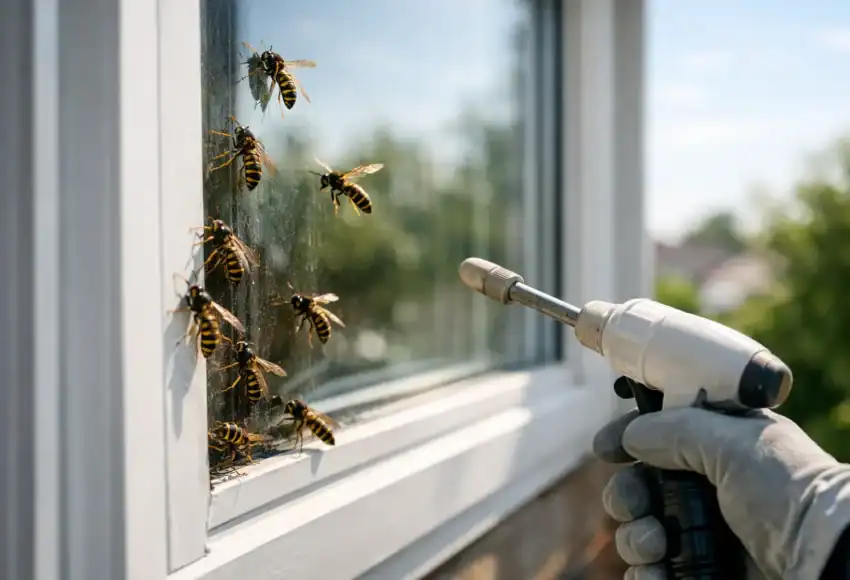
A wasp repeatedly tapping against a window can feel like it is trying to get inside. Usually, the answer to why are wasps around windows is simpler: they are following light, warmth, food scents, or a route to a nest hidden close to the frame. The key is figuring out whether you are seeing an occasional wandering wasp or evidence of a nest that needs attention.
For homeowners, landlords, and business owners, this is not something to ignore for weeks. A small amount of activity may pass on its own, but steady traffic around the same window can mean wasps are entering a gap in the siding, soffit, brick, or window trim.
Why Are Wasps Around Windows in the First Place?
Windows create several conditions wasps naturally investigate. The glass reflects daylight and vegetation, while the frame may hold heat long after the sun moves. Open windows can also release attractive smells from food, sweet drinks, garbage, pet food, or flowering indoor plants.
In late summer and early fall, wasps are especially persistent around homes. Their colony is large at this point in the season, and workers spend more time looking for sugary foods. That is why a wasp that was barely noticeable in June can become an everyday problem near kitchen, patio, or dining-area windows in August.
Sometimes, a wasp is not attracted to the window at all. It is using the area as a landmark while traveling to and from a nearby nest. If you see several wasps arriving from the same direction and disappearing behind trim or siding, treat it as a likely nest entrance.
Light and reflections can confuse wasps
Wasps can be drawn to bright windows because the reflected sky and outdoor plants look like open space. This is common when a wasp has entered a garage, attic, sunroom, or enclosed porch and cannot find its way back outside. It may circle the glass repeatedly because it sees the light but cannot reach the exit.
A single wasp inside is usually an access issue, such as a screen gap, open door, damaged weather stripping, or opening around a utility line. Several wasps indoors, especially near one window, is more concerning. They may be emerging from a nest in a wall void, attic, or ceiling area.
Gaps around window frames offer shelter
Wasps do not need a large opening. Small cracks around window casing, loose caulking, damaged screens, and gaps where siding meets trim can provide access to protected spaces. Yellowjackets may nest underground but can also use wall cavities. Paper wasps often build open, umbrella-shaped nests under eaves, shutters, overhangs, and window ledges.
Hornets and some wasp species may create larger enclosed paper nests in sheltered exterior spaces. If activity is concentrated around an upper-story window, roofline, or soffit, the nest may be hidden where it cannot be safely seen from the ground.
Food and moisture keep them nearby
Wasps are opportunistic. A recycling bin with sticky drink containers, a garbage can without a tight lid, fallen fruit, barbecue residue, and pet bowls can all keep them active around a property. Leaky window air conditioners, condensation, and nearby standing water can also provide moisture during hot weather.
This does not mean your home is dirty. It means the area offers something useful to foraging insects. Cleaning up food sources can reduce random visitors, but it will not solve a nest established inside a wall or beside the window.
How to Tell If There Is a Wasp Nest Near the Window
Watch the wasps from indoors or from a safe distance outdoors. You are looking for a pattern, not trying to get close enough to inspect the nest. One or two wasps that appear at different times may simply be foraging. Repeated movement through one crack, vent, or opening is the strongest sign of a nest.
Common warning signs include:
- Wasps entering and leaving the same spot every few minutes
- Increased activity during warm, sunny parts of the day
- A visible paper nest under an eave, shutter, deck edge, or window awning
- Buzzing or scratching sounds from a wall, ceiling, or attic near the window
- Wasps appearing inside a room with no clear route from outdoors
The size of the problem can be misleading. You may only see a few insects at the opening because most of the colony remains inside the cavity. Blocking that opening with foam, tape, or caulk before the nest is treated can force wasps into the home or send them searching for another exit.
What You Can Do Safely Right Away
Start by keeping windows closed where activity is heavy, especially if children, pets, customers, or tenants use that room. Check screens for tears and make sure they fit tightly. If a wasp is trapped inside, close interior doors, open one exterior window if it is safe to do so, and let the insect find its way out. Avoid swatting, since sudden movement can make a wasp defensive.
Outside, remove easy food sources. Rinse recycling, cover garbage, clean outdoor eating areas, and pick up overripe fruit. Keep sweet drinks covered when spending time near windows or patios. These steps can reduce foraging wasps, even when they do not eliminate a nest.
Do not spray insecticide into a crack around a window, wall, or soffit. Store-bought sprays may not reach the nest, can leave agitated wasps trapped in the structure, and may expose people or pets near the window. Climbing ladders to reach a high nest adds another avoidable risk.
When Wasp Removal Is the Safer Choice
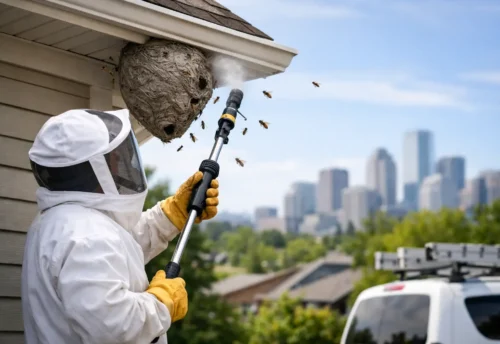
Professional removal is the right move when there is regular traffic into a wall, a visible nest near a doorway or window, activity inside the home, or anyone on the property has a known allergy to stings. It is also wise to act quickly at rental properties and businesses, where a sting can affect tenants, staff, or customers.
A trained technician can identify the likely nesting location, treat the colony appropriately, and advise on sealing entry points after activity has stopped. The order matters. Exclusion work is useful, but only after the nest has been dealt with so wasps are not trapped indoors.
In York Region communities such as Georgina, Keswick, Sutton, and Bolton, homes often have mature trees, rooflines, sheds, decks, and exterior gaps that give wasps plenty of protected nesting options. Discount Pest Control provides fast, discreet wasp nest removal for homes and businesses when window activity points to more than an occasional visitor.
Can You Prevent Wasps From Returning Next Season?
You can lower the chance of repeat nesting, although no property can be made completely wasp-proof. In early spring, inspect window trim, eaves, shutters, soffits, sheds, and deck structures for small new nests. Paper wasps often begin with a small nest that is much easier to address before the colony grows.
After a nest has been removed and wasp activity has ended, repair damaged screens, replace failing caulk, and close gaps around exterior fixtures. Keep branches trimmed away from the house where practical, because dense vegetation near windows can give wasps a sheltered approach to the structure.
The best response depends on what you are seeing. A lone wasp near a sunny window may need nothing more than a closed screen and a cleaner patio. A steady stream entering the same crack is a different situation. Give it space, keep people away from the area, and get the source handled before a small warning becomes a painful problem.

Leave a Comment