
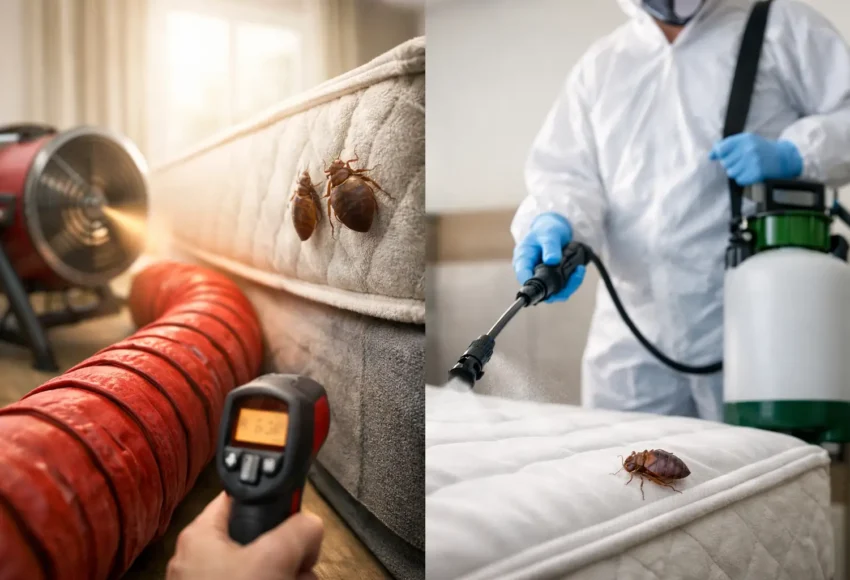
Bed Bug Heat Treatment vs Spray
If you have bed bugs, the question usually comes up fast: bed bug heat treatment vs spray – which one actually gets the problem under control without dragging it out for weeks? That choice matters because the wrong treatment can mean more bites, more stress, and more money spent repeating the job.
For most property owners, the real answer is not which method sounds better. It is which method fits the size of the infestation, the type of property, your budget, and how quickly you need results. Heat can be extremely effective and fast. Spray treatments can also work well, especially when handled properly and followed up as needed. The best option depends on the situation inside the room, not just the label on the service.
Bed bug heat treatment vs spray: the basic difference
Heat treatment raises the temperature in affected rooms high enough to kill bed bugs at every life stage, including eggs. The goal is to get lethal heat deep into mattresses, furniture, baseboards, and hiding spots where bed bugs tend to stay out of sight.
Spray treatment uses professional insecticides, and sometimes additional dust products, applied to cracks, crevices, bed frames, furniture joints, and other known harborages. Rather than heating the whole room, spray treatment targets where bed bugs travel and hide.
That difference shapes everything else – speed, prep, cost, follow-up, and how disruptive the treatment feels.
When heat treatment makes the most sense
Heat is often the preferred choice when you want fast knockdown across a larger affected area. Because it treats the whole space at once, it can reach places that are hard to treat one crack at a time. If bed bugs have spread beyond the bed into couches, dressers, wall voids, or multiple furniture pieces, heat can be a strong option.
Another reason people choose heat is the life-stage issue. Bed bug eggs are one of the hardest parts of any infestation. When the heat is applied correctly and temperatures are maintained long enough, eggs can be eliminated along with active bugs. That can reduce the need for repeated visits, although follow-up inspection is still smart.
Heat also appeals to customers who want to avoid heavy chemical use in sleeping areas. For families with children, pets, or sensitivities, that can be reassuring. It does not mean the process is casual or risk-free. It needs trained technicians, the right equipment, and careful monitoring so the treatment reaches the correct temperature evenly.
In some homes and commercial spaces, heat is especially useful when bed bugs need to be removed quickly with as little delay as possible. Turnover situations in rentals, hospitality settings, or busy households can make speed a big factor.
Where spray treatment has the advantage
Spray treatment is often more affordable upfront, which matters for many homeowners and property managers. If the infestation is limited, caught early, or confined to a few known areas, a targeted professional spray program may be the practical choice.
Sprays also leave residual product in treated areas, which can help kill bed bugs that come out after the initial application. Heat kills during the treatment window, but once the room cools down, that part is over. Spray treatments can keep working after the technician leaves, depending on the products used and where they are applied.
This approach can make sense in apartments, shared housing, or cluttered spaces where heat circulation may be harder to manage. It can also be a better fit when certain heat-sensitive items cannot be removed easily.
That said, spray treatment usually requires more patience. Bed bug control with sprays often takes more than one visit, and customer preparation matters a lot. If laundry, decluttering, and access to hiding spots are not handled properly, results can slow down.
Cost, speed, and disruption
For many customers, bed bug heat treatment vs spray comes down to these three things.
Heat treatment usually costs more at the start because it involves specialized equipment, temperature monitoring, and whole-room treatment. But a higher upfront cost does not automatically mean it is overpriced. In some cases, paying more once is cheaper than paying less several times if a problem drags on.
Spray treatment is usually easier on the initial budget. That can be the deciding factor for a homeowner trying to solve the issue quickly without a major expense. Still, lower upfront cost should be weighed against the possibility of follow-up appointments.
Speed is where heat often stands out. A properly performed heat treatment can deliver major results in a single day. Spray programs tend to work over time, especially when eggs hatch between visits.
Disruption depends on the property. Heat treatment requires removing or protecting items that may be damaged by high temperatures, such as certain electronics, candles, medications, pressurized containers, and heat-sensitive belongings. Spray treatments involve prep too, but the prep is different – more focus on laundering, reducing clutter, and staying out of treated areas until they are safe to re-enter.
Safety depends on the provider, not just the method
Customers often ask which option is safer. The honest answer is that both can be safe when performed correctly by trained professionals, and both can cause problems when handled poorly.
Heat treatment must be controlled carefully. If temperatures are uneven, bed bugs can survive in cooler pockets. If heat-sensitive items are overlooked, property damage can happen. Good operators inspect first, explain prep clearly, and monitor the process throughout the treatment.
Spray treatment must use the right products in the right places at the right amounts. More chemical is not better. Professional application matters because bed bugs hide close to where people sleep and spend time. The treatment has to be effective without creating unnecessary exposure risks.
This is why experience matters more than marketing claims. A company should be able to explain why it is recommending one method over the other for your specific situation.
Heat vs spray in different property types
In a single-family home, heat can work very well when the infestation has spread across bedrooms or common living areas. It is also attractive when homeowners want quick relief and fewer repeat visits.
In apartments or condos, spray treatment is sometimes the more practical first step, especially when surrounding units may also need inspection. Bed bugs do not respect unit lines, so treatment planning has to account for neighboring spaces.
For rental properties, either method can make sense depending on turnover time, furnishing, and budget. A vacant unit may be a better heat candidate than an occupied one packed with belongings. For occupied rentals, targeted spray treatment with follow-up can be easier to stage.
For small businesses, it depends on the layout and urgency. Offices, waiting rooms, staff areas, and lodging environments each call for a different approach. Discreet service and fast response matter a lot in those settings, especially when reputation is on the line.
Why prep and follow-up matter so much
No bed bug treatment works well if the prep is ignored. That is true for both heat and spray.
With heat, technicians need access and airflow so hot air reaches the places bed bugs hide. Piles of clutter, tightly packed storage, and blocked furniture can create cooler zones where bed bugs survive.
With sprays, prep affects whether the product reaches the right cracks, seams, and joints. If rooms are overcrowded or furniture cannot be accessed, treatment becomes less effective.
Follow-up matters too. Even after a strong treatment, monitoring is part of doing the job right. Bites can sometimes continue briefly for reasons that are not active infestation, and surviving bed bugs can be hard to spot without a professional recheck. A solid service plan does not stop at the first visit and hope for the best.
So which should you choose?
If you want the shortest path to broad elimination and are prepared for a higher upfront cost, heat treatment may be the better fit. If your infestation appears limited, budget is a major concern, or your property setup makes heat less practical, a professional spray program may be the smarter move.
There are also cases where a combined approach works best. Some infestations benefit from heat as the main treatment with targeted residual products in specific areas. Others respond well to a spray-based program with inspection and follow-up built in from the start. The right answer is not always one or the other.
For homeowners and property managers in places like Georgina, Keswick, Sutton, or Mount Albert, speed and discretion are usually just as important as price. That is why a proper inspection matters before choosing a method. If a company jumps straight to one treatment for every case, that is a red flag.
A good bed bug service should explain what it found, how far the problem has spread, what prep is required, how many visits may be needed, and what results you can realistically expect. If you are dealing with an active infestation, the goal is not just to treat the room. It is to stop the problem before it spreads further and becomes more expensive to fix.
If you are stuck deciding between heat and spray, the best next step is simple: get the space assessed by a professional who will recommend the method that fits your property, not a one-size-fits-all sales pitch. When bed bugs are involved, fast and informed action usually saves the most time, stress, and money.


Leave a Comment