
Top Signs of Bedbugs You Shouldn’t Ignore
Waking up with itchy bites is frustrating. Not knowing what caused them is worse. One of the top signs of bedbugs is that uneasy pattern – bites that seem to appear overnight, often with no obvious explanation. If you have a feeling something is off in your bedroom, guest room, rental unit, or office lounge area, trust that instinct and check sooner rather than later.
Bedbugs are small, quiet, and very good at hiding. They do not care whether a space is spotless or cluttered, and they do not stay limited to mattresses. They can hide in bed frames, headboards, couches, baseboards, luggage, and even behind wall fixtures. That is why early clues matter so much. Catching an infestation at the beginning usually means less stress, less spread, and a faster path back to normal.
The top signs of bedbugs in your home
The most common warning sign is bites, but bites alone are not enough to confirm bedbugs. Some people react strongly, while others barely react at all. In homes with more than one person, one family member may show obvious welts and another may have no visible marks, even if both were exposed.
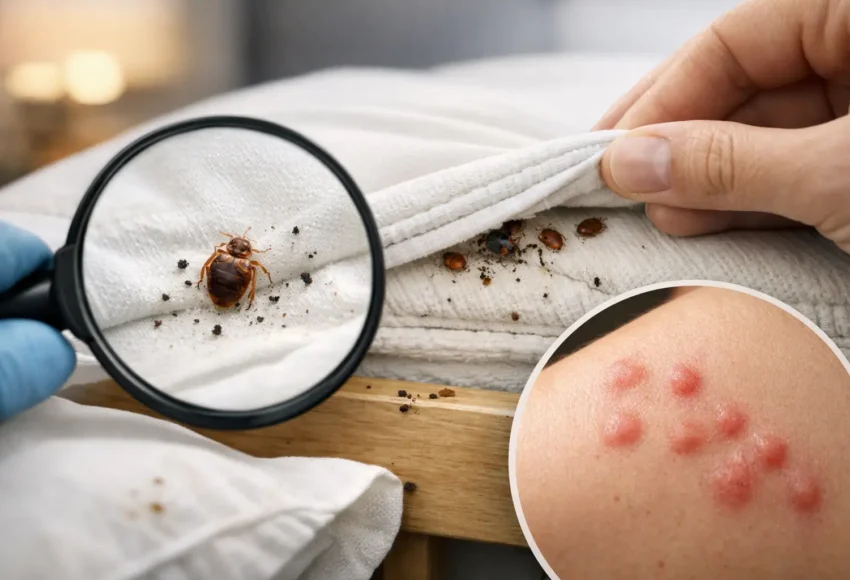
Bedbug bites often show up in small groups or lines, especially on areas of skin exposed during sleep like the arms, shoulders, neck, and legs. They can look similar to mosquito bites or rashes, which is why many people mistake the problem for something else at first. If the bites keep appearing after sleep, especially over several mornings, that pattern deserves attention.
Another one of the top signs of bedbugs is finding tiny rust-colored or dark spots on sheets, pillowcases, or mattresses. These spots can come from crushed bugs or bedbug droppings. They tend to appear near seams, corners, and edges where bedbugs like to hide during the day.
You may also notice pale yellow shed skins or tiny white eggs in cracks and fabric seams. Bedbugs grow by molting, so infestations often leave these shells behind. Eggs are very small and easy to miss, but shed skins are sometimes visible if you inspect closely with a flashlight.
A musty, sweet odor can develop in heavier infestations. Not every infestation creates a noticeable smell, so this is not the first sign most people catch. But if a room starts to smell unusual and you are also seeing bites or stains, the combination is more concerning.
Where bedbugs usually hide
Most people start with the mattress, and that makes sense. Still, bedbugs often spread beyond it. They like tight spaces close to where people rest for long periods.
Check mattress seams, box spring edges, bed frames, and behind the headboard first. Then move to nearby furniture like nightstands, upholstered chairs, and sofas. In apartments, condos, and multi-unit housing, they can also travel through shared walls and enter from neighboring units.
In real cases, we often find them tucked into screw holes, under furniture joints, behind outlet covers, and along baseboards. That is one reason do-it-yourself inspections can miss active hiding spots. Seeing no bugs on the top of the mattress does not always mean the room is clear.
Signs you might miss at first
Some of the most important clues are easy to dismiss. A few small black dots on bedding can look like dirt. A single itchy spot might seem like dry skin or a mosquito bite. Even seeing one bug can be brushed off as a random insect that wandered inside.
But bedbugs rarely stay random. If you are washing sheets more often because of unexplained stains, changing where you sleep because one room feels suspicious, or checking your skin every morning, those are practical signals that something is not right. In rental properties or guest spaces, tenant complaints about nighttime bites should also be taken seriously right away.
It also matters when symptoms started. Bedbugs often show up after travel, bringing in used furniture, hosting overnight guests, or moving items between units. That does not prove the source, but it can help narrow down the timing and increase suspicion.
How to tell bedbugs from other pests
Not every bite or bedroom insect means bedbugs. Fleas usually target the lower legs and ankles more often, especially in homes with pets. Mosquitoes are more random and easier to notice flying around. Carpet beetles do not bite, but their hairs can irritate skin and cause confusion.
The biggest difference is evidence around sleeping areas. Bedbugs leave signs where people rest – on beds, couches, upholstered furniture, and nearby cracks. If the bites are paired with spotting on sheets or visible shed skins near mattress seams, bedbugs become much more likely.
Mice, roaches, and other pests leave very different traces. Rodents leave larger droppings, gnaw marks, and scratching sounds. Cockroaches favor kitchens, bathrooms, and moist hiding areas. Bedbugs are quieter and more closely tied to human resting spaces.
What to do if you notice the top signs of bedbugs
Start by reducing the chance of spreading them. Avoid moving bedding, clothing, or furniture into other rooms unless items are sealed in bags first. People often make the problem worse by carrying infested items through the home without realizing it.
Strip the bed carefully and bag linens before moving them. Wash and dry on high heat if the fabric allows. Heat is useful, but home laundering alone usually does not solve a full infestation because bugs and eggs may still be hiding in the frame, furniture, and surrounding room.
Vacuuming visible areas can help reduce some activity, but it is not a complete fix either. Bedbugs cling to hard-to-reach spots, and eggs are especially stubborn. Over-the-counter sprays can create a false sense of progress. In some cases, they scatter the bugs deeper into walls or into nearby rooms, making treatment harder.
If you are a homeowner, act quickly before the infestation expands. If you manage a rental property or small business, document the signs and respond fast to protect tenants, guests, and your reputation. Speed matters more than guesswork here.
When professional help makes the most sense
If you have confirmed bugs, recurring bites, or multiple signs at once, it is time to bring in professional treatment. Bedbugs are hard to eliminate because they hide well, reproduce quickly, and can survive in small cracks where household products do very little.
A proper treatment plan is not just about spraying a mattress. It involves inspecting the full room, identifying hiding spots, treating affected areas safely, and giving clear preparation steps so the infestation is handled thoroughly. The right approach depends on how far the problem has spread, whether it is limited to one room, and whether the property is a single-family home, apartment, hotel, or office.
For homeowners and property managers in places like Georgina, Keswick, Sutton, and surrounding York Region communities, a fast response can prevent a bedroom issue from becoming a multi-room problem. That is especially important in shared housing, rentals, and commercial spaces where delays often lead to more cost and disruption.
Discount Pest Control works with customers who want the issue handled discreetly, safely, and without wasting time on trial-and-error solutions. That matters when you are trying to protect your family, tenants, staff, or guests and just want the problem gone.
A quick word about peace of mind
Sometimes people inspect their room, find nothing obvious, and still feel uneasy. That happens more often than you might think. Bedbugs are excellent at staying out of sight, especially early on. If the signs keep adding up – fresh bites, unexplained spots, or recurring concerns after travel – it is better to check properly than lose sleep wondering.
You do not need to panic, and you do not need to feel embarrassed. Bedbugs can happen in clean homes, busy households, rental units, and commercial properties alike. What matters is noticing the signs early and taking the next step before the problem grows.


Leave a Comment