
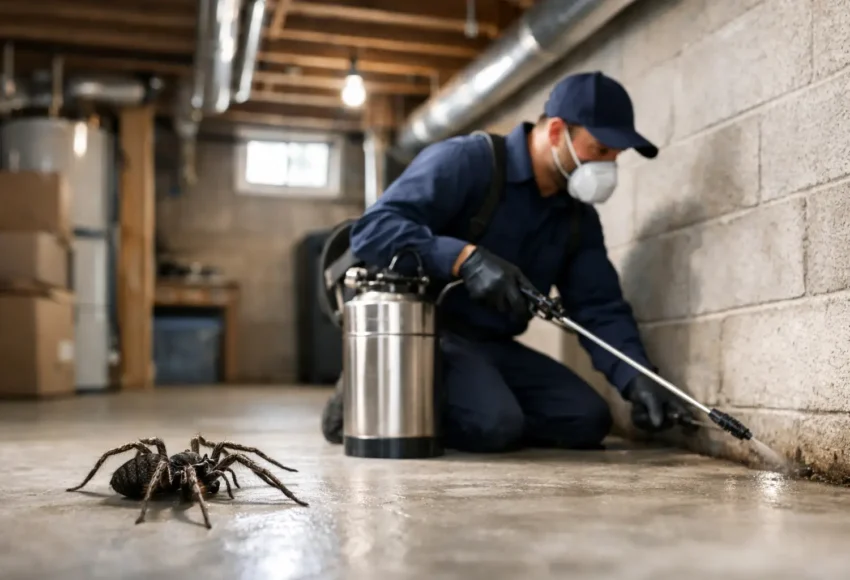
Spider Control in Basement That Lasts
You head downstairs for a storage bin or a load of laundry, and there it is – a web stretched across the corner, a spider dropping behind a shelf, or several tiny ones clustered near a basement window. Spider control in basement spaces usually becomes urgent for one simple reason: once you start noticing them, it rarely feels like a one-time issue.
Basements give spiders exactly what they want. They are quiet, darker than the rest of the house, often a little damp, and full of hiding spots. Cardboard boxes, utility rooms, exposed joists, window wells, cracks around pipes, and cluttered corners all make a basement easy to settle into. If insects are already present, spiders have a steady food source and even less reason to leave.
The good news is that seeing spiders in a basement does not always mean you have a major infestation. The bad news is that if the conditions stay the same, the problem often keeps coming back. That is why the best fix is not just removing a few webs. It is reducing the reasons spiders are choosing that space in the first place.
Why spiders are common in basements
Most homeowners find spiders in basements more than anywhere else in the house because the environment works in their favor. Basements tend to stay cooler and more humid, especially in older homes or during wet seasons. They also have fewer disturbances, which matters because spiders do well in undisturbed areas.
Another factor is access. Small gaps around foundation walls, basement windows, vents, doors, and plumbing lines can let insects in first. Spiders follow the food. If your basement has flies, centipedes, ants, sow bugs, or other crawling pests, spiders may stay active there even if the rest of the home seems fine.
Storage habits matter too. Long rows of packed boxes, piles of seasonal items, and unused furniture create protected spaces where spiders can hide and build webs without being noticed. In rental homes, finished basements, and utility areas, the problem may go on for weeks before anyone sees how active it has become.
What spider activity usually means
A single spider every now and then is common in many Ontario homes. Several spiders, fresh webs appearing often, or egg sacs attached to corners and stored items point to a larger problem. Sometimes the issue is the spiders themselves. Other times, the real problem is that the basement is supporting other pests that spiders are feeding on.
This is where spider control in basement areas becomes less about fear and more about diagnosis. If spiders are thriving, something in the space is helping them do it. That might be excess moisture, an easy path indoors, too much clutter, or an untreated insect issue.
There is also a practical difference between wandering spiders and web-building spiders. Wandering spiders may move through basements while hunting and can be harder to spot until one appears on a wall or floor. Web-building spiders often reveal themselves faster because the webs keep reappearing in the same corners, windows, and ceiling lines. Both types can become persistent if the basement remains undisturbed.
Spider control in basement spaces starts with prevention
The first step is to make the basement less attractive. That means reducing moisture, limiting hiding places, and cutting off the spider food supply.
If the basement feels damp, a dehumidifier can make a real difference. Spiders themselves are not always drawn to moisture, but the pests they feed on often are. Check for condensation, slow leaks, damp floor edges, or musty storage areas. If water is getting in around the foundation or windows, that should be addressed quickly.
Clutter reduction matters more than many people expect. Cardboard is especially unhelpful in basement storage because it creates dark shelter and can attract other pests. Plastic bins with sealed lids are easier to inspect and harder for pests to use as harborage. Keeping stored items a little off the floor and away from walls also helps.
Vacuuming webs, egg sacs, and visible spiders is useful, but it works best as part of a larger plan. If you only remove what you can see, the same activity often returns. Focus on corners, ceiling edges, behind appliances, around water heaters, near sump pumps, and along window frames.
Sealing entry points can cut down future activity. Gaps around utility lines, cracked weatherstripping, damaged screens, and poorly sealed basement windows are common access points. Window wells should also be checked, since they often collect debris and insects that attract spiders close to the home.
When DIY methods help and when they fall short
For mild activity, basic cleaning and exclusion can improve the situation. If you have seen one or two spiders and a few old webs, better storage, less moisture, and sealing gaps may be enough to keep the problem manageable.
But there are limits to DIY control. Store-bought sprays may kill exposed spiders, yet many do not reach the hidden areas where spiders rest or where egg sacs are attached. Overusing these products can also create safety concerns in homes with children or pets, especially in low-ventilation basement areas.
The bigger challenge is recurrence. If you keep seeing spiders after cleaning, or if webs come back within days, there is usually a source problem that has not been solved. The same is true if the basement has a noticeable insect issue. Spiders rarely build up without food.
That is why professional service often saves time and frustration. A proper treatment plan looks at both spider harborage and the conditions feeding the problem. In some homes, the right solution is targeted spider treatment. In others, it also involves addressing ants, centipedes, or other insects that are keeping spiders active.
What professional spider control in basement areas should include
A good service starts with inspection, not guesswork. The goal is to identify where spiders are nesting, how they are entering, and whether another pest issue is helping sustain them. That matters because not every basement has the same layout, moisture level, or risk points.
Treatment should focus on likely harborages such as corners, wall-floor joints, utility penetrations, unfinished ceiling areas, basement windows, and storage zones. In many cases, the most effective approach combines removal of active webs and spiders with targeted products designed for residual protection.
Safety matters just as much as effectiveness. Homeowners and property managers want results, but they also want treatment that is safe for families and pets when applied properly. That is especially important in homes where basements are used as living space, laundry rooms, play areas, or tenant storage.
There is also value in discretion. For rental properties and small businesses, a visible pest issue can quickly become an awkward one. Fast service and a clear plan help reduce stress before the problem grows.
Signs it is time to call for help
If spiders keep showing up in the same basement areas, if you are seeing multiple webs each week, or if egg sacs are present, it is time to stop treating it as a minor annoyance. The same applies if the basement is finished and used daily, or if tenants, children, or staff are regularly encountering spiders.
You should also take it seriously if the problem seems tied to another pest issue. A basement with spiders and insects rarely improves on its own. It usually becomes a cycle: insects move in, spiders follow, and both stay active because the conditions remain favorable.
For homeowners in places like Georgina, Keswick, Sutton, or surrounding communities where seasonal moisture and older housing features can make basements more pest-prone, quick action can prevent a small issue from spreading into storage rooms, main-floor living spaces, or tenant complaints.
Discount Pest Control works with homeowners, landlords, and businesses that need a fast, practical answer – not a drawn-out process or a one-size-fits-all spray. The right service should leave you with fewer spiders now and fewer reasons for them to come back later.
Keeping the basement under control after treatment
After a professional visit, a few habits can help maintain results. Keep basement storage organized, continue managing humidity, and avoid letting webs sit untouched in corners for long periods. Seasonal checks around windows, vents, and foundation gaps can also catch new entry points early.
It helps to think of basements as pest-sensitive zones. They do not need to be spotless, but they do need enough light maintenance to stay uninviting. When a basement is dry, sealed, and not overloaded with clutter, spiders have fewer places to hide and fewer reasons to stay.
If your basement still feels like the part of the house where spiders win, that is usually a sign the issue is bigger than a broom and a spray can. A clear plan, quick treatment, and a little prevention go a long way toward making that space feel usable again.


Leave a Comment