
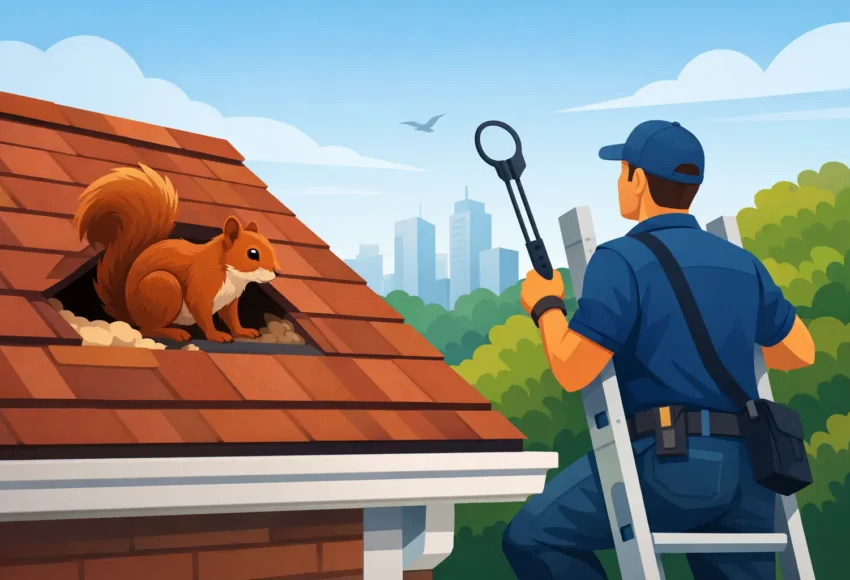
Squirrel Removal From Roof: What to Do Fast
You usually hear it before you see it – scratching above the ceiling at dawn, quick running sounds in the attic, or chewing near the roofline. When you need squirrel removal from roof areas, speed matters. What starts as a little noise can turn into damaged vents, chewed wiring, insulation contamination, and an opening that invites even more wildlife inside.
Squirrels are common around homes, and they are more destructive than many people expect. They do not need a large gap to get in. A loose soffit, roof vent, fascia gap, or weak section near the eaves can be enough. Once they find warmth and shelter, especially during colder months or nesting season, they tend to come back unless the entry point is properly addressed.
Why squirrels target the roof
Roofs give squirrels exactly what they want – height, cover, and access. Tree branches that hang close to the house act like a bridge. From there, squirrels can inspect shingles, vents, flashing, soffits, and roof edges for weak spots. They are persistent chewers, so a vulnerable area does not stay small for long.
The attic is the real prize. It is dry, quiet, and protected from predators. For a female squirrel, it can also be a nesting space for babies. That changes the job completely, because removal has to be handled carefully. Blocking the hole too early can trap animals inside, and that often creates a bigger mess, not a faster solution.
Signs you need squirrel removal from roof spaces
The clearest sign is repeated noise coming from above, especially early in the morning and late in the afternoon. Squirrels are active during the day, which helps separate them from many other nuisance animals. If the sounds are fast, light, and frequent, squirrels are a likely cause.
You may also notice visible damage outside. Bent roof vents, gnawed wood, torn shingles near the edge, disturbed soffits, and droppings near entry points all point to activity. In some homes, homeowners first spot the issue from the yard when they see squirrels running the same path from tree to roof over and over.
Inside, warning signs can include stained ceilings, foul attic odors, damaged insulation, and higher risk around electrical lines. If squirrels stay long enough, they can leave urine and droppings behind and chew materials they should never be touching.
Why DIY squirrel removal often goes wrong
A lot of people try the fastest-looking fix first. They seal the hole, set a trap from the hardware store, or try to scare the squirrels off with noise or strong smells. The problem is that roof-level wildlife issues are rarely that simple.
If there are baby squirrels inside, sealing the entry point can separate them from the mother. She may then tear into another part of the roof to get back in. If a squirrel is trapped inside the attic, it can panic, damage more of the home, and create a serious odor problem if it dies in an inaccessible area.
Trapping also has limits. It may remove one squirrel without solving the reason it got in. If the opening remains, another one can move in quickly. And from a safety standpoint, climbing on a roof without the right equipment is risky on its own, even before you factor in frightened wildlife.
The right way to handle squirrel removal from roof problems
The safest approach starts with a full inspection. It is not enough to spot one hole and assume that is the whole issue. A proper inspection looks for the main entry point, secondary openings, nesting activity, and signs of young inside the attic.
From there, the removal method depends on the situation. In many cases, one-way exit devices are the best option. These let squirrels leave but prevent them from re-entering. This works well when timed properly and when all other access points are identified and secured. If babies are present, humane removal has to account for them before exclusion work is completed.
Once the animals are out, the real prevention work begins. The damaged area needs to be repaired with materials strong enough to resist chewing. Soft or temporary patch jobs often fail. Roof vents may need protective covers, soffits may need reinforcement, and small gaps along the roofline should be closed properly.
What happens if you wait too long
Squirrel problems rarely stay small. The longer they have access to the roof or attic, the more likely you are to deal with multiple issues at once. Structural damage is one concern, but fire risk is another. Squirrels chew to wear down their teeth, and wiring is a common target.
There is also the contamination factor. Droppings and urine in insulation can create odors and unhealthy conditions, especially in enclosed attic spaces. If the nesting continues, cleanup costs usually rise because you are no longer dealing with removal alone. Now you are dealing with sanitation, repairs, and prevention.
Timing matters even more during breeding season. A home that seems to have one squirrel may actually have a full nest hidden from view. That is why a professional assessment is worth it early, before the problem spreads.
Roof squirrel removal and long-term prevention
Removing the squirrels is only half the job. If your home still offers easy access, the same pattern can repeat. Prevention usually starts outside. Trimming tree branches back from the roof helps reduce direct access. It will not solve every case, but it removes one major advantage squirrels use.
Roof components should also be checked after removal. Homeowners are often surprised by how many small vulnerabilities exist around attic vents, chimney flashing, soffits, and fascia boards. These areas wear down over time, and squirrels are good at finding weak points before people do.
In some cases, prevention also means watching for food sources around the property. Bird feeders, pet food, and unsecured garbage can make the home more attractive. That does not mean every squirrel issue is caused by food, but reducing what draws them close to the house can help.
When to call for professional help
If you hear activity in the attic, see active roof entry, or notice damage around vents and eaves, it is time to call. The same applies if you have already tried to block an opening and the problem continues. Repeated scratching, new roof damage, or squirrels appearing around the same area every day usually mean the issue is active and established.
For homeowners and property managers, speed is often the deciding factor. The sooner the entry point is identified and the animals are removed properly, the less chance there is of expensive repairs. Discreet service also matters, especially for rental properties and businesses where visible wildlife problems can create stress with tenants, customers, or staff.
That is where a local team can make a difference. In communities such as Georgina, Keswick, Sutton, and nearby York Region areas, squirrel activity around roofs and attics is a common issue, especially near mature trees and quieter residential neighborhoods. A fast response helps stop the damage before it gets worse.
Discount Pest Control approaches these situations with the urgency homeowners expect – identifying entry points, removing squirrels safely, and helping prevent them from coming back. Affordable service matters, but so does doing the job correctly the first time.
What to do right now if squirrels are on your roof
Start by keeping your distance and avoiding direct contact. Do not climb onto the roof to inspect the opening yourself, and do not seal any active hole until you know whether squirrels are still inside. If you can safely observe from the ground, note where the animals are entering and when activity is highest.
It also helps to limit access to indoor attic spaces until the situation is assessed, especially if there are droppings, damaged insulation, or exposed wiring. Pets and children should be kept away from contaminated areas. Then schedule a professional inspection as soon as possible.
A squirrel on the roof may look like a minor nuisance from the yard, but once it gets inside, the problem changes fast. The good news is that early action usually means a cleaner, safer fix and a better chance of keeping your home protected for the long run.
Leave a Comment