
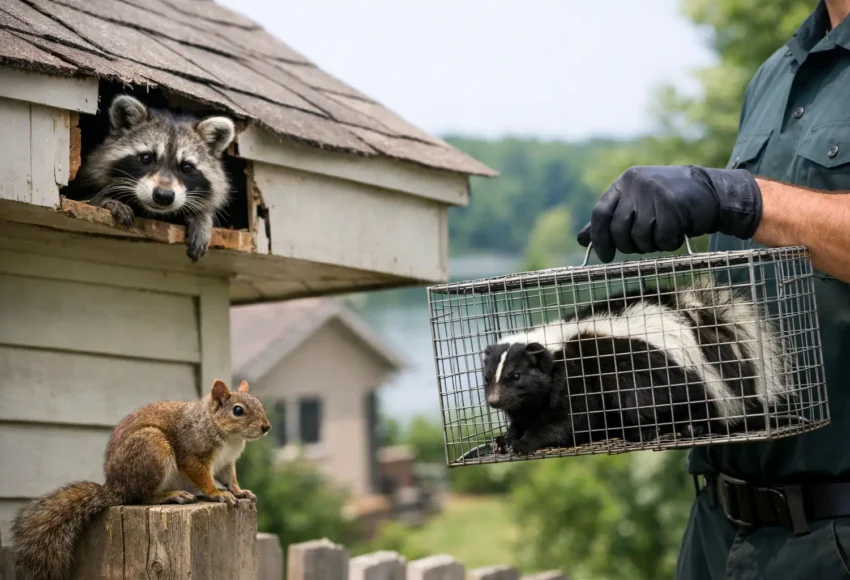
Wildlife Removal for Pefferlaw, Ontario Homes
A scratching sound above the ceiling at 2 a.m., a raccoon tipping over garbage bins, or a strong odor near the deck can turn a quiet Pefferlaw property into a stressful situation fast. A search for wildlife removal Pefferlaw Ontario usually means an animal has already found a way into a home, garage, shed, or business. Don’t wait for the damage to grow. The right response is fast, humane removal followed by careful exclusion work that helps keep animals from coming back.
Wildlife Removal in Pefferlaw, Ontario Starts With the Entry Point
Seeing an animal outside does not always mean there is a problem. Raccoons, squirrels, skunks, birds, and other wildlife belong outdoors. The problem begins when they use a building as shelter, nesting space, or a food source.
In Pefferlaw, wildlife often enters through roof vents, loose soffits, damaged siding, uncapped chimneys, open crawlspace vents, gaps around pipes, or weak areas along a roofline. A raccoon can pull apart a loose vent cover. Squirrels can chew through vulnerable wood and fascia. Mice can fit through surprisingly small gaps and may move from an exterior wall into living areas.
A professional inspection looks beyond the animal you noticed. The goal is to find active entry points, signs of nesting, damage, contamination, and weak spots that could become the next opening. Removing one raccoon but leaving a damaged soffit behind can lead to another raccoon finding the same access point days later.
Signs You May Have Wildlife Inside Your Property
Wildlife problems are not always obvious at first. Noise is often the first warning, especially early in the morning or after dark. Squirrels tend to create quick scurrying sounds during daylight hours, while raccoons may cause heavier thumping or dragging noises at night.
Other signs include droppings in the attic or garage, torn insulation, chewed wiring, visible damage around vents, greasy rub marks along exterior walls, and repeated activity around garbage, pet food, or bird feeders. A persistent musky or unpleasant smell can also point to an animal nesting under a deck, in a crawlspace, or inside a wall.
For rental homes and commercial properties, quick action matters even more. Wildlife odors, noise, and visible damage can lead to tenant complaints, affect customers, and create a maintenance issue that becomes more expensive with every passing day.
Why DIY Wildlife Removal Can Make the Problem Worse
It is understandable to want a quick fix. Homeowners may try blocking a hole, placing traps near an entry point, using repellents, or chasing an animal away. Unfortunately, these approaches can create bigger problems when the animal is already inside.
Blocking an opening too early may trap wildlife in the attic or walls. If there are babies inside, the mother may cause additional damage trying to get back in. Trapping without a plan for inspection and exclusion also fails to address the reason the animal entered in the first place.
There are safety concerns as well. Wildlife can bite or scratch when frightened, and droppings may contaminate insulation, storage areas, or surfaces. Raccoons and skunks should be handled with particular care. A close encounter is not worth the risk to you, your family, employees, or pets.
Repellents may have limited value in certain situations, but they rarely solve an established wildlife issue on their own. Noise devices, strong smells, and store-bought sprays do not repair a damaged vent or close a gap under a deck.
A Humane Approach That Solves the Full Problem
Effective wildlife removal is more than getting an animal out of the building. It is a process designed to protect the property while treating the situation responsibly.
First, the property is inspected to identify the species, access points, and signs of young animals. This matters because removal methods depend on the animal, the location, and the season. A squirrel in an attic requires a different approach than a skunk living beneath a deck or a raccoon using a chimney.
Next, the active entry point is addressed with a humane one-way exclusion method when appropriate. This allows the animal to leave while preventing it from getting back inside. The area is monitored as needed, and the opening is sealed once it is clear the animal has exited safely.
Finally, exclusion and repair work help prevent repeat visits. Depending on the property, this may include securing vents, reinforcing weak roofline areas, sealing exterior gaps, screening chimney openings, or repairing damaged soffit and fascia. This step is what separates a temporary removal from a long-term solution.
Raccoons, Squirrels, Skunks, and Bats Need Different Solutions
Raccoons are strong, intelligent, and persistent. They often target attics, chimneys, garages, and areas under decks. A raccoon problem may involve damaged roof vents, torn shingles, displaced insulation, or a mother nesting with young. Fast service is important, but so is making sure no animals are left behind.
Squirrels often enter attic spaces through small gaps along the roofline. They can chew wood, wiring, and insulation as they create nesting areas. Since squirrels are active during the day, homeowners may hear them running overhead in the morning or afternoon.
Skunks commonly shelter under porches, sheds, and decks. The odor risk makes this a situation that should be handled carefully. Trying to scare a skunk out can result in exactly the outcome you hoped to avoid.
Bats require special care because they can access very small openings and may roost in attic spaces or wall voids. If bats are suspected, do not seal gaps without a proper assessment. Timing and humane exclusion methods matter, particularly when young bats may be present.
What You Can Do While Waiting for Help
Keep your distance from the animal and avoid attempting to handle it. If it is inside a living space, keep children and pets away, close interior doors if possible, and give the animal a clear route away from people. Do not corner it.
Outside, secure garbage bins, remove accessible pet food, clean up fallen fruit, and avoid leaving bird seed scattered near the home. These steps can reduce attractants, although they will not remove an animal that has already moved into the structure.
If you notice an entry hole, take a photo from a safe distance if you can. Do not cover it with foam, wood, or mesh until the situation has been assessed. That opening may be the only way an animal can exit, especially if young are involved.
Protecting Your Pefferlaw Home After Removal
Prevention is usually less costly than repairing major attic damage later. Check exterior vents regularly, especially after strong winds or winter weather. Keep tree branches trimmed back from the roof where possible, since overhanging limbs can give squirrels and raccoons a convenient path to upper levels.
Repair loose soffits, fascia, siding, and roof edges promptly. Small maintenance issues can become wildlife entry points over time. If you have a deck or shed with open space underneath, consider having it properly screened once you are sure no animal is living there.
For properties with recurring wildlife activity, a full exterior inspection is worth considering. Older homes, cottages, rental properties, and buildings near wooded areas or water may have multiple vulnerable spots. It depends on the condition of the structure and the species involved, but early exclusion work often prevents an emergency later.
Discount Pest Control provides fast, discreet wildlife assistance for homeowners, property managers, and businesses dealing with unwanted animals in Pefferlaw. Unmarked vehicles, practical solutions, and a focus on humane exclusion help make a stressful situation easier to manage.
If you hear movement in the attic, see fresh damage around a vent, or suspect an animal has settled under your deck, act before the problem spreads. A prompt inspection can protect your property, your peace of mind, and the wildlife that needs a safe way back outside.
Leave a Comment