
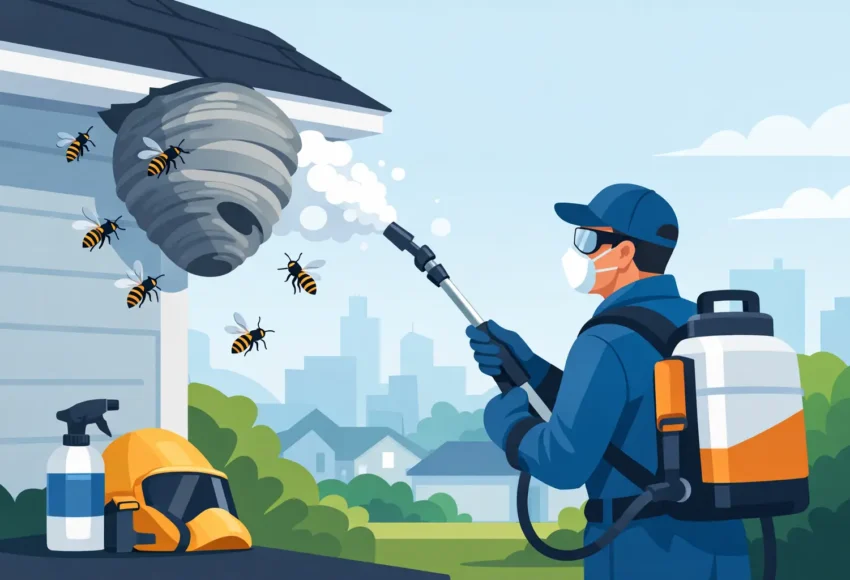
How to Get Rid of Wasp Nest Safely
If you found a wasp nest tucked under an eave, inside a shed, or near your front door, the worst move is usually the fastest one. People searching for how to get rid of wasp nest safely often want a quick fix, but safety comes first when stinging insects are protecting a colony. A rushed approach can turn a small problem into multiple stings, a dangerous reaction, or a bigger infestation later in the season.
The right response depends on where the nest is, how active it is, and who uses that area of the property. A small early nest attached to a quiet overhang is different from a large established nest beside a play area, tenant entrance, or business loading door. That is why the safest plan starts with identifying the level of risk before anyone reaches for a spray.
How to get rid of wasp nest safely starts with risk assessment
Before doing anything, keep your distance and watch the nest from several feet away. You want to know whether you are dealing with occasional activity or heavy traffic in and out. If you see a steady stream of wasps, the nest is active and should be treated carefully.
Location matters just as much as size. Nests near doors, decks, rooflines, garbage areas, playgrounds, or HVAC equipment are higher risk because people pass close to them without noticing. The same goes for nests inside wall voids, attics, soffits, or other enclosed spaces. Those are not good DIY situations because the insects may spread deeper into the structure if treatment is done incorrectly.
You should also think about who is nearby. If anyone in the home or building has a known allergy to stings, if pets use the area, or if children could wander close, it makes sense to treat the nest as urgent. For landlords and business owners, a visible nest can also become a liability issue quickly.
When you should not remove a wasp nest yourself
Some nests are simply too risky to handle without professional equipment and training. If the nest is large, hard to reach, inside a wall, above a ladder’s safe working height, or in a high-traffic area, do not try to knock it down or spray it casually.
You should also avoid DIY removal if the wasps seem unusually aggressive. Disturbing an active colony can trigger a swarm response in seconds. That risk goes up in late summer, when colonies are bigger and more defensive.
Another common mistake is assuming all stinging insects behave the same way. Wasps, hornets, and bees are often confused. If you are not sure what you are looking at, it is better to pause. Honey bees, for example, should not be treated the same way as wasps.
What not to do with an active wasp nest
A lot of sting incidents happen because someone tries a shortcut they saw online or heard from a neighbor. Never hit, burn, flood, or hose down an active nest. Do not seal the entry point first if the nest is inside a wall or soffit, because trapped wasps may find another way into the building.
It is also a bad idea to remove a nest during the hottest part of the day when activity is high. Spraying from too close, using the wrong product, or standing on an unstable ladder all raise the chance of injury. The goal is not just to kill insects. The goal is to avoid getting stung and avoid making the problem spread.
If you decide to treat it yourself, do it cautiously
For a small, exposed nest in an accessible outdoor area, some homeowners choose to handle it themselves. If you go that route, be realistic about the risk. Wear long sleeves, pants, closed shoes, gloves, and eye protection. Make sure children and pets are inside, and keep everyone away from the area.
Use a wasp-specific product labeled for nest treatment, and follow the product instructions exactly. Do not improvise. The safest time to treat is usually early morning or evening when wasps are less active, but you still need enough visibility to work safely.
Stand as far back as the product allows and make sure you have a clear path to retreat. Apply the treatment directly to the nest entrance and surface as directed. Once treatment is complete, leave the area immediately and do not linger to check results.
Then wait. This is where people get impatient and make mistakes. Do not try to knock the nest down right away. Give the treatment time to work, and only return after activity has completely stopped.
Removing the nest after treatment
Once there is no visible activity, the nest can usually be removed carefully with a long-handled tool and placed in a sealed trash bag. Even then, caution matters. A few live wasps may still be present, especially if treatment was incomplete.
After removal, clean the area to reduce the chance of new nesting. Wasps are attracted to sheltered spots, food residue, and easy access points. If the nest was attached under an eave or inside a shed, inspect for openings or conditions that made the spot appealing in the first place.
Why some nests keep coming back
Removing a nest does not always solve the bigger issue. If the area offers shelter and nearby food sources, wasps may rebuild in the same general location. Open garbage bins, sugary drink spills, pet food, fallen fruit, and gaps around soffits or siding can all make a property more attractive.
This is one reason recurring nest activity around a home or commercial building often needs a broader inspection. A one-time removal helps with the immediate threat, but prevention is what saves you from repeating the same problem every season.
How professionals handle wasp nest removal safely
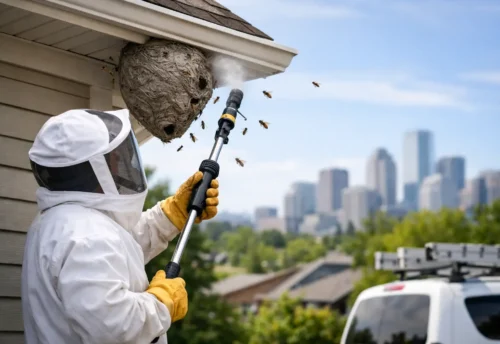
Professional treatment is usually the safest option when the nest is established or poorly placed. A trained pest control technician can identify the species, choose the right treatment method, and remove the nest with less risk to people, pets, and the property.
That matters even more when the nest is hidden. Wall voids, attics, rooflines, and commercial exterior fixtures can all hold nests that are bigger than they appear from the outside. Treating only the visible opening may not solve the problem.
A professional can also help with prevention. That may include identifying entry points, recommending repairs, and spotting conditions that attract stinging insects in the first place. For homeowners and property managers in busy communities such as Georgina or Keswick, fast response matters when a nest is near entrances, patios, or tenant walkways.
Signs you need urgent wasp control
You should call for immediate help if someone has already been stung, if the nest is near a main doorway, or if wasps are getting inside the building. The same applies if you hear buzzing inside a wall, notice increasing wasp activity day after day, or see multiple nests on the property.
Commercial properties should move quickly too. A nest near outdoor seating, service doors, dumpsters, or customer access points can become both a safety problem and a reputation problem. Discreet treatment is often a priority in those cases.
Preventing the next nest
The best time to prevent a nest is before it grows. In spring and early summer, inspect eaves, sheds, decks, fences, attics, and overhangs for small starter nests. Those are easier and safer to address than large mature colonies.
Keep trash sealed, clean up food and drink residue outside, and reduce standing water where possible. Repair loose siding, damaged vents, and small gaps around rooflines or exterior fixtures. If your property tends to get repeated wasp activity, a seasonal inspection can help you catch the problem before it becomes urgent.
If you are unsure whether a nest is safe to handle, trust that instinct. The safest answer to how to get rid of wasp nest safely is sometimes not DIY at all. A fast professional visit can save you time, reduce the chance of stings, and solve the problem without unnecessary risk. If the nest is active, close to people, or hard to reach, getting help early is often the smartest move.
Pingback: 24 Hour Pest Control Ontario When It Cannot Wait - Pest Control Ontario Exterminators